Waist measures identify obesity missed by body mass index
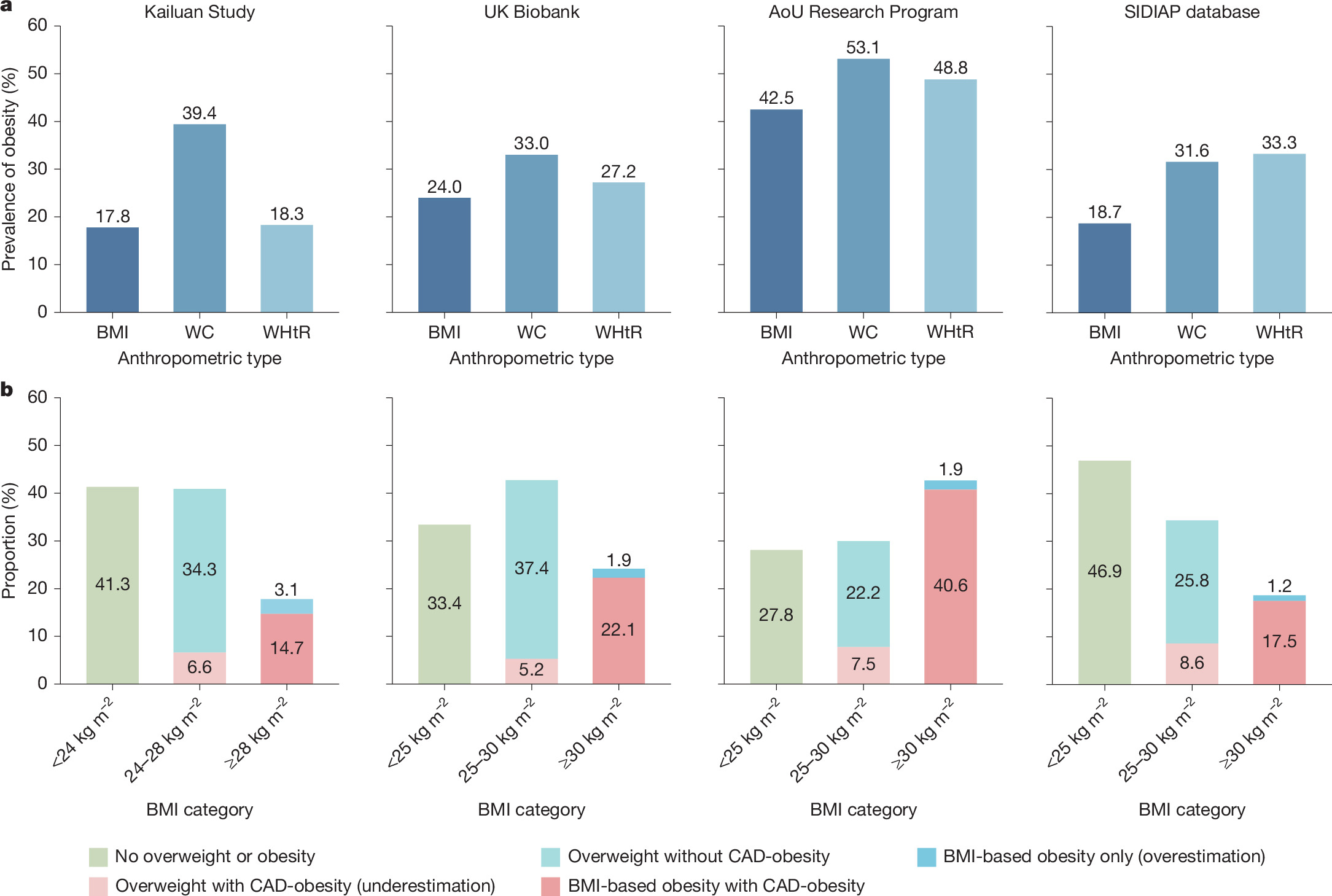
Compared with a definition incorporating waist measurements, body mass index alone overestimated obesity in 1.2–3.1% of participants and underestimated it in 5.2–8.6%.
Our read
Biomarkers- Studied:
- Cohort study of 844,108 adults in China, UK, USA, and Spain, against adults assessed using BMI alone
- What changed:
- Adding waist measurements identified obesity missed by BMI alone in 5.2–8.6% of participants
- The catch:
- Waist measures and BMI estimate body fat indirectly rather than measuring it directly
Editor of record: Boris Djordjevic · AgingResearch.News
Across China, the UK, the US and Spain, 844,108 adults aged 18–74 were included in a retrospective study comparing obesity definitions. Researchers combined body mass index, a weight-to-height measure, with waist size and waist size relative to height. The framework defined clinical obesity as excess body fat with obesity-related impairment of organ function, and preclinical obesity as excess fat with preserved function.
Mortality analyses covered China, the UK and Spain. Compared with people without confirmed obesity or impaired organ function, clinical obesity was associated with a death hazard ratio of 1.69, versus 1.19 for preclinical obesity. A hazard ratio measures relative risk over time. Across the four cohorts, 77.4–91.3% of people with preclinical obesity did not progress to clinical obesity over 10 years.
Why it matters
Assessing organ function alongside excess body fat may help guide obesity care toward health and survival, outcomes relevant to healthy aging. The authors support adopting the framework for care and policy.
Caveats
The authors note that their population-level method could not determine whether obesity caused an individual’s organ dysfunction. Participants were aged 18–74 and were free from stroke, heart attack and cancer at baseline.
From the paper
- Limitation
The retrospective design of our study and its reliance on electronic health record (EHR) data could limit diagnostic precision and introduce inter-cohort variability.
Quoted word for word from the full text on nature.com.


Comments
Be the first to comment.