Brain-based marker linked to faster aging over time
An observational analysis of two midlife cohorts linked a brain-imaging marker to accelerated biological aging over 7–15 years.
Our read
Biomarkers- Studied:
- Cohort study in people
- In the record:
- The 665th paper on education with results in people; 1,404 on record in all.
- Why it’s aging research:
- It builds or tests a tool for aging research.
Editor of record: Boris Djordjevic · AgingResearch.News
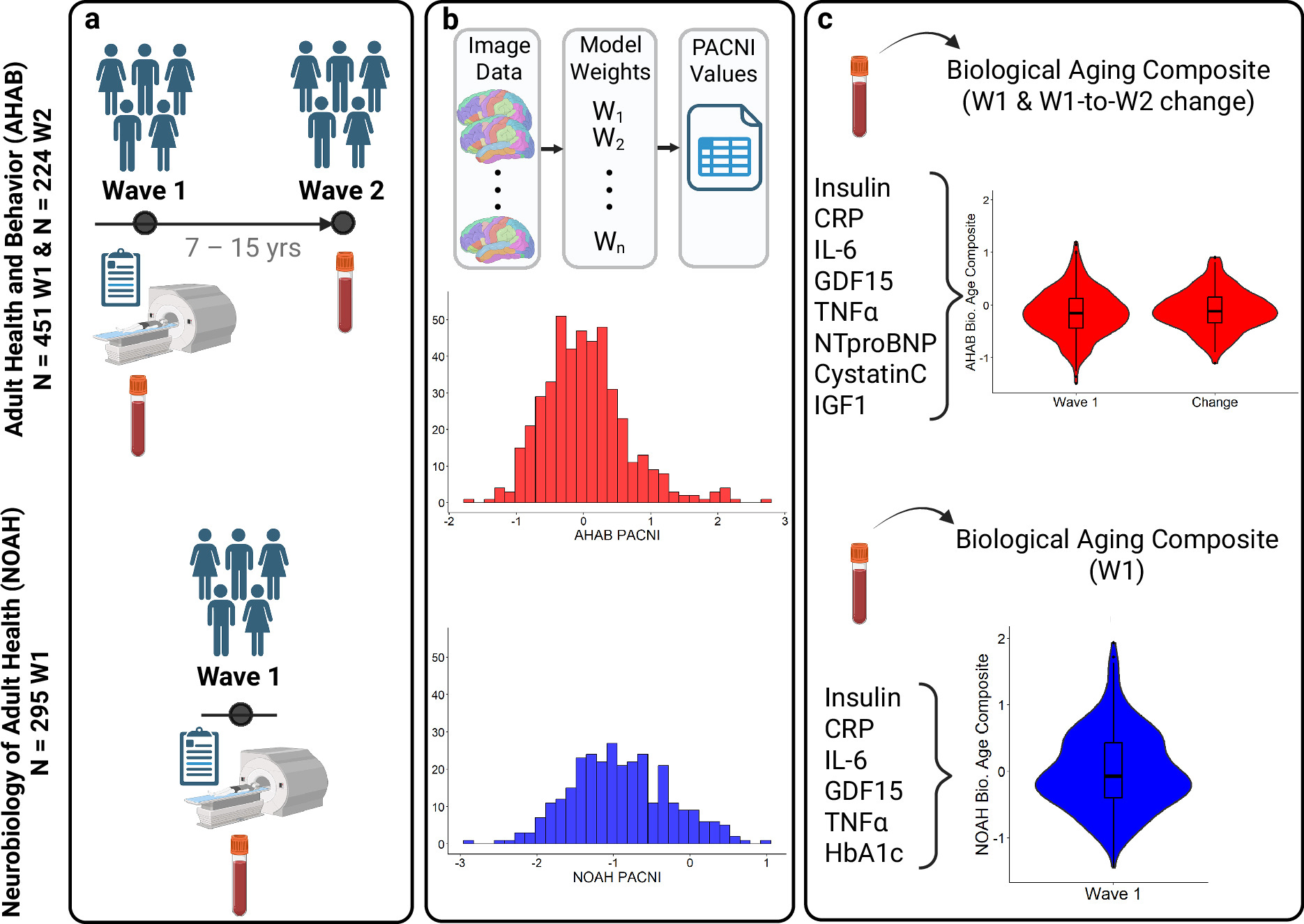
People in two midlife cohorts took part in an observational study testing whether DunedinPACNI, a brain-based aging marker, predicted biological aging across several body systems. The marker was developed from magnetic resonance imaging scans collected at a single point in time.
In both cohorts, less education was associated with faster aging as measured by DunedinPACNI, repeating an earlier finding. Faster aging on the brain-based measure was also associated with higher biological aging in midlife. It was linked to accelerated biological aging over 7–15 years, as participants moved from midlife into later life.
Why it matters
Aging across several body systems raises the question of whether a measure drawn from the brain can help anticipate broader biological changes from midlife into later life.
Caveats
Differences between participants, such as education, could have contributed to the links between the brain marker and later aging measures. The composite aging measures do not tell us whether the marker predicts lifespan or specific diseases.

Comments
Be the first to comment.