Underweight linked to higher death rates in older Chinese adults
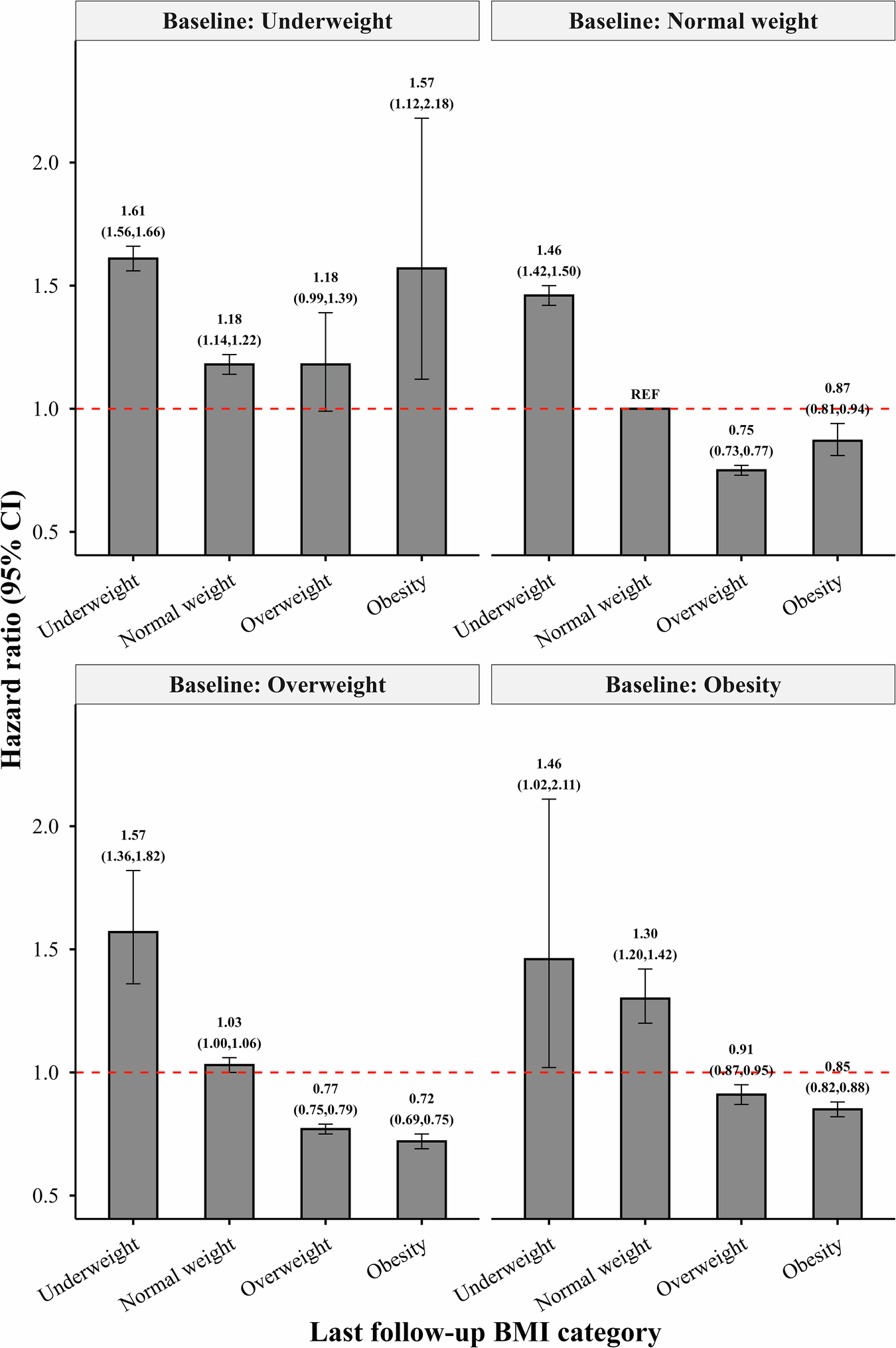
Persistent underweight was linked to higher mortality than remaining normal weight, with a hazard ratio of 1.61, a measure comparing death rates.
Our read
Populations- Studied:
- Cohort study of 1,338,732 older adults in China, against adults remaining normal weight
- What changed:
- Death rates were higher with persistent underweight than with stable normal weight (hazard ratio 1.61)
- The catch:
- Underlying illness could drive both declining body size and higher mortality
- Why it’s aging research:
- It measures an outcome that worsens with age.
Editor of record: Boris Djordjevic · AgingResearch.News
Adults aged 65 and older in China—1,412,411 people—underwent repeated examinations from 2017 to 2023 in an observational cohort study. The main analyses included 1,338,732 participants with complete data on the other factors considered.
Compared with remaining normal weight, persistent underweight was associated with higher mortality, with a hazard ratio of 1.61. Moving from normal weight to underweight had a hazard ratio of 1.46. Remaining overweight and moving from normal weight to overweight were linked to lower mortality, with hazard ratios of 0.77 and 0.75, respectively. Analyses of changes in weight, waist size and body mass index—a measure of weight relative to height—broadly supported these findings. Associations were broadly consistent across sex, age and causes of death.
Why it matters
Declining body size in later life may signal deteriorating health. The authors suggested it could help identify older adults who warrant further clinical assessment.
Caveats
Underlying illness may have contributed to both declining body size and higher mortality. These associations in Chinese adults aged 65 and older do not show that deliberately gaining weight would prolong life.



Comments
Be the first to comment.