An energy backup’s failure marked nerve-cell decline in flies
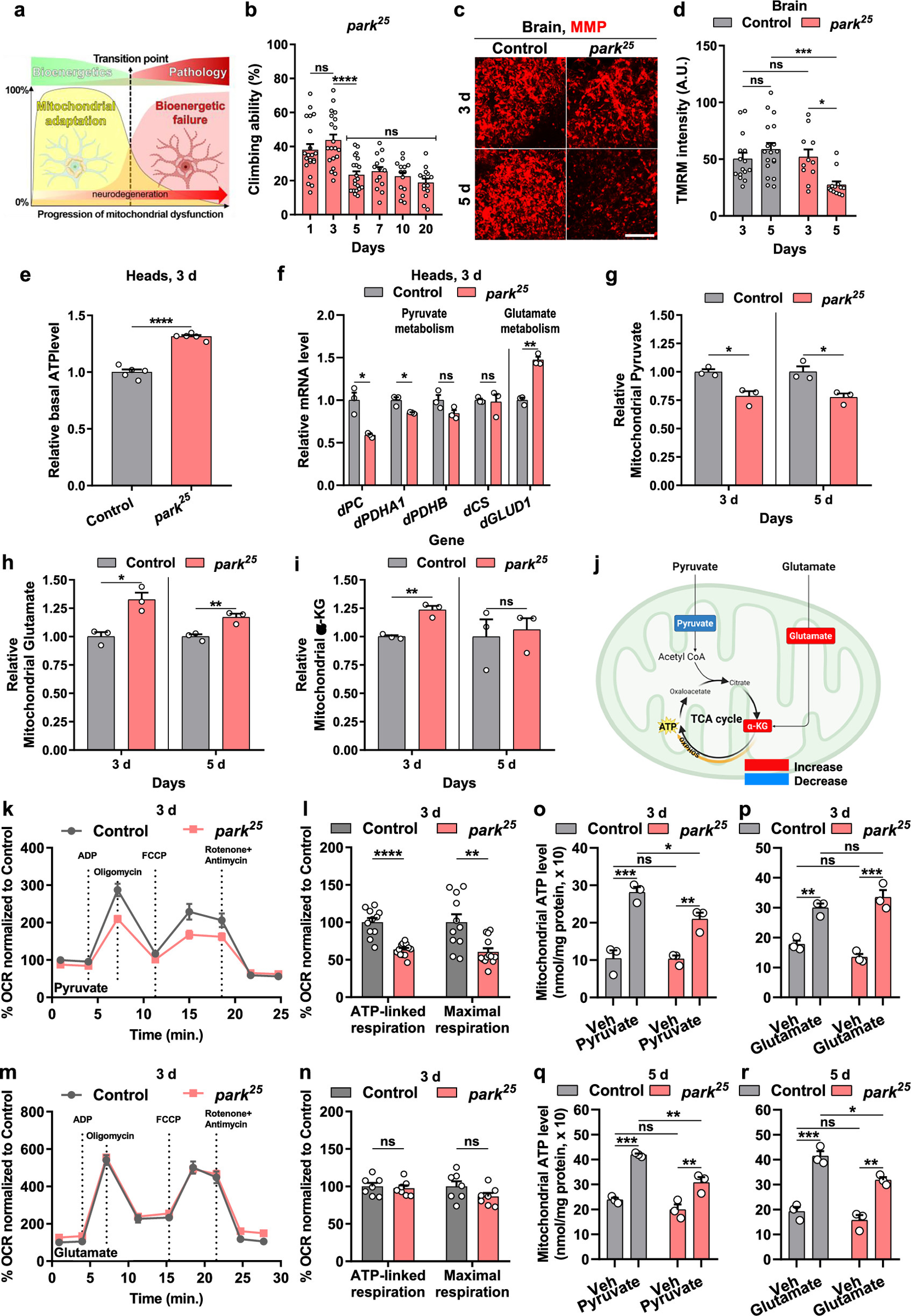
Experiments in parkin-deficient flies found that a temporary backup for nerve-cell energy production weakened with age.
Our read
Mechanisms- Studied:
- Experiments in parkin-deficient flies
- What changed:
- As parkin-deficient flies aged, their nerve-cell energy backup weakened and nerve-cell deterioration accelerated
- In the record:
- The 12th paper on PRKN with results in people; 335 on record in all.
Editor of record: Boris Djordjevic · AgingResearch.News
Flies deficient in parkin, a protein involved in mitochondrial upkeep, showed a temporary energy backup in laboratory experiments. Mitochondria, the cells’ energy-producing structures, had an impaired ability to produce energy using pyruvate as fuel. But they retained their capacity to use another fuel, glutamate.
Increased levels of TSPO, a protein, sustained this glutamate-supported energy production in nerve cells. With age, the signals that increased TSPO weakened. This compromised the compensation and accelerated nerve-cell deterioration. In human neurons grown in the lab from reprogrammed cells, parkin deficiency was similarly associated with higher TSPO levels.
Why it matters
Nerve cells must sustain energy production despite failures in mitochondrial upkeep. The work addresses why that resilience may give way to neurodegeneration with age.
Caveats
The age-related loss of compensation was studied in parkin-deficient flies. The human experiments used neurons grown in the lab, not people.
Comments
Be the first to comment.