Nationwide implementation of digital non-communicable diseases screening in Indonesia’s primary care system
Abstract
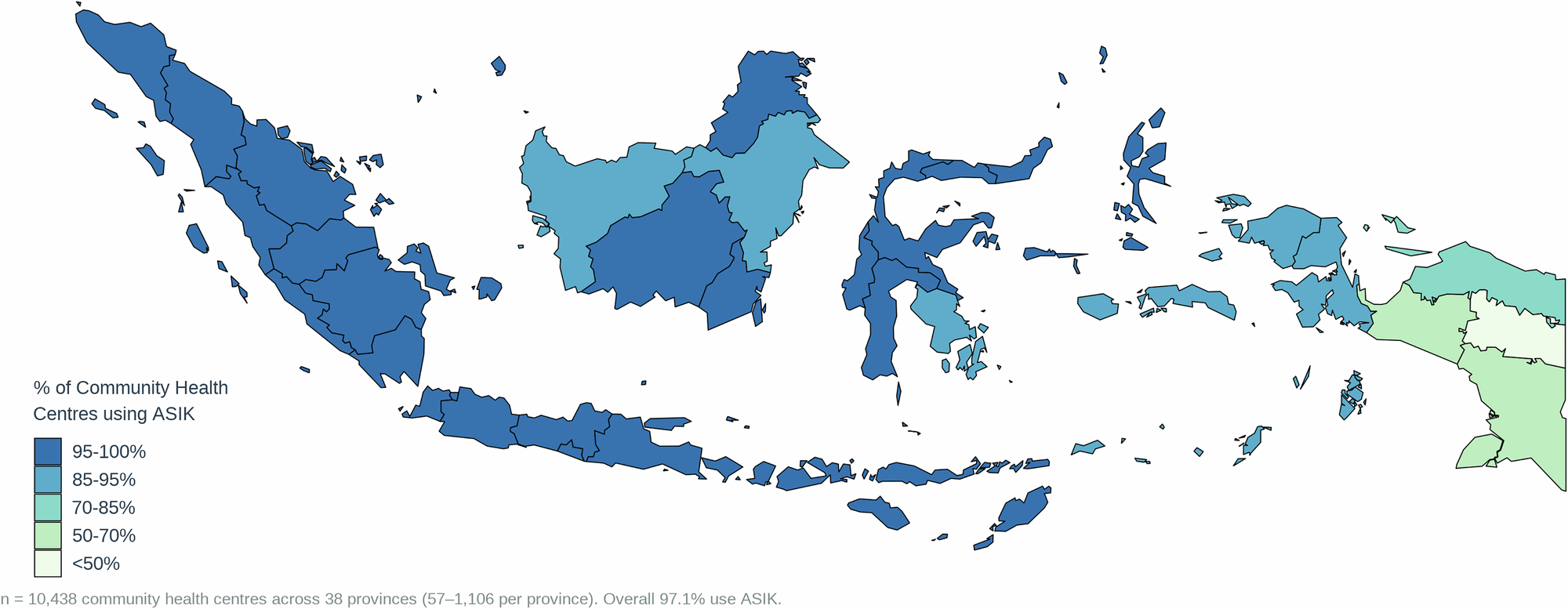
Non-communicable diseases require screening systems that can operate across large and diverse health systems, yet evidence from national implementations in low- and middle-income countries remains limited. Here we show how Indonesia’s Aplikasi Sehat IndonesiaKu mobile application, integrated with the national digital health platform SATUSEHAT and the legacy Sistem Informasi Penyakit Tidak Menular reporting system, supports routine screening across primary care and community settings. We analyse records from January 2023 to April 2024, comprising 116,013,364 screening visits among 75,822,322 individuals and reporting from 10,131 primary healthcare centres across all 38 provinces. Blood pressure and anthropometric measurements are recorded substantially more often than cholesterol and cancer screening. Among participants with relevant measurements, 27.98% meet the screening definition for hypertension, 19.28% for obesity, and 32.18% for central obesity. Screening volume varies markedly across provinces, while recorded outcomes differ by age and sex. These findings indicate that interoperable digital infrastructure can support population-scale monitoring of non-communicable disease, but equitable implementation also depends on workforce, equipment and service readiness. Aisyah et al. report nationwide use of Indonesia’s integrated ASIK-SATUSEHAT system for 116 million NCD screening visits, showing broad primary-care adoption alongside variation by service, region, age and sex.
The paper
Kementerian Kesehatan Republik Indonesia; Shanghai Jiao Tong University
Nature Communications, 15 Oct 2026, Open access, CC BY-NC-ND