Survodutide met heart safety goal in adults with obesity
The combined cardiovascular outcome occurred in 3.7% on survodutide versus 4.1% on placebo over a median 22.0 months.
Our read
Interventions- Studied:
- Trial in people
Editor of record: Boris Djordjevic · AgingResearch.News
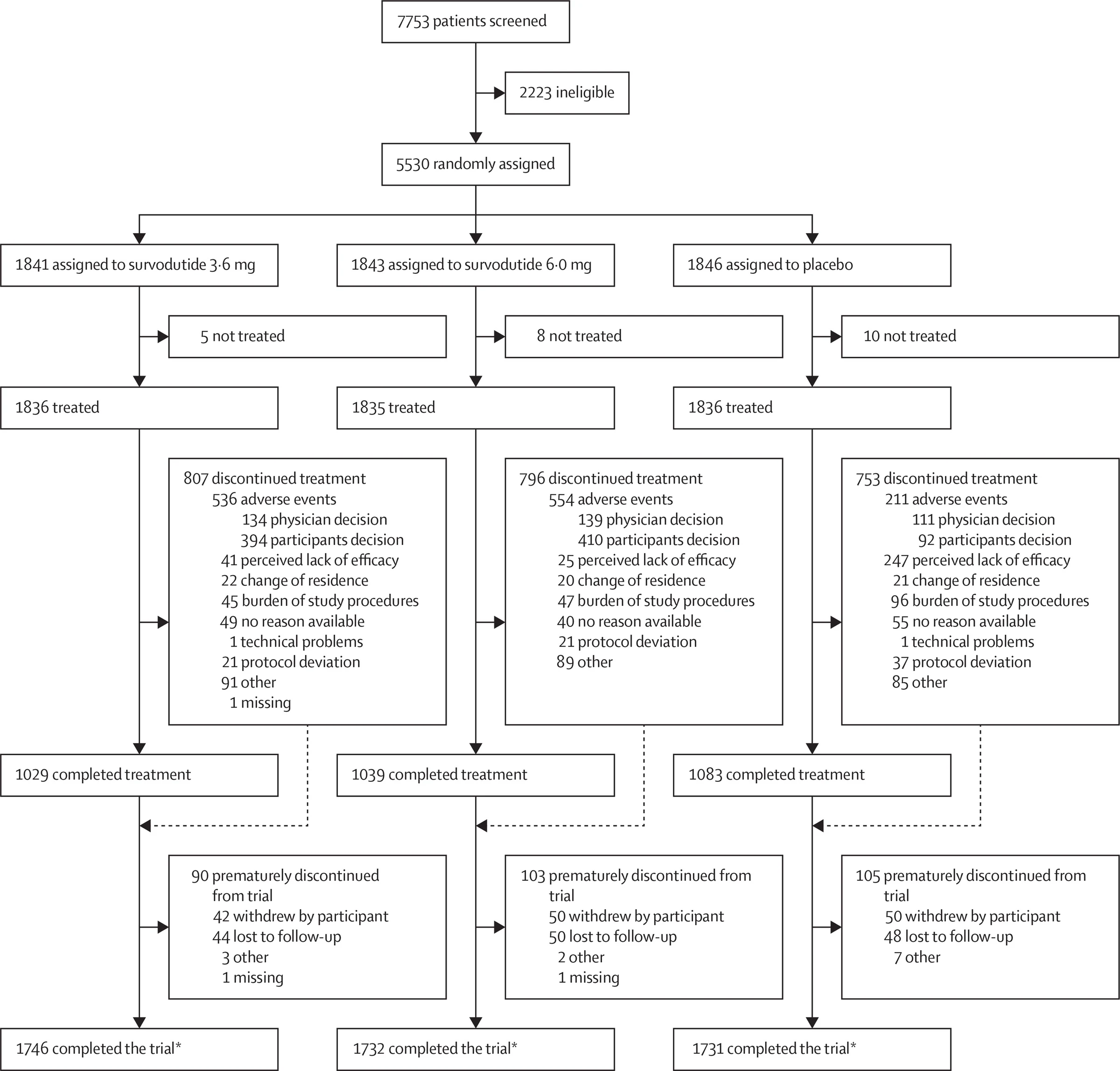
Among 5,530 adults aged 18 or older with overweight or obesity and cardiovascular disease, chronic kidney disease or increased cardiovascular risk, 5,507 received treatment in a randomized, placebo-controlled trial. Participants received weekly survodutide injections, increased to 3.6 or 6.0 milligrams, or placebo; 39.8% were female and 60.2% male. The main outcome combined cardiovascular death, nonfatal heart attack or stroke, procedures to restore heart blood flow, and heart failure events.
Across the 3.6-milligram, 6.0-milligram and placebo groups, respectively, adverse events occurred in 93.0%, 93.1% and 85.6%; nausea in 48.0%, 49.0% and 12.1%; and vomiting in 31.7%, 34.0% and 4.8%. Digestive problems prompted stopping treatment in 19.3%, 20.8% and 1.9%; serious adverse events affected 22.5%, 20.8% and 23.9%; fatal adverse events affected 0.9%, 0.9% and 0.6%. Cardiac disorders accounted for fatal events in 0.3%, 0.4% and 0.3%.
Why it matters
Cardiovascular safety matters when evaluating drugs for obesity in people at risk of age-related heart disease.
Caveats
The trial assessed whether cardiovascular risk stayed below a prespecified safety threshold, not whether the drug reduced it; the range of likely effects included no difference. The findings do not cover adults with a body mass index below 27 or people without the qualifying health risks.




Comments
Be the first to comment.