Arthritis linked to more fragmented daily activity rhythms
Rhythm fragmentation was 0.063 standard deviations higher in adults with arthritis than in those without it after accounting for demographic and clinical differences.
Our read
Populations- Studied:
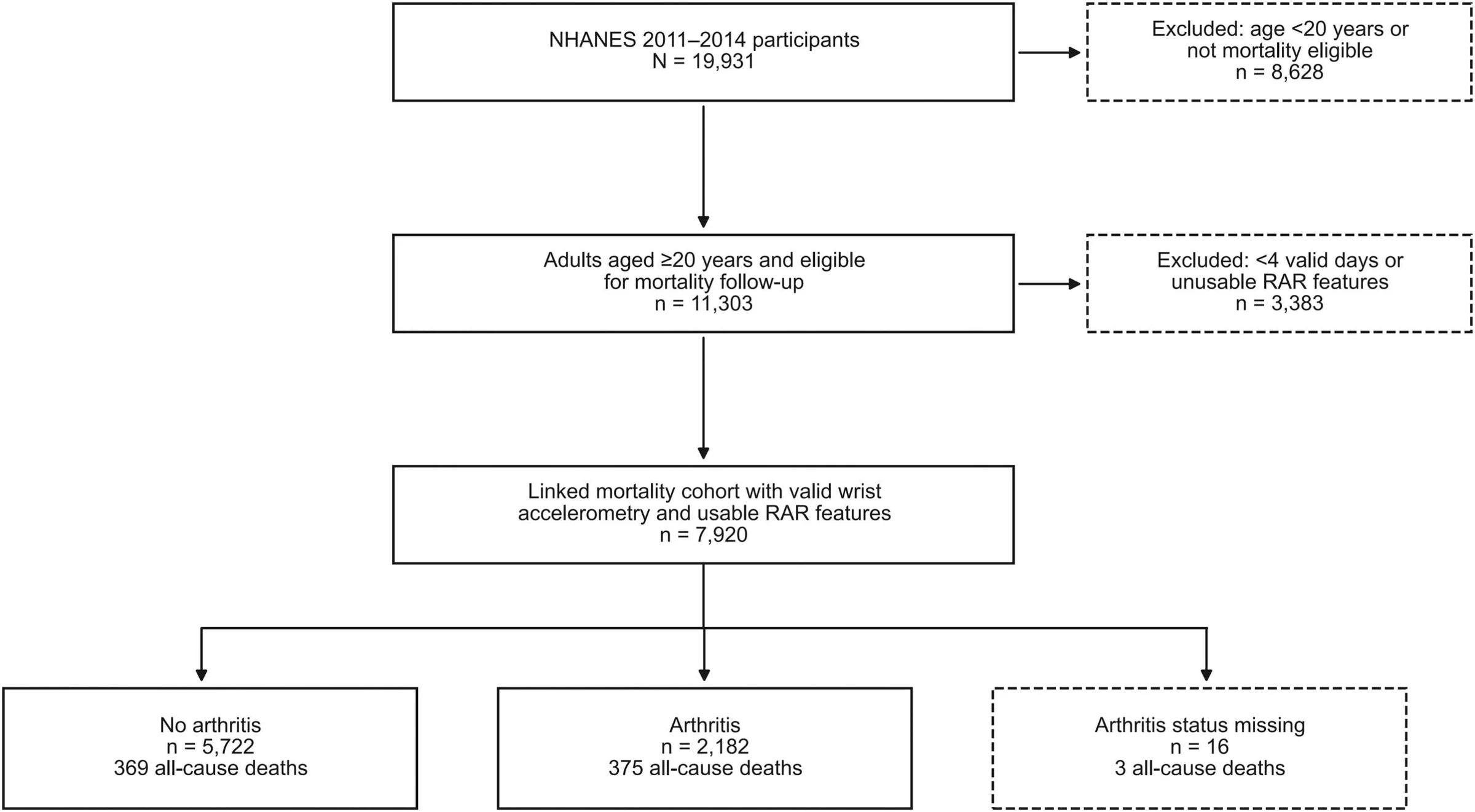
- Cohort study of 7,904 adults with and without arthritis, against adults without arthritis
- What changed:
- Adults with arthritis had more fragmented daily activity rhythms than those without arthritis
- The catch:
- Functional limitations accounted for most of the difference in rhythm fragmentation
Editor of record: Boris Djordjevic · AgingResearch.News
Among 7,920 adults in the National Health and Nutrition Examination Survey, researchers examined wrist activity recordings in an observational cohort study. Each participant had at least four valid days of recordings. Arthritis status was available for 7,904 participants, including 2,182 with arthritis.
Adults with arthritis had more fragmented rest-activity rhythms—more switching between rest and activity within a day—and lower activity during their most active 10 hours. A standard deviation describes how widely measurements vary. Accounting for functional limitations reduced the fragmentation difference to 0.005 standard deviations. Greater fragmentation was also associated with death from any cause after accounting for other measured factors. That link held both across the cohort and among participants with arthritis.
Why it matters
Wearable activity measurements may help arthritis researchers explore connections between everyday function, sleep health and survival.
Caveats
Poorer underlying health could have contributed to both fragmented rhythms and mortality despite adjustment. The findings do not establish whether changing these rhythms would change survival.



Comments
Be the first to comment.