Obesity with poor muscle health linked to worse knee arthritis
Obesity with poor muscle health was linked to 2.54 times the odds of developing knee arthritis with symptoms over six years compared with people with obesity alone.
Our read
Populations- Studied:
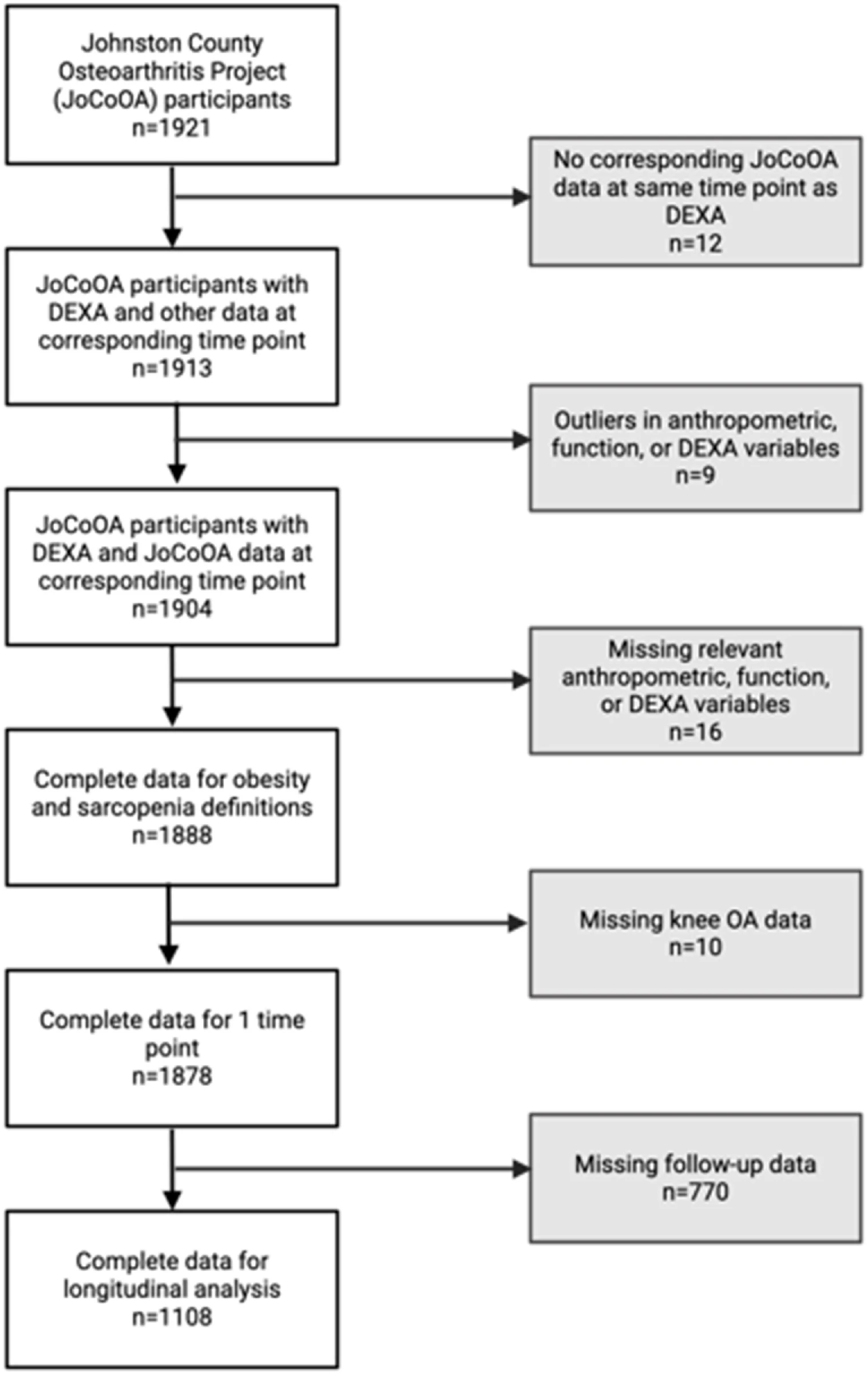
- Cohort study of 1,108 Johnston County Osteoarthritis Project participants, six-year follow-up
- What changed:
- Adults with obesity and poor muscle health had 2.54 times the odds of developing knee arthritis with symptoms versus obesity alone
- The catch:
- Analysis excluded people without complete baseline and follow-up data
- In the record:
- The 518th paper on sarcopenic obesity with results in people; 1,127 on record in all.
Editor of record: Boris Djordjevic · AgingResearch.News
The 1,108 adults in this community-based cohort study were 62 years old at baseline; one-third were male and one-third were Black. Participants in the Johnston County Osteoarthritis Project had six-year follow-up data.
Sarcopenic obesity meant obesity together with low muscle mass in the arms and legs and low grip strength or poor performance when standing from a chair. Researchers assessed knee osteoarthritis using X-rays and symptoms. Compared with obesity alone, sarcopenic obesity was associated with 2.54 times the odds of developing knee osteoarthritis with symptoms after statistical adjustment. It was also linked to 3.20 times the odds of progression on X-rays and 2.11 times the odds of worsening X-ray severity and symptoms.
Why it matters
For knee osteoarthritis, a joint disease common with aging, the authors suggest weight-loss interventions that also limit muscle loss.
Caveats
Other health differences between participants with and without poor muscle health could have contributed to their knee outcomes despite statistical adjustment. The cohort’s baseline age was 62, so the findings may not extend to much younger adults.
- Obesity
- Sarcopenic obesity
- Grip strength
- Knee osteoarthritis
- Incident symptomatic knee osteoarthritis
- Humans
The paper
Osteoarthritis and Cartilage Open, Nov 2026, CC BY
Comments
Be the first to comment.