Raising activity had no clear link to fewer cardiovascular events
In 4,401 matched pairs, increased versus sustained low activity had a hazard ratio—a comparison of event rates over time—of 1.19.
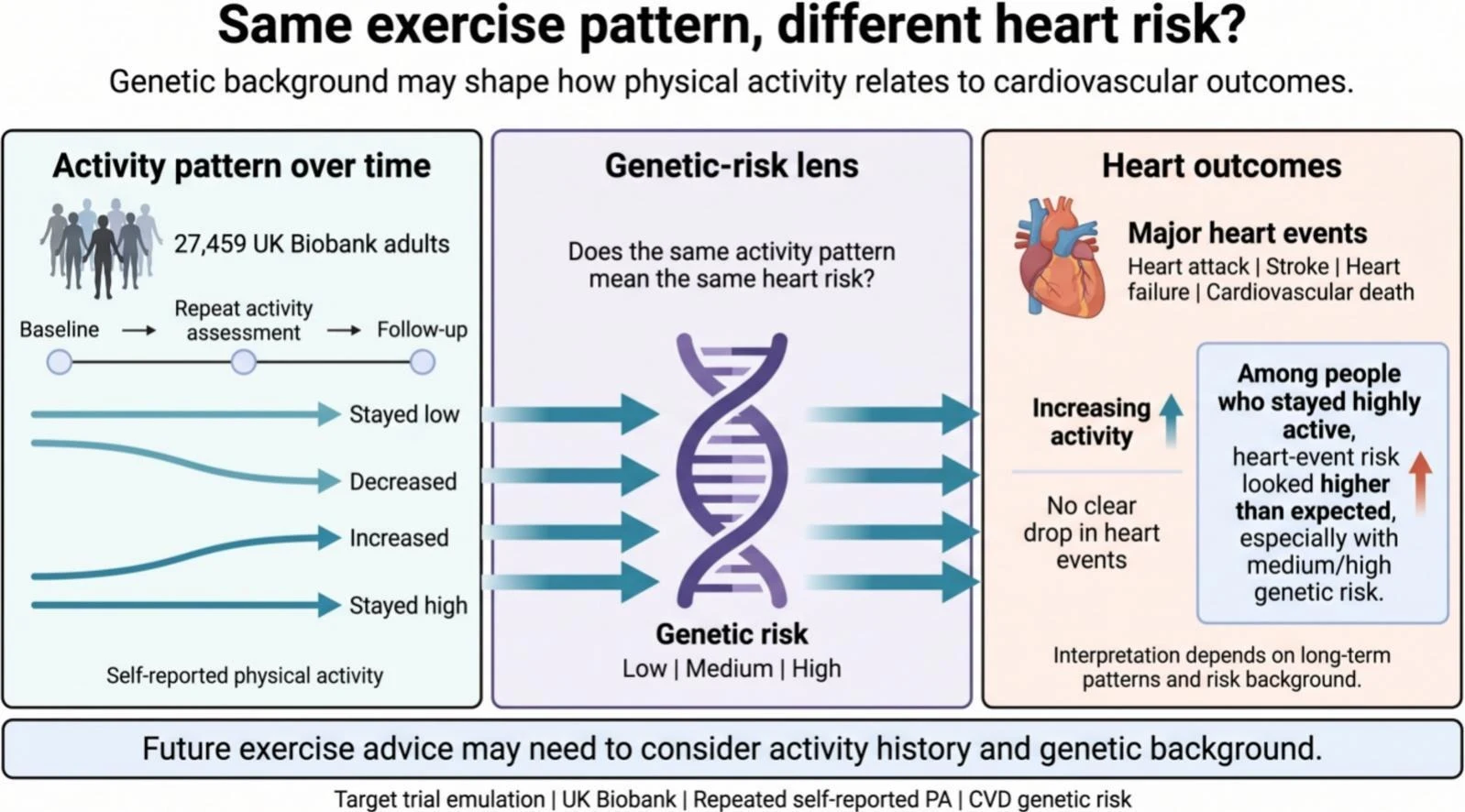
27,459 participants
Limit: People without repeated activity assessments were left out
Edited by Boris Djordjevic · AgingResearch.News
An observational study examined 27,459 UK Biobank participants with repeated assessments of physical activity. Researchers used a framework designed to mimic a trial, rather than randomly assigning activity levels. They matched 4,401 pairs of participants to compare increased activity with sustained low activity.
Increasing activity was not clearly associated with fewer major cardiovascular events—serious events affecting the heart or blood vessels. The range of likely values included no difference. In analyses of the full cohort, sustained high activity was associated with higher cardiovascular event risk. This unexpected signal was more apparent among participants with intermediate or high genetic susceptibility to cardiovascular disease. The analyses by genetic risk were exploratory.
Why it matters
Cardiovascular prevention matters for health in later life. The authors suggest that genetic risk assessment may help evaluate cardiovascular risk in highly active people.
Caveats
This observational analysis cannot establish that activity patterns caused the outcomes or that increasing activity has no benefit. The findings came from UK Biobank participants with repeated activity assessments.
Where the evidence stands
Physical activity
- 997 independent labs in 89 countries
- 441 findings against
- Funders: National Institutes of Health and others
- 182 of 4,029 findings with company ties


Comments
Be the first to comment.