Adolescent obesity linked to higher long-term death risk
Adolescents with obesity had a higher death rate from all causes than those without obesity, with a hazard ratio—a measure of relative rates—of 1.82.
Our read
Populations- Studied:
- Cohort study of 16,758 adolescents, 1994–1995 through 2021, against adolescents without obesity
- What changed:
- Death from any cause was higher among adolescents with obesity than those without obesity (hazard ratio 1.82)
- The catch:
- Movement behaviors were self-reported by adolescents
Editor of record: Boris Djordjevic · AgingResearch.News
The 16,758 adolescents in the Add Health study had an average age of 16 at enrollment in 1994–1995. This prospective population-based cohort study tracked deaths through 2021. There were 249 deaths, including 49 from cardiovascular disease, which affects the heart and blood vessels. Adolescents reported their adherence to daily movement recommendations.
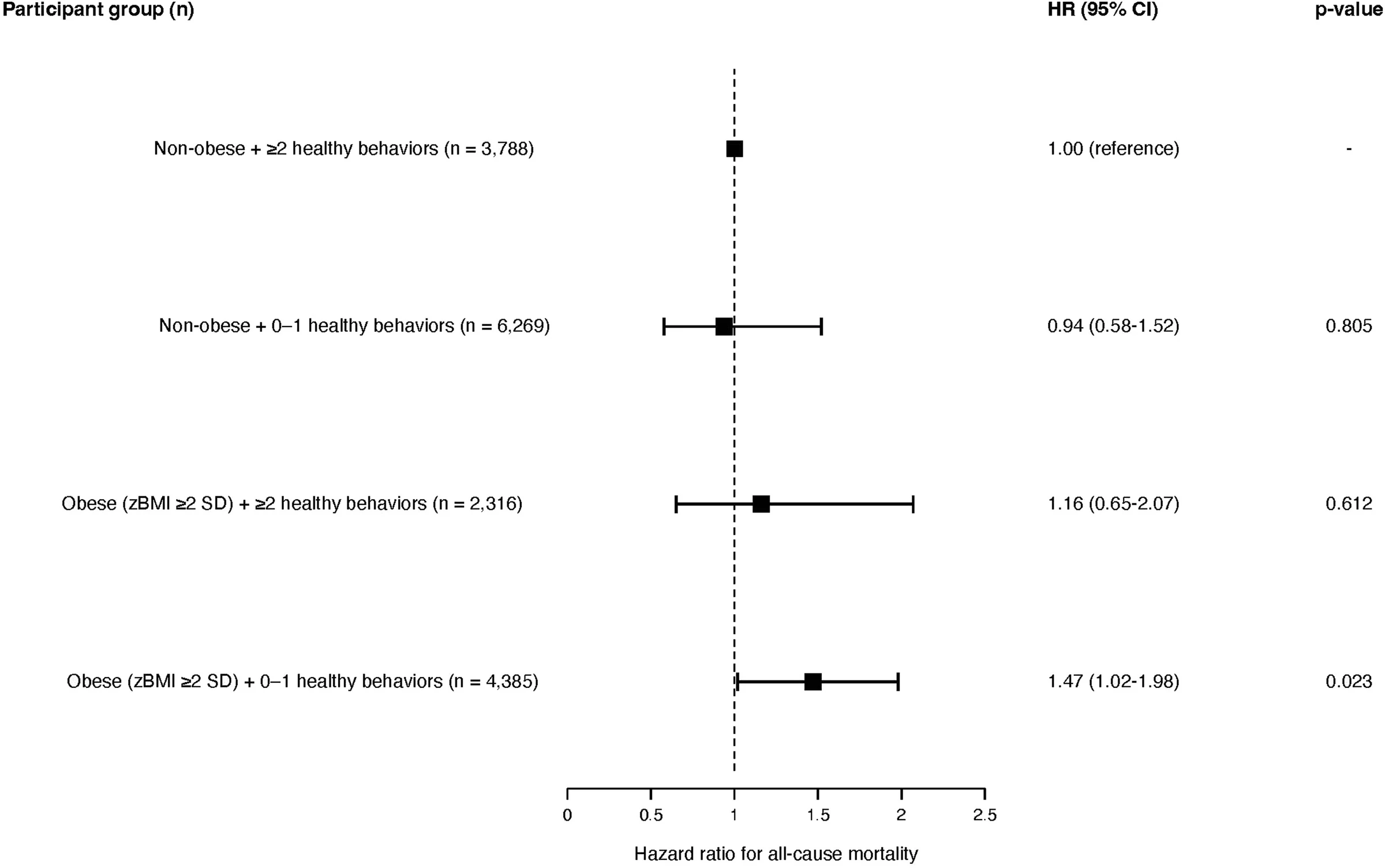
Obesity in adolescence was associated with higher mortality from all causes and cardiovascular disease. Compared with adolescents without obesity who met at least two movement recommendations, adolescents with obesity who met zero or one had higher mortality from all causes. Those with obesity who met at least two recommendations did not show a statistically clear increase; the range of likely values included no difference. The authors suggested that meeting multiple movement recommendations may lessen the excess mortality associated with adolescent obesity.
Why it matters
Following adolescents into adulthood helped address how early-life obesity relates to longevity, rather than only to health during the teenage years.
Caveats
Adolescents self-reported movement behaviors, and those who met more recommendations may also have differed in other ways that affected mortality. The cohort does not address obesity that first develops in adulthood.
The paper
Universidad Pública de Navarra (UPNA); Universitat de València
The Journal of Adolescent Health, Nov 27, 2026, Open access, CC BY


Comments
Be the first to comment.