DNA marks are more variable in older rhesus macaque brains
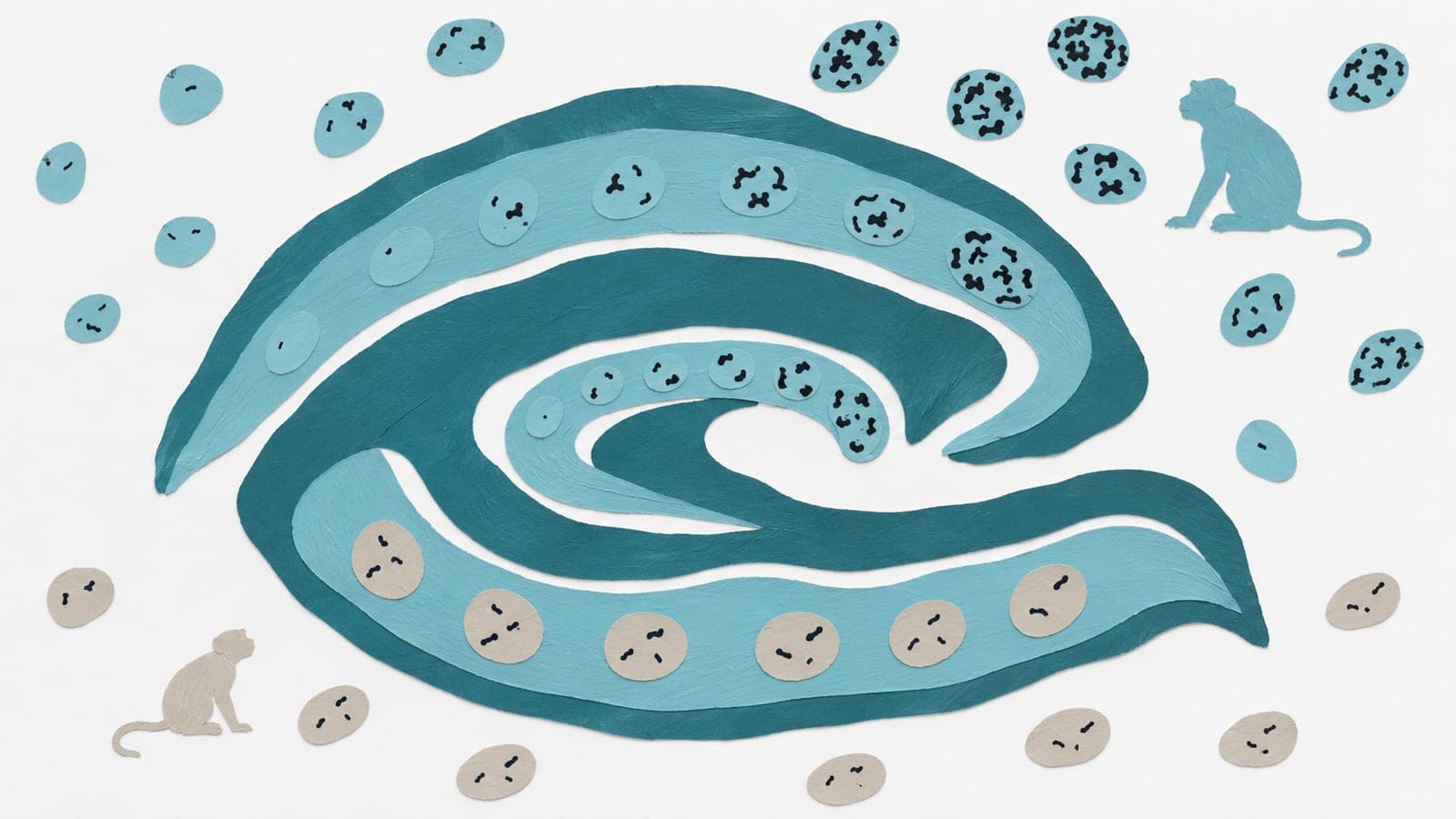
An observational analysis of 86 hippocampus samples spanning about 3–35 years linked older age to greater variation in chemical marks on DNA.
Our read
Mechanisms- Studied:
- Cross-sectional study of rhesus macaque hippocampus samples
- What changed:
- DNA methylation variability increased with age in rhesus macaque hippocampus samples
- The catch:
- Age differences across samples do not measure how individual brains change over time
- Why it’s aging research:
- It looks at how biology varies with age or lifespan.
Editor of record: Boris Djordjevic · AgingResearch.News
Rhesus macaque hippocampus samples spanning about 3–35 years of age were examined in an observational study of DNA methylation, chemical marks that help regulate gene activity. The researchers analyzed 86 samples: 56 female and 30 male. The hippocampus is a brain region involved in memory.
Average methylation at individual DNA sites changed little with age, but variability increased widely. Across broader stretches of DNA, the team identified 5,163 regions with age-associated methylation patterns. Some patterns moved in one direction; others followed more complex paths, with midlife shifts centered around 12.3 and 13.2 years. Analysis of matched gene-activity data identified candidate nearby DNA regions where age-associated methylation may be linked to changes in gene activity. Across genes, higher average methylation was more often associated with lower activity than with higher activity.
Why it matters
The authors interpreted the growing variability as consistent with less reliable control of gene activity during brain aging.
Caveats
The associations between methylation and gene activity did not show whether the DNA marks caused the activity changes. The findings concern macaque hippocampus samples, not human brains.
Where the evidence stands
DNA methylation
- 198 independent labs in 39 countries
- 18 findings against
- Funders: National Institutes of Health and others
- 42 of 400 findings with company ties
Epigenetic regulation of gene expression
- 47 independent labs in 18 countries
- 1 finding against
- Funders: National Institutes of Health and others
- 8 of 58 findings with company ties
Comments
Be the first to comment.