Chemical mixture linked to faster biological aging in adults
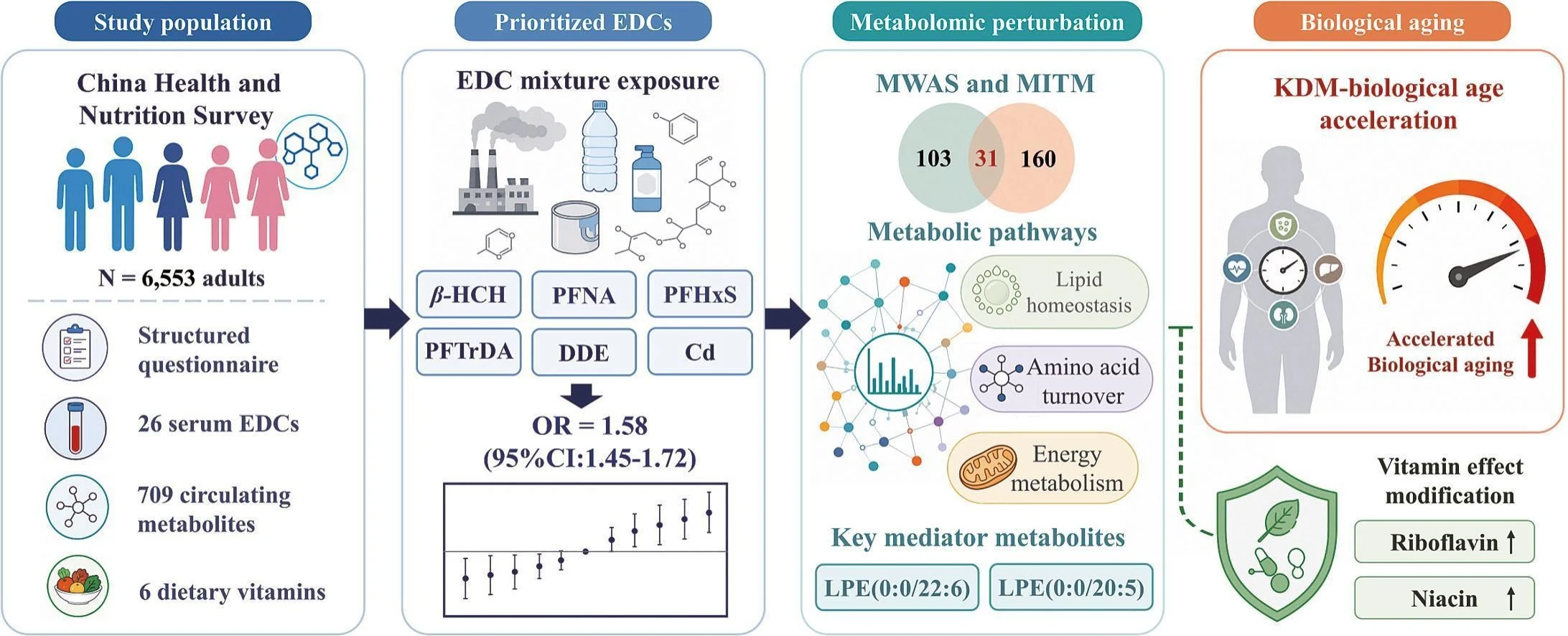
In 6,553 adults, combined exposure to six chemicals was linked to biological age acceleration, with an odds ratio of 1.58.
Our read
Populations- Studied:
- Cross-sectional study of 6,553 adults from China Health and Nutrition Survey (Dose-response)
- What changed:
- Higher combined chemical exposure was linked to higher odds of faster biological aging (odds ratio 1.58)
- The catch:
- Biological aging could precede higher measured chemical exposure, rather than result from it
Editor of record: Boris Djordjevic · AgingResearch.News
The 6,553 adults from the China Health and Nutrition Survey were studied in a cross-sectional analysis of chemical exposure and biological aging. Researchers measured 26 hormone-disrupting chemicals and 709 metabolites, small molecules involved in the body’s chemical processes. They also assessed intake of six dietary vitamins and used a validated method to estimate biological age, which reflects the body’s condition rather than simply years lived.
Analyses identified six chemicals whose combined exposure was associated with higher odds of biological age acceleration. The association grew stronger as combined exposure rose. It was weaker among participants with higher intakes of riboflavin or niacin, two B vitamins.
Why it matters
For research on aging-related chronic disease, the findings support examining exposure to chemical mixtures rather than one contaminant at a time.
Caveats
The one-time measurements could not show whether chemical exposure preceded biological age acceleration. People with higher B vitamin intake may also have differed in other dietary or health factors.
Where the evidence stands
Riboflavin
- 29 independent labs in 10 countries
- 5 findings against
- 33 trials, 21 with no results posted
- Funders: National Natural Science Foundation of China and others
- 2 of 44 findings with company ties
- 5 of 33 trials sponsored by its developers
Niacin
- 42 independent labs in 16 countries
- 1 finding against
- 99 trials, 36 with no results posted
- Funders: National Natural Science Foundation of China and others
- 12 of 123 findings with company ties
- 6 of 99 trials sponsored by its developers


Comments
Be the first to comment.