Posttraumatic stress disorder linked to older biological age
Greater symptom severity was linked to up to about two years of advanced age on one DNA-based measure among 21,999 US veterans.
Our read
Populations- Studied:
- Cross-sectional study of 21,999 US military veterans with PTSD severity data
- What changed:
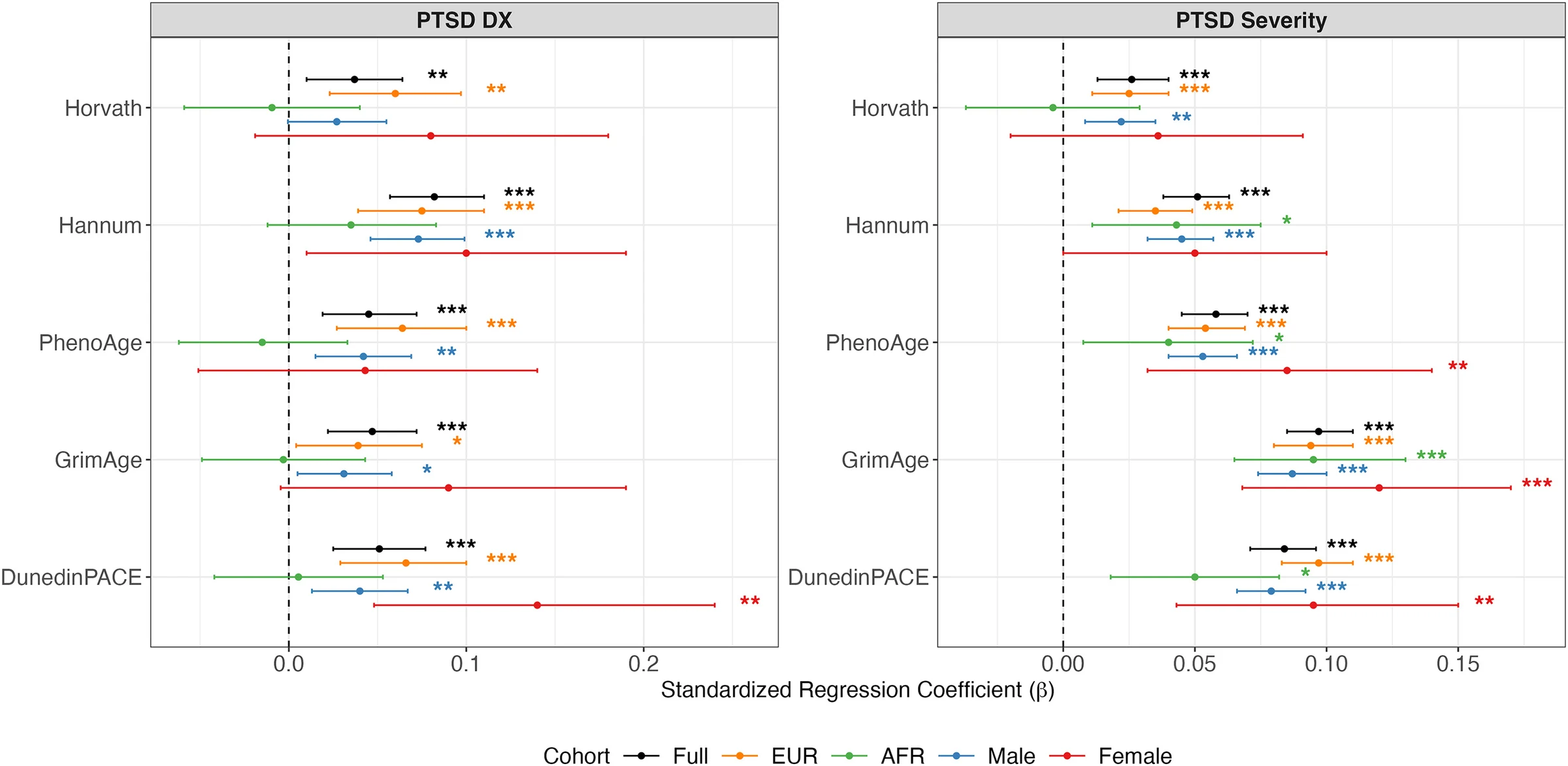
- Veterans with the highest PTSD symptom severity had epigenetic ages 23.7 months older than those with the lowest severity
- The catch:
- PTSD severity was measured concurrently with epigenetic age, so the direction could be reversed
- In the record:
- The 53rd paper on posttraumatic stress disorder with results in people; 98 on record in all.
Editor of record: Boris Djordjevic · AgingResearch.News
US military veterans—43,155 people, 92.96% male—were studied in an observational analysis of posttraumatic stress disorder (PTSD) and biological age. Researchers used health records, blood DNA data and symptom reports from 21,999 participants. PTSD diagnoses predated blood collection by at least one year.
Diagnosis and symptom severity were associated with more advanced aging across five measures after accounting for chronological age. These measures used DNA methylation, chemical marks on DNA. Symptom severity showed the most consistent associations. Depending on the measure, it was linked to up to about seven months to about two years of advanced age, or an aging pace up to 16 days faster per year. Links with three measures were stronger in younger than older veterans. Associations were similar in males and females.
Why it matters
For the large population of veterans with posttraumatic stress disorder, even small differences in biological aging may have personal and healthcare-system significance, the authors argued.
Caveats
DNA-based aging estimates were the outcome, not illness or lifespan; diagnoses preceding blood sampling do not reveal when the age differences began. Most participants were male US veterans, and fewer associations reached statistical significance among participants of African ancestry.
Where the evidence stands
DNA methylation
- 206 independent labs in 39 countries
- 20 findings against
- Funders: National Institutes of Health and others
- 49 of 421 findings with company ties
From the paper
- Participants
The initial MVP DNAm dataset contained data from 48,298 individuals.
Methods, Genotyping and DNAm Ascertainment and Statistical Processing
- Limitation
Although our definition of PTSD diagnosis and duration required that the PTSD diagnosis be present at least one year prior to the blood draw date for obtaining DNA, there is still no way to demonstrate causality, despite our efforts at temporal separation of variables.
Quoted word for word from the full text on medRxiv.
The paper
PTSD is Associated with Advanced Epigenetic Age in 43,155 US Military Veterans
Boston University
Biological Psychiatry, Nov 7, 2026, Open access, accepted manuscript

Comments
Be the first to comment.