Higher essential amino acid intake linked to lower risk of death
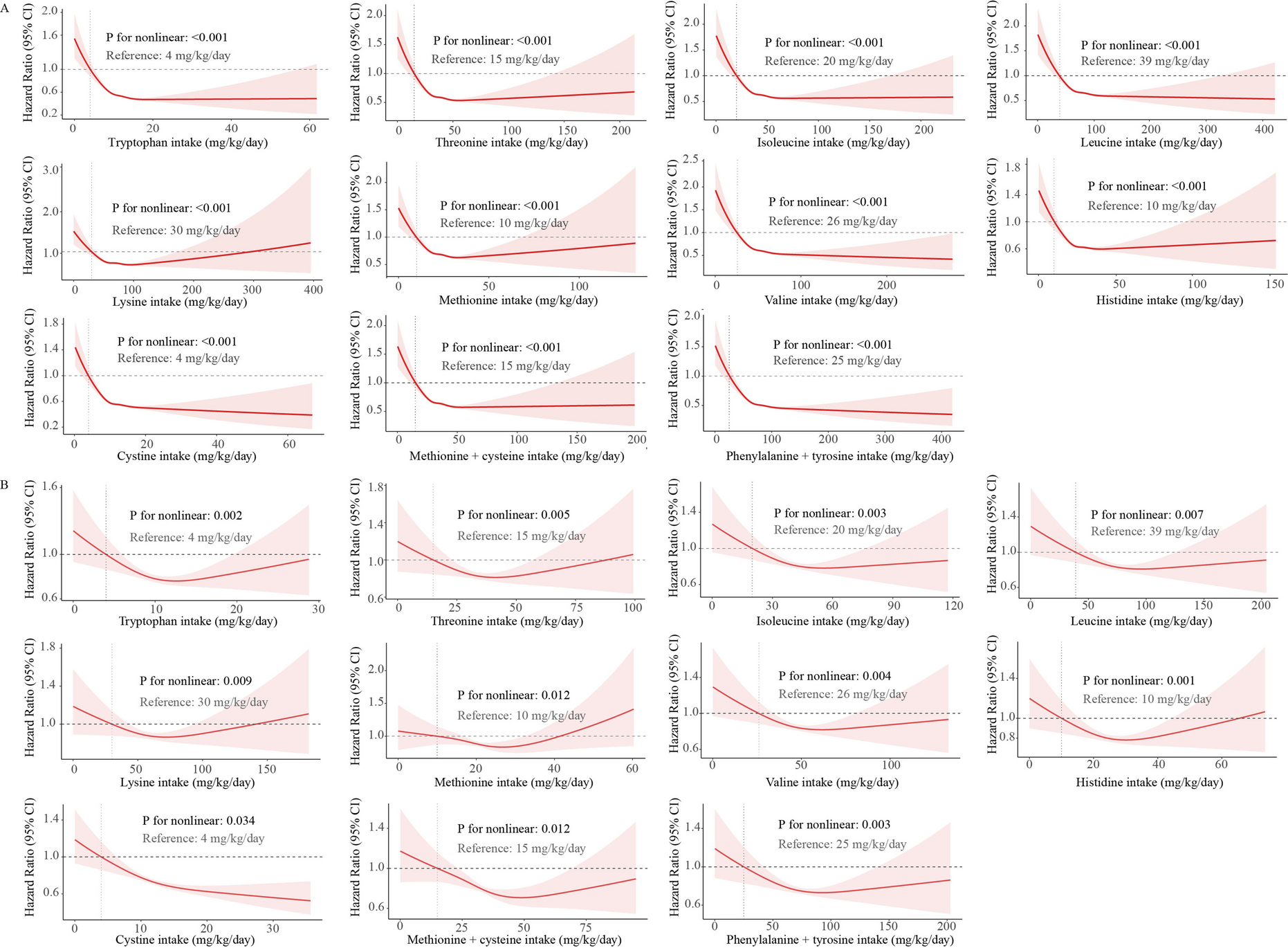
Moderate versus low intake was linked to lower relative death risk, with a hazard ratio of 0.87, where 1 means no difference.
Our read
Populations- Studied:
- Cohort study of 126,336 people
Editor of record: Boris Djordjevic · AgingResearch.News
Among 126,336 UK Biobank participants and 35,084 National Health and Nutrition Examination Survey participants, researchers analyzed dietary patterns in two prospective cohort studies. They identified low, moderate, high and very-high intake profiles for essential amino acids—protein building blocks the body must obtain from food—and pooled the cohorts’ results.
Over a median follow-up of 14.2 years, 14,518 deaths were recorded. Compared with the low-intake profile, all three higher-intake profiles were associated with lower risks of death overall. Similar associations appeared for deaths from cardiovascular disease and cancer. An exploratory analysis within the UK Biobank suggested that the association was more pronounced among adults aged 65 or older.
Why it matters
Nutrition in older adulthood raises questions about which dietary patterns support long-term survival. The authors suggest that adequate essential amino acid intake belongs within a healthy diet and may inform future public-health nutrition advice.
Caveats
People with different amino acid intake patterns may also have differed in other eating habits or health factors linked to survival, leaving open whether amino acid intake itself accounted for the associations.
Comments
Be the first to comment.