Oral damage linked to loss of independence in adults with arthritis
Lack of recent dental care and complete tooth loss corresponded to 75 and 93 fewer days alive and independent over five years versus recent care.
Our read
Populations- Studied:
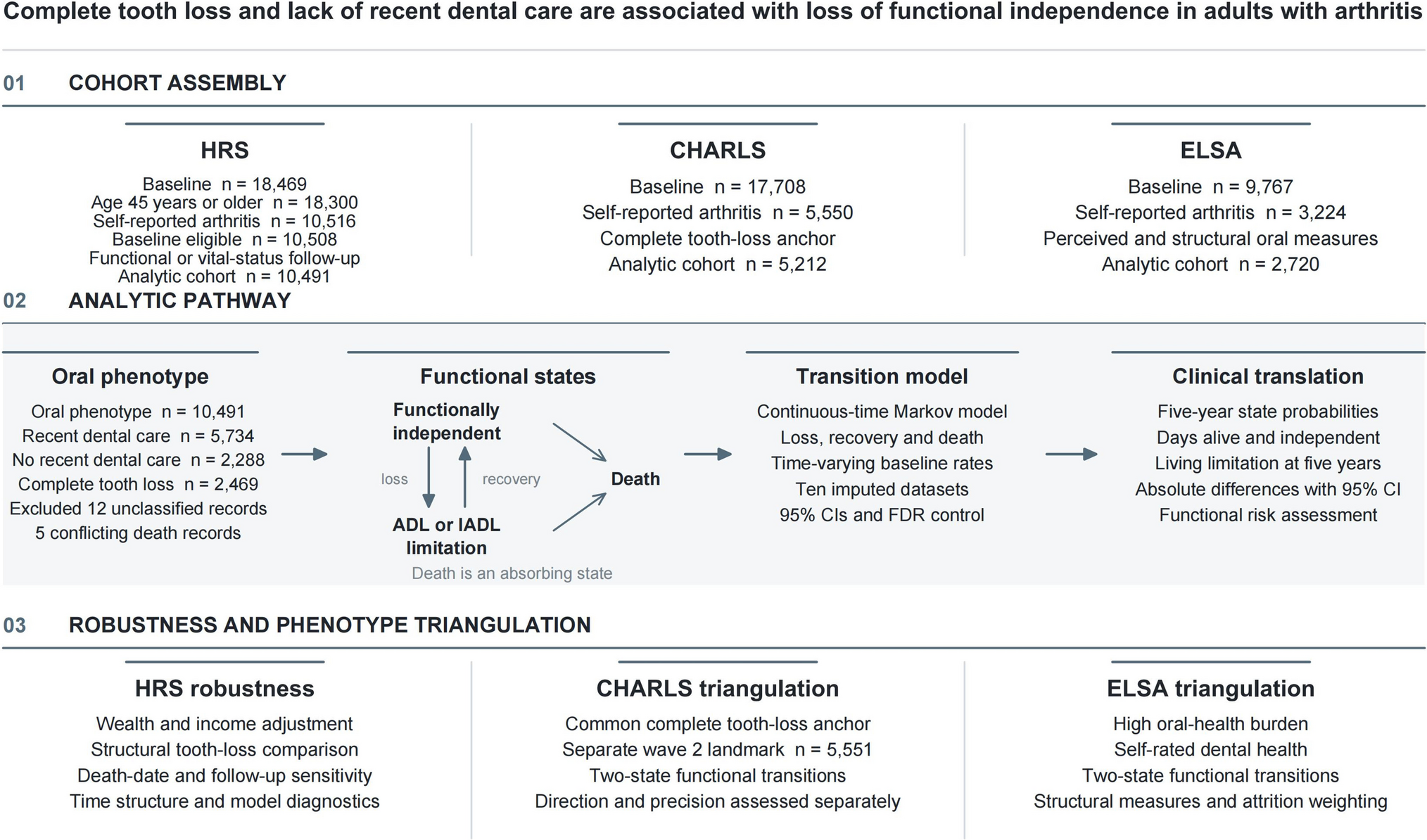
- Cohort study of 10,491 adults with self-reported arthritis
- What changed:
- Complete tooth loss corresponded to 93 fewer days alive and independent over five years versus people with teeth receiving recent care
- The catch:
- Wealth and income could partly explain the association
Editor of record: Boris Djordjevic · AgingResearch.News
The 10,491 adults aged at least 45 with self-reported arthritis in the Health and Retirement Study were studied in a cohort analysis of oral health and functional independence. Researchers compared people who had teeth and recent dental care with those who had teeth but no recent care, and those with complete tooth loss. Models tracked loss and recovery of independence while accounting for death.
Both lack of recent care and complete tooth loss were associated with faster loss of independence. Complete tooth loss was also associated with slower recovery. Model-based estimates corresponded to 75 and 93 fewer days alive and independent over five years, respectively, compared with people with teeth receiving recent care.
Why it matters
For adults aging with arthritis, the authors suggest that brief oral assessment may support dental evaluation, nutritional review and closer follow-up of daily functioning.
Caveats
Differences in economic circumstances could partly account for the links, which weakened after adjustment for wealth and income. The findings concern adults aged at least 45 with self-reported arthritis, rather than younger adults or people without arthritis.


Comments
Be the first to comment.