No clear age gap after surgery for wear-related neck cord compression
At 12 months, 42.3% of matched patients aged 75 or older reached a meaningful neurological improvement threshold, versus 46.2% of younger patients.
Our read
Interventions- Studied:
- Cohort study of surgical patients with degenerative cervical myelopathy, 12 months
- What changed:
- Meaningful neurological improvement did not differ: 42.3% of matched older surgical patients versus 46.2% of younger patients
- The catch:
- Only patients selected for surgery were included, excluding other older adults with this condition
Editor of record: Boris Djordjevic · AgingResearch.News
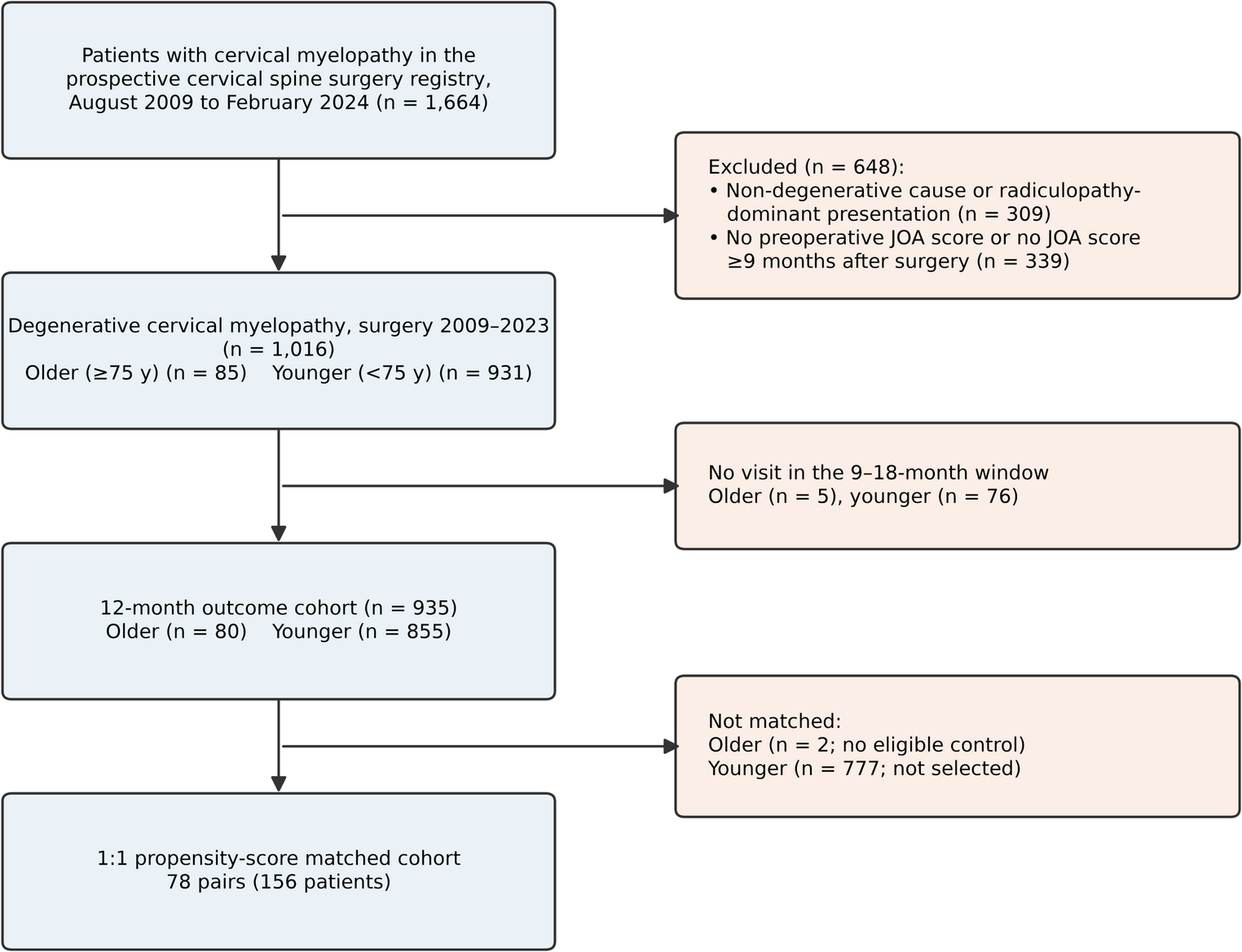
Among 1,016 patients who underwent surgery for degenerative cervical myelopathy—spinal cord compression from wear-related changes in the neck—85 were aged 75 or older. This single-center, propensity score-matched analysis used registry records from 2009–2023. It matched 78 older patients to 78 younger patients with similar preoperative characteristics and the same surgical approach.
At 12 months, 42.3% of matched older patients and 46.2% of younger patients reached a threshold for meaningful neurological improvement that accounted for their initial disease severity. The difference was not statistically significant. This did not establish that the age groups had equivalent outcomes. Across the registry, recorded complications around surgery affected 7.1% of older patients and 11.0% of younger patients.
Why it matters
For older adults with this spinal cord condition, the authors suggest that decisions about surgery should consider other illnesses and medical and rehabilitation needs rather than age alone.
Caveats
The comparison involved patients selected for surgery, so it does not show how all adults aged 75 or older with this condition would fare. Matching could not rule out unmeasured differences between the age groups.


Comments
Be the first to comment.