Diabetes drugs linked to lower dementia risk after minor stroke
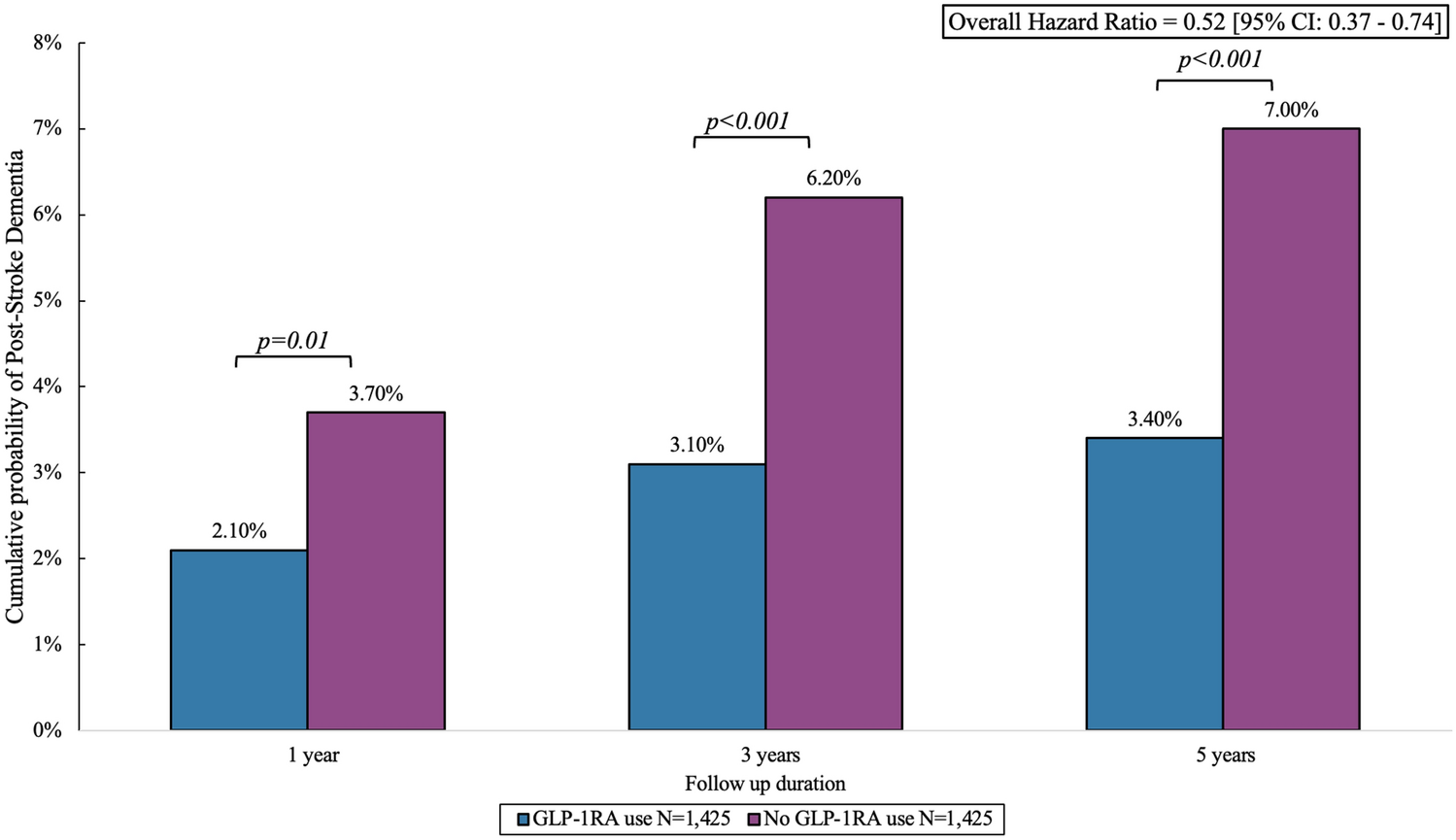
Over five years, dementia occurred in 3.4% of drug users versus 7.0% of nonusers in a matched comparison of people with minor strokes.
Our read
Populations- Studied:
- Study in people
- Why it’s aging research:
- It studies an intervention with evidence of extending healthy life.
Editor of record: Boris Djordjevic · AgingResearch.News
Adults with minor, non-disabling ischemic strokes—strokes caused by blocked blood flow—were compared in a retrospective observational cohort study using US health records from 2016–2025. Researchers matched 1,425 drug users with 1,425 nonusers on 75 baseline characteristics. Their mean age was 60.7 years, and 92.7% had diabetes.
The drugs were glucagon-like peptide-1 receptor agonists, a class of diabetes medicines. Use meant a prescription before or within three months of stroke diagnosis. Over five years, use was associated with a 48% lower hazard of dementia, meaning a lower rate of developing it during follow-up. Other cognitive complaints occurred in 17.2% of users versus 25.6% of nonusers. Bleeding inside the skull did not differ significantly between groups.
Why it matters
Dementia after minor stroke has no guideline-recommended therapies aimed at cognitive outcomes. The authors called for prospective trials to test whether these drugs could help prevent this age-related condition.
Caveats
Differences in patients’ health or care not captured by the matching could have contributed to the dementia link. The cohort mostly had diabetes and excluded people with prior cognitive impairment, dementia, brain bleeding, mood disorders or anxiety disorders.
The paper
Journal of Neurology, Nov 7, 2026
Comments
Be the first to comment.