Declining thinking skills linked to higher hip fracture risk
Moderate and rapid cognitive decline were linked to higher fracture risk than high, stable cognition, with hazard ratios—relative risk measures—of 1.39 and 1.86.
Our read
Populations- Studied:
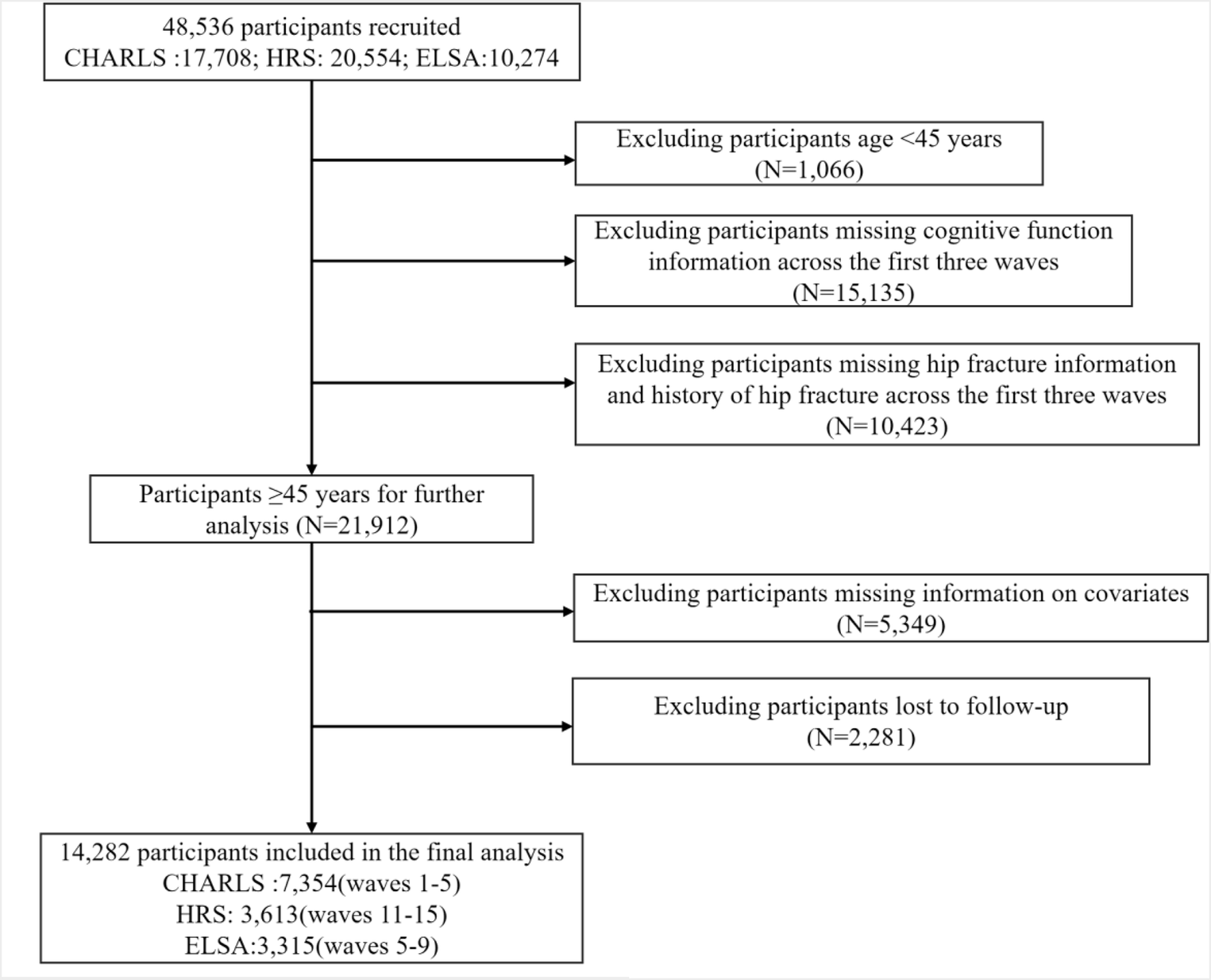
- Cohort study of 14,282 adults aged 45 and older, against people with high, stable cognition (Multicenter)
- What changed:
- Hip fracture risk was higher with rapid cognitive decline than with high, stable cognition (hazard ratio 1.86)
- The catch:
- Health differences between cognitive groups could partly explain their differing hip fracture risks
Editor of record: Boris Djordjevic · AgingResearch.News
Adults aged 45 and older—14,282 people in China, the United States and the United Kingdom—were included in a multinational prospective cohort study. Researchers used the first three rounds of data from each of three nationally representative cohorts to identify patterns of cognitive change. They assessed hip fractures during the next two rounds.
Participants fell into three groups: high, stable cognitive abilities, moderate decline or rapid decline. After adjustment for other factors, both declining groups had higher subsequent hip fracture risk than the high-stable group. The association was strongest in the rapid-decline group. The links also held up in additional analyses that tested how sensitive the findings were to analytical choices.
Why it matters
The authors suggest that identifying and managing unfavorable cognitive changes early may contribute to hip fracture prevention in middle-aged and older adults.
Caveats
Other health differences between the cognitive groups could have contributed to their fracture risk. The findings concern adults aged 45 and older, not younger adults.
The paper
Osteoporosis International, Nov 13, 2026
Comments
Be the first to comment.