Muscle mass cutoffs linked to death risk in Japanese hospital patients
Arm and leg muscle mass, divided by height squared, had severe-reduction thresholds below 6.4 kilograms per square meter for men and 5.0 for women.
Our read
Biomarkers- Studied:
- Cohort study of 242,464 hospitalized Japanese adults, against patients with normal muscle mass (Independent replication)
- What changed:
- Death risk was higher with severe estimated muscle loss than normal muscle mass (hazard ratio 2.04)
- The catch:
- Muscle mass was estimated rather than directly measured, risking misclassification of severity
Editor of record: Boris Djordjevic · AgingResearch.News
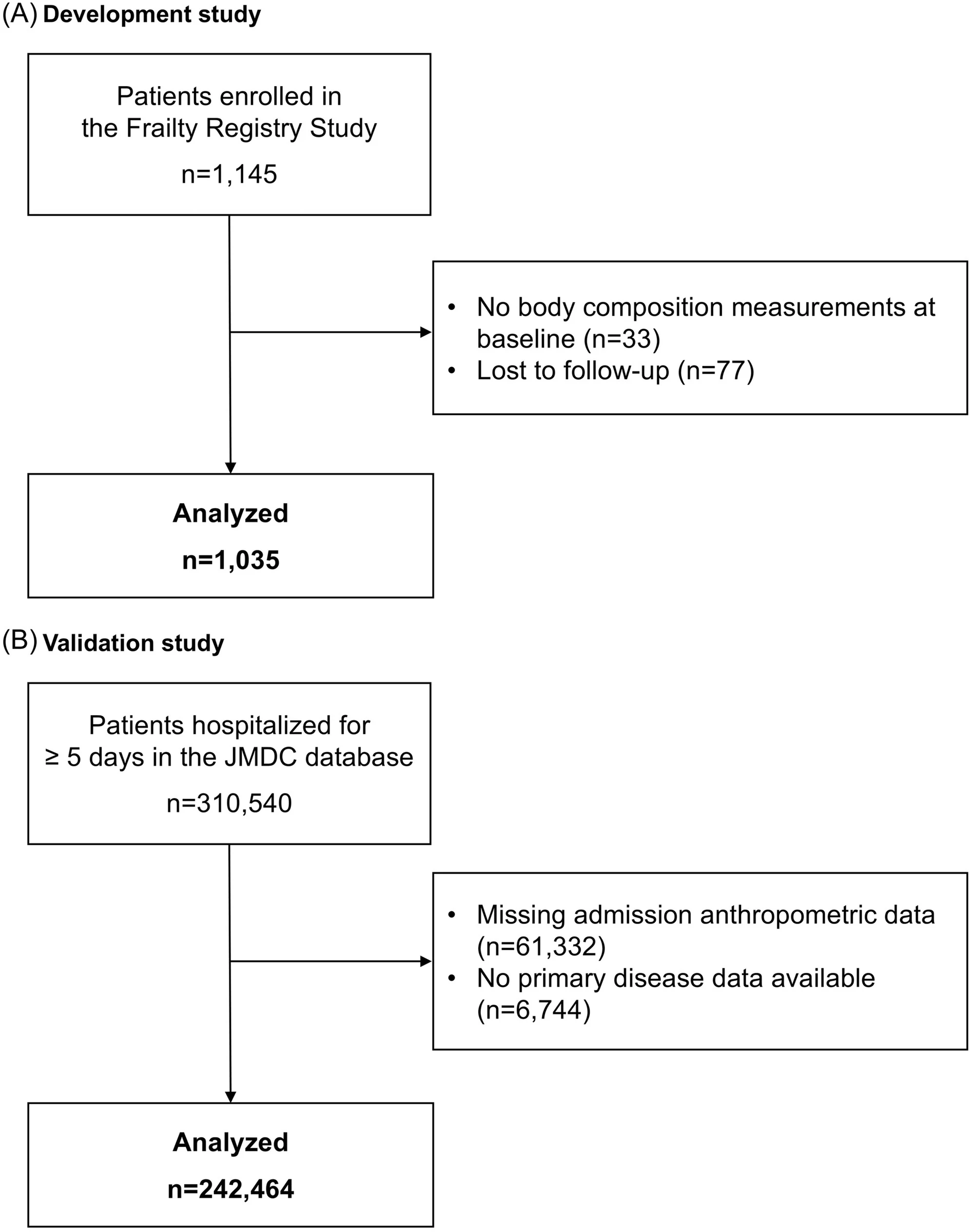
Older Japanese frailty-clinic outpatients—1,035 people with a mean age of 76.5 years—formed the development group in a two-phase study. Researchers used scans and electrical measurements to assess muscle mass. They selected severe-reduction thresholds using hospitalization within one year. A separate height-adjusted measure of mass excluding fat had thresholds below 16.0 kilograms per square meter in men and 13.4 in women.
The validation phase used insurance records for 242,464 adults aged 18–99 hospitalized for at least five days between January and March 2019. Follow-up ended in December 2019. Muscle measures were estimated from age, sex, height and weight. Severe reductions were associated with higher mortality after adjustment for age, sex, other illnesses and frailty. The authors said the cutoffs may help grade malnutrition severity and assess future risk.
Why it matters
For older adults assessed for frailty, malnutrition grading needs ways to distinguish moderate from severe muscle reduction. This work addresses how muscle measurements might support that distinction.
Caveats
The mortality analysis used estimated muscle measures, rather than scans or electrical measurements. The cutoffs were developed in older Japanese outpatients whose eligibility excluded dementia, cancer and end-stage kidney failure, among other conditions.
From the paper
- Participants
The development cohort included 1035 participants (mean age, 76.5 years).
- Follow-up
All deaths recorded during the 1-year follow-up occurred after hospitalization and were therefore already captured within the hospitalization outcome.
- Result
… with hazard ratios of 2.04 (95% confidence interval: 1.97–2.12), 1.95 (1.86–2.03), and 2.01 (1.94–2.09) for appendicular skeletal muscle mass index by dual-energy X-ray absorptiometry and bioelectrical impedance analysis and for fat-free mass index, respectively (all P < 0.001).
Quoted word for word from the full text on aspenjournals.onlinelibrary.wiley.com.
The paper
Hospital National Center for Geriatrics and Gerontology Obu Aichi Japan; National Center for Geriatrics and Gerontology Obu Aichi Japan
JPEN Journal of Parenteral and Enteral Nutrition, Nov 13, 2026, Open access, CC BY-NC
Comments
Be the first to comment.