Agent Orange exposure linked to Parkinson disease in US veterans
Compared with unexposed veterans, those reporting exposure had a higher relative risk of Parkinson disease diagnosis, with a hazard ratio of 1.44.
Our read
Populations- Studied:
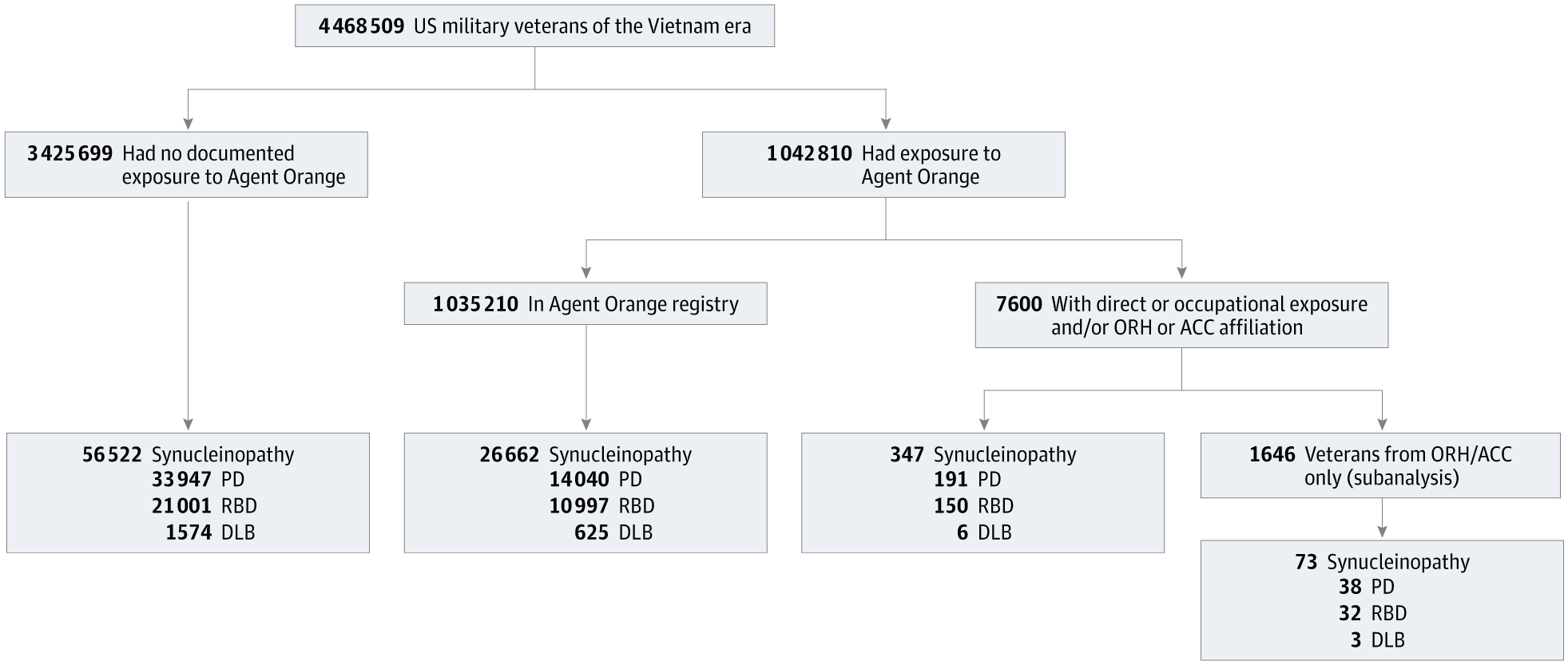
- Cohort study of 4,468,509 Vietnam War Era US veterans, mean 12.5 years, against unexposed veterans
- What changed:
- Parkinson disease diagnosis risk was higher among exposed veterans than unexposed veterans (hazard ratio 1.44)
- The catch:
- Recall errors in self-reported exposure could place veterans in the wrong exposure group
- In the record:
- One of 6 papers on agent orange on record: 1 with results in people.
Editor of record: Boris Djordjevic · AgingResearch.News
Among 4,468,509 US veterans who served during the Vietnam War Era, an electronic health record–based cohort study linked self-reported Agent Orange exposure to later Parkinson disease diagnoses. Participants averaged 60.6 years old, 98% were men, and follow-up averaged 12.5 years. Agent Orange was a defoliant used during the Vietnam War.
Compared with unexposed veterans, exposed veterans had a Parkinson disease hazard ratio of 1.44, a measure of relative risk over time. Exposure was also linked to rapid eye movement sleep behavior disorder, in which people act out dreams, and dementia with Lewy bodies, which affects thinking and movement. Links with Parkinson disease and the sleep disorder were stronger among veterans reporting direct or occupational exposure. Analyses accounted for age, traumatic brain injury, frailty and the possibility of dying before diagnosis.
Why it matters
Parkinson disease and related conditions affect health later in life. The authors said identifying this possible environmental risk factor had implications for global policy.
Caveats
Exposure was self-reported, so recall errors could have placed veterans in the wrong exposure group. Participants served during the Vietnam War Era and were 98% men, limiting how well the findings apply to women and other populations.
Where the evidence stands
Agent orange
- 1 lab in 1 country
- Agent orange
- Parkinson's disease
- Dementia with Lewy bodies
- Traumatic brain injury
- Synucleinopathies
- Humans
The paper
Agent Orange Exposure and Diagnosis of Parkinson Disease and Related Disorders Among US Veterans
Pathology and Laboratory Services; Neurology and Research Service
JAMA Neurology, Nov 16, 2026

Comments
Be the first to comment.