BMC Medicine
Severe infection linked to long-term heart rhythm problems
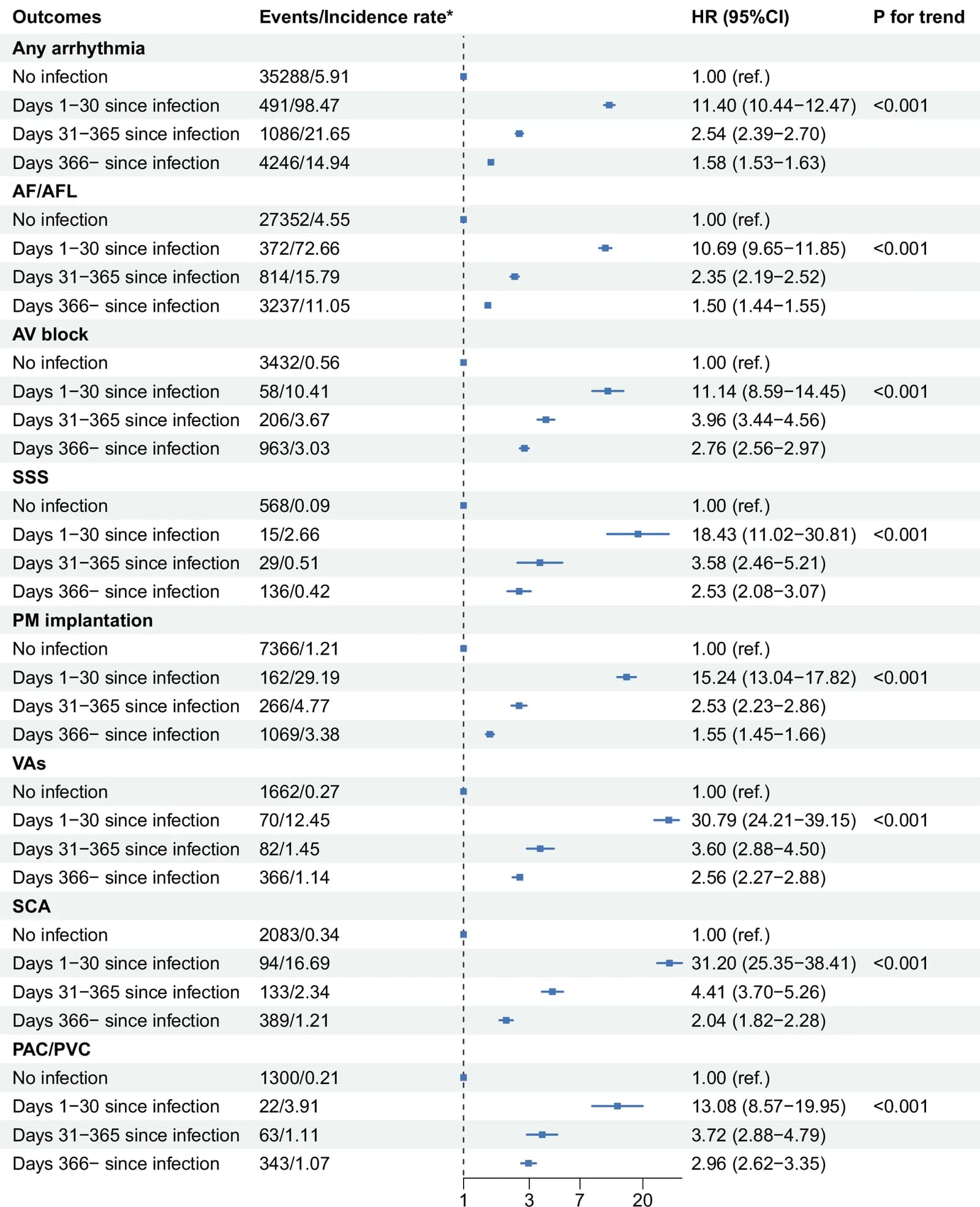
The adjusted hazard ratio for new heart rhythm disorders was 1.85 after hospital-treated infection compared with no infection, over 14.2 years’ median follow-up.The adjusted hazard ratio for new heart rhythm disorders was 1.85 after hospital-treated infection compared with no infection, over 14.2 years’ median follow-up.
Cohort · 465,374 peoplePopulations
Who was studied465,374 UK Biobank participants, against people without severe infection
What changedNew heart rhythm problems were more likely ≥366 days after severe infection than without infection (hazard ratio 1.58)
The catchSubclinical cardiovascular disease could increase both infection susceptibility and arrhythmia risk