AI-guided monitoring detected modestly more rhythm abnormalities
Within 90 days, abnormal rhythms or specified related findings were detected in 0.74% of the AI-guided group versus 0.48% of controls.
Our read
Interventions- Studied:
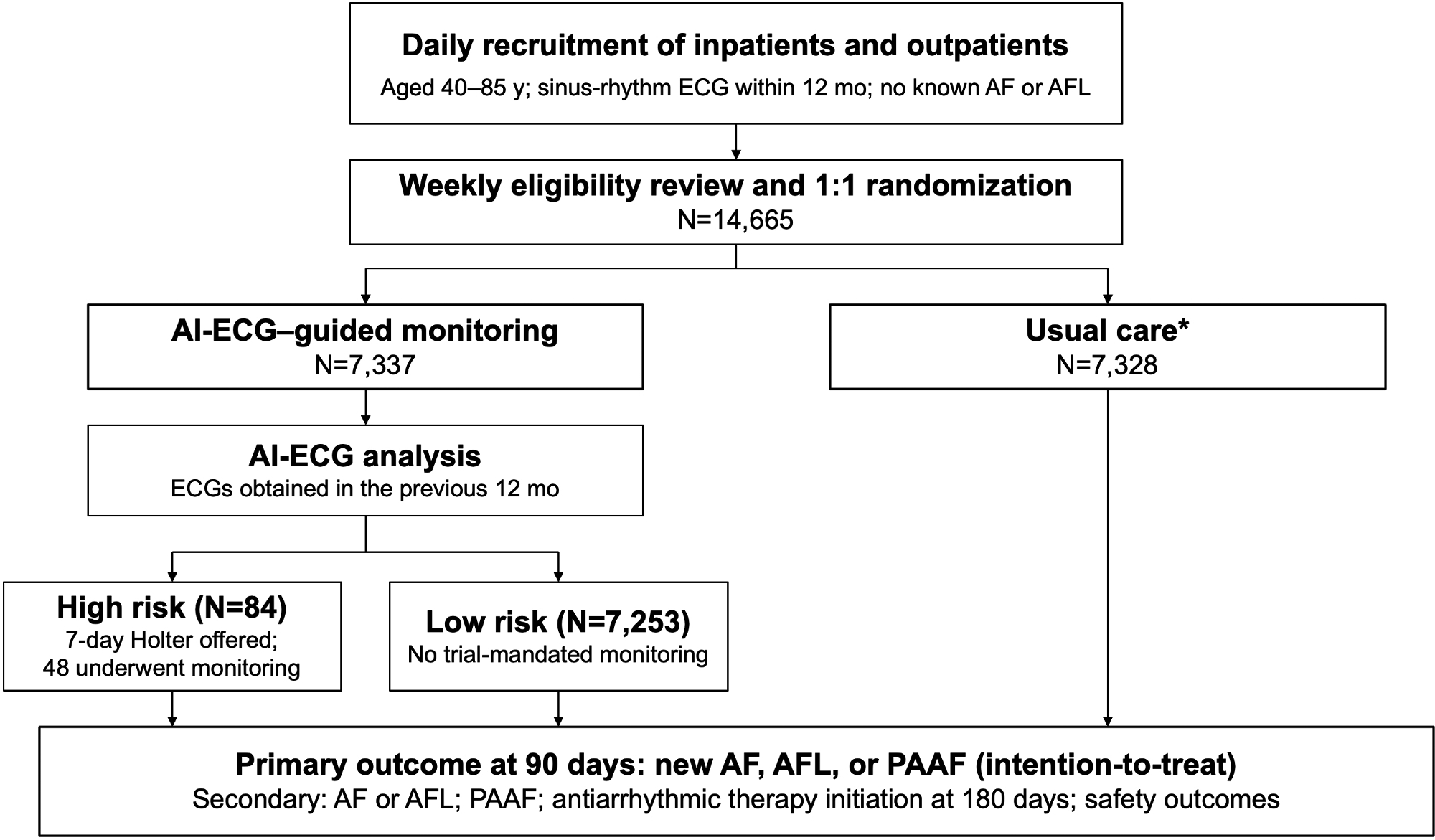
- Randomized trial in 14,665 adults without previous atrial fibrillation or flutter, against usual care (Blinded, registered NCT06847932)
- What changed:
- Rhythm abnormalities were detected in 0.74% of the AI-guided group versus 0.48% with usual care
- The catch:
- Reclassifying one intervention event as a nonevent removed statistical significance
- Why it’s aging research:
- It bears on staying healthy in midlife and later life.
Editor of record: Boris Djordjevic · AgingResearch.News
Adults aged 40–85 without previous atrial fibrillation or atrial flutter, two abnormal heart rhythms, took part in a randomized trial involving 14,665 people at one center. Artificial intelligence analyzed heart electrical recordings to guide monitoring in one group; the other received usual care. High-risk intervention participants were offered up to seven days of monitoring. Forty-eight participated, alongside 48 matched controls.
The modest detection increase involved a combined outcome of fibrillation, flutter or other rhythm findings defined in advance, such as frequent early beats. Fibrillation or flutter alone did not differ significantly between groups (0.3% versus 0.2%). Neither did starts of drugs for abnormal rhythms at 180 days (2.3% versus 2.4%). Monitoring-related problems, including skin reactions and discomfort, occurred in 22.9% of monitored intervention participants versus 18.8% of matched controls.
Why it matters
The authors viewed targeted rhythm monitoring in middle-aged and older adults as a foundation for larger trials testing its effect on patient outcomes.
Caveats
The detection result was statistically fragile: reclassifying one intervention event as a nonevent removed statistical significance. Participants knew their assignments, and the trial covered only adults aged 40–85 without previous fibrillation or flutter.


Comments
Be the first to comment.