Age-linked RNA splicing changes are widespread in human tissues
An analysis of 17,382 human tissue samples linked age to splicing changes in 10,786 genes, or 70% of those tested.
Our read
Mechanisms- Studied:
- Preprint: computational study
Editor of record: Boris Djordjevic · AgingResearch.News
Human tissue samples—17,382 across 49 tissues—were examined in an observational analysis of RNA splicing and donor age. Splicing cuts and joins RNA copies of genes, allowing different versions to form.
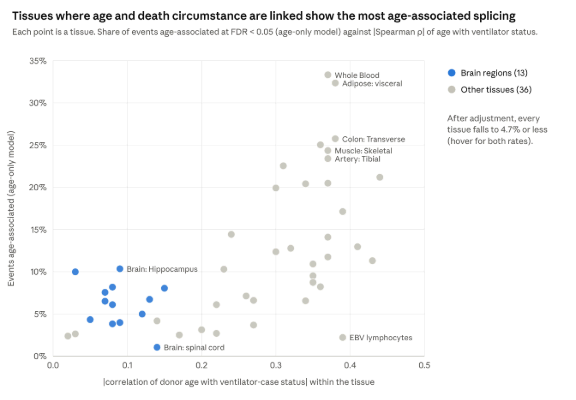
The researchers found at least one age-linked splicing change in 10,786 of 15,503 genes tested. Genes that regulate splicing showed the most consistent age links across tissues. Changes tended to move RNA away from genes’ principal versions. The share of age-linked events was highest in tissues where donor age and ventilator status were most closely linked. After accounting for sex, RNA quality, time without blood flow and circumstances of death, 3,662 genes retained an age-linked event.
Why it matters
Changes in RNA splicing recur in human aging. Mapping them across tissues helps identify which parts of this process warrant closer study.
Caveats
Donor age was intertwined with circumstances of death, which may account for some apparent age links; adjusted effects had a median size of 57% of the unadjusted estimates. The preprint has not been peer-reviewed.
From the paper
- Limitation
Power rises with read depth, so breadth of age linkage partly reflects expression level.
Quoted word for word from the full text on researchsquare.com.
The paper
Cirrostratus Exedra Ltd
Research Square, Nov 5, 2026, Open access, Preprint, not yet peer-reviewed

Comments
Be the first to comment.