Mobility program linked to less functional decline in older inpatients
Functional worsening at discharge occurred in 29.7% of older patients after the program began, compared with 49.7% before it.
Our read
Interventions- Studied:
- Preprint: cohort study of 600 older medical inpatients discharged alive, 90 days
- What changed:
- Functional decline at discharge was 20.0 percentage points lower after the mobility program than before implementation
- The catch:
- Differences in comorbidity burden and unrecorded frailty could explain the lower functional decline
- Why it’s aging research:
- Biological age, frailty, function, multimorbidity or death.
Editor of record: Boris Djordjevic · AgingResearch.News
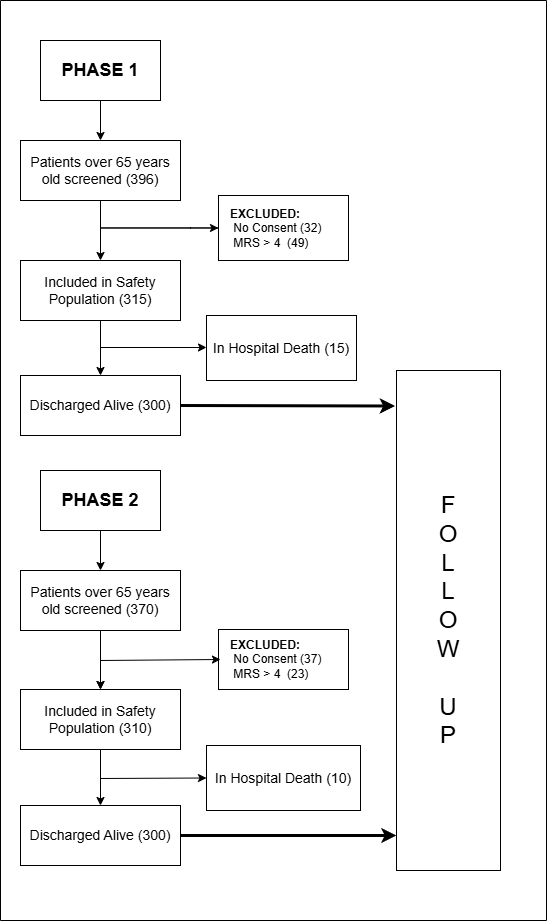
Six hundred patients aged 65 or older who left an Italian internal medicine ward alive were studied in a before-and-after observational cohort. Researchers compared 300 patients receiving usual care with 300 admitted after a structured early mobility program began. A team assessed patients within 24 hours of admission and planned at least two movement sessions daily once they were clinically stable. Activities included bed exercises, standing and walking.
At discharge, functional worsening—measured by disability or daily-activity scores—occurred in 49.7% before implementation and 29.7% afterward, a 20.0-percentage-point difference. Deaths within 90 days after discharge occurred in 20.7% before and 11.7% afterward. Both associations remained after statistical adjustment. Falls were infrequent and similar between groups.
Why it matters
Older adults can lose independence during a hospital stay. These findings support mobility-focused care pathways as an approach to preserving their ability to manage daily life.
Caveats
Patients entered the groups at different times, so other changes in care or patient health could have contributed to the results; functional and post-discharge analyses included only hospital survivors. The preprint has not been peer-reviewed, and its single-hospital population excluded people requiring strict bed rest or with an end-of-life condition.
From the paper
- Participants
We included 600 discharged-alive patients aged ≥ 65 years admitted to an internal medicine ward in Italy, 300 before and 300 after HESM implementation.
- Result
Functional worsening occurred in 149/300 patients before and 89/300 after implementation (49.7% vs 29.7%; absolute risk reduction 20.0 percentage points, 95% CI 12.3–27.7; number needed to treat 5).
- Absolute difference
Functional worsening occurred in 149/300 patients before and 89/300 after implementation (49.7% vs 29.7%; absolute risk reduction 20.0 percentage points, 95% CI 12.3–27.7; number needed to treat 5).
- Limitation
The before–after design is inherently vulnerable to temporal confounding, and causal inference cannot be established.
Quoted word for word from the full text on researchsquare.com.
- Hospital early structured mobilization program
- Hospital-associated disability
- Modified Barthel Index
- Modified Rankin Scale
- Humans
The paper
Internal Medicine - Ramazzini Hospital
Research Square, Nov 3, 2026, Open access, Preprint, not yet peer-reviewed



Comments
Be the first to comment.