Waist-to-height ratio linked to risk beyond body mass index
Among adults with normal body mass index, elevated waist-to-height ratios were linked to higher diabetes rates during follow-up, with a hazard ratio of 1.74 versus lower ratios.
Our read
Biomarkers- Studied:
- Preprint: cohort study of 77,684 adults with normal body mass index
- What changed:
- Normal-BMI adults with elevated waist-to-height ratios had higher diabetes rates than those with lower ratios (hazard ratio 1.74)
- The catch:
- Unmeasured health behaviors could differ by waist-to-height ratio and affect disease risk
- In the record:
- The 115th paper on waist-to-height ratio with results in people; 437 on record in all. Its result on myocardial infarction agrees with all 3 other findings on record.
- Why it’s aging research:
- It bears on staying healthy in midlife and later life.
Editor of record: Boris Djordjevic · AgingResearch.News
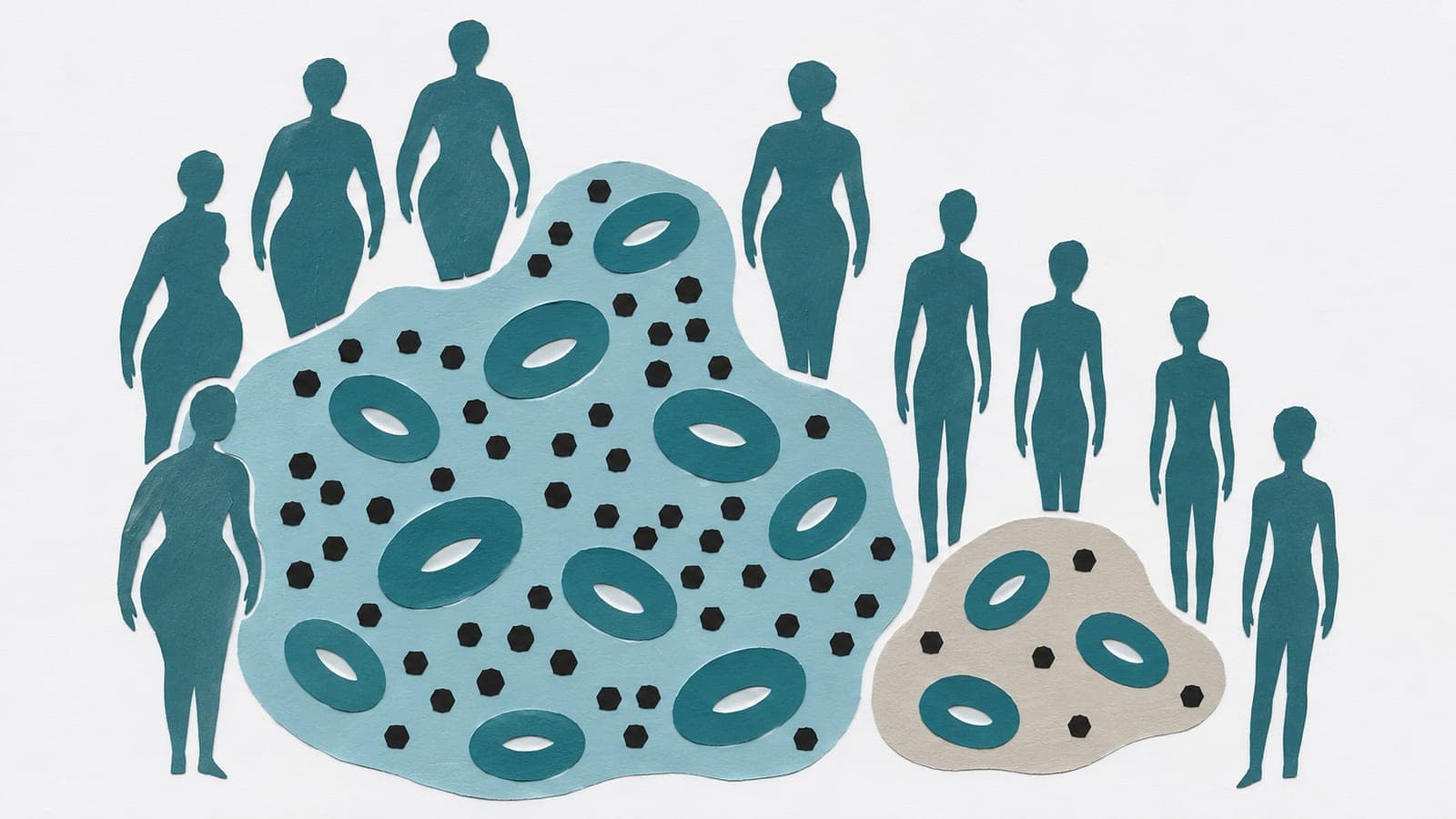
Among 308,600 adults in the All of Us Research Program, an observational study examined links between waist size relative to height and eight diseases affecting metabolism or cardiovascular health. Researchers excluded people who already had each disease from that disease’s analysis. They adjusted for factors including smoking and body mass index, a measure relating weight to height.
Among 77,684 adults with normal body mass index, elevated waist-to-height ratios were associated with diabetes, heart attack and stroke caused by blocked blood flow. The respective hazard ratios—comparisons of disease rates during follow-up—were 1.74, 1.49 and 1.52. The diabetes association was strongest among adults with normal body mass index. Adding waist-to-height ratio also improved disease-risk prediction, most notably for diabetes.
Why it matters
Diabetes and cardiovascular disease commonly affect health in later life. The authors support assessing fat around the waist alongside body mass index when evaluating these risks.
Caveats
Adults with higher waist-to-height ratios may also have differed in unmeasured health behaviors that affected disease risk. The findings are from a preprint that has not been peer-reviewed.
The paper
Rutgers, The State University of New Jersey; U.S. Army Research Institute of Environmental Medicine
medRxiv, Nov 5, 2026, Open access, CC BY, Preprint, not yet peer-reviewed

Comments
Be the first to comment.