Carbohydrate quality linked to multiple heart and metabolic diseases
For developing at least three heart and metabolic diseases, hazard ratios were 0.92 for high-quality carbohydrates and 1.11 for low-quality carbohydrates.
Our read
Populations- Studied:
- Cohort study of 177,763 UK Biobank participants without cardiometabolic diseases, median 12.56 years
- What changed:
- At least three heart and metabolic diseases were less likely with high-quality carbohydrates (hazard ratio 0.92), more likely with low-quality carbohydrates (1.11)
- The catch:
- Other health habits among high-quality carbohydrate eaters could influence disease risk
- In the record:
- One of 6 papers on high-quality carbohydrates on record: 5 with results in people.
Editor of record: Boris Djordjevic · AgingResearch.News
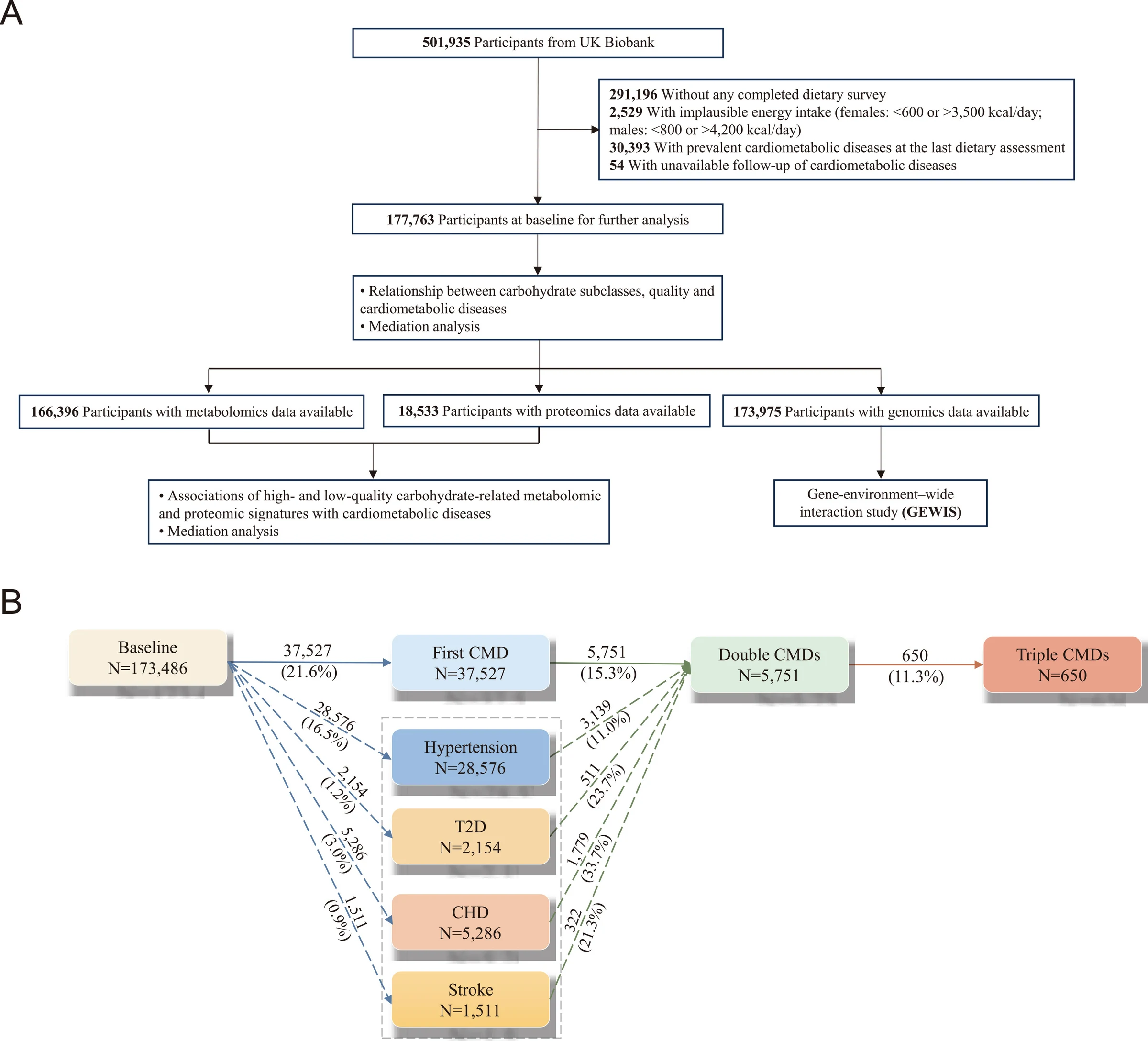
All 177,763 UK Biobank participants were free of cardiometabolic diseases—conditions affecting the heart and metabolism—when they entered this prospective cohort study. Researchers assessed carbohydrate quality and followed participants for a median of 12.56 years. During follow-up, 37,527 developed a first disease, 5,751 developed two and 650 developed three.
High- and low-quality carbohydrates showed opposite associations with accumulating these conditions. The links were strongest for developing at least three diseases. Hazard ratios were 0.92 and 1.11, respectively. These compare disease rates over time: below one indicates a lower rate, and above one a higher rate. Associations were particularly evident for progression from high blood pressure to also having type 2 diabetes. Exploratory molecular and genetic analyses highlighted potential biological pathways and genetic differences in the associations.
Why it matters
Heart and metabolic diseases become more common with age. The findings may inform future research on personalized nutritional strategies to prevent these conditions.
Caveats
People eating high-quality carbohydrates may also have had other health habits that influenced disease risk. All participants began without cardiometabolic disease, limiting what the findings say about people already living with these conditions at enrollment.
- High-quality carbohydrates
- Low-quality carbohydrates
- MAPK/ERK signaling
- PI3K–AKT signaling
- Type 2 diabetes
- Humans
The paper
Tongji Hospital; Huazhong University of Science and Technology
The American Journal of Clinical Nutrition, Nov 17, 2026


Comments
Be the first to comment.