RNA platform sustained gene silencing beyond the liver in mice
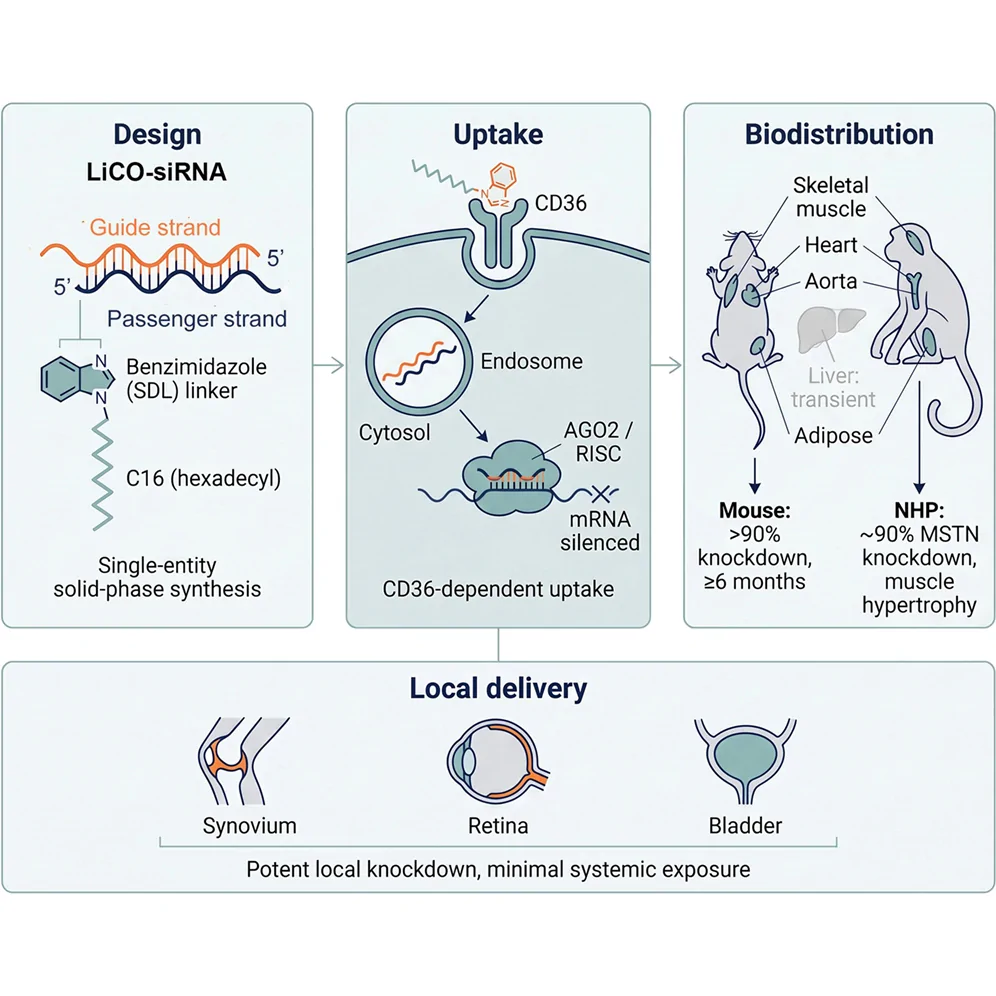
One dose reduced target gene messages by more than 90% in several mouse tissues, with at least 50% silencing lasting six months.
Our read
Interventions- Studied:
- Experiments in mice, 9 months
- What changed:
- A single dose reduced gene messages by ≥50% for 6 months in mouse tissues beyond the liver
- The catch:
- Mouse muscle strength was not reported alongside sustained gene silencing
- Stake:
- Two authors hold shares in Ractigen Therapeutics.
Editor of record: Boris Djordjevic · AgingResearch.News
Mice received a single systemic dose of fat-linked small interfering RNA—molecules that reduce selected gene messages—in an animal experiment testing delivery beyond the liver. The platform, called LiCO, reduced target gene messages by more than 90% in skeletal muscle, heart, aorta—the body's main artery—and fat tissue. At least 50% silencing persisted for six months, with measurable activity at nine months. Liver silencing was temporary.
In cynomolgus macaques, two intravenous doses targeted the RNA message for a protein called myostatin. They reduced that message by about 90% and lowered circulating myostatin protein by 60%–70% through day 98. Muscles progressively enlarged. The researchers reported no adverse clinical findings, blood-count findings or blood-chemistry findings.
Why it matters
Muscle-directed RNA medicines may be relevant to age-related muscle decline. The authors propose the platform for neuromuscular, metabolic and localized disorders.
Caveats
The animal experiments leave open whether the platform would deliver RNA as effectively and durably in people.
The paper
Molecular Therapy Nucleic Acids, Oct 21, 2026, Open access


Comments
Be the first to comment.