Blood protein pattern predicts energy capacity in human cells
A 25-protein signature predicted how serum from 88 healthy adults aged 22 to 92 affected the energy-making capacity of human skin cells.
Our read
Biomarkers- Studied:
- Experiments in cells
Editor of record: Boris Djordjevic · AgingResearch.News
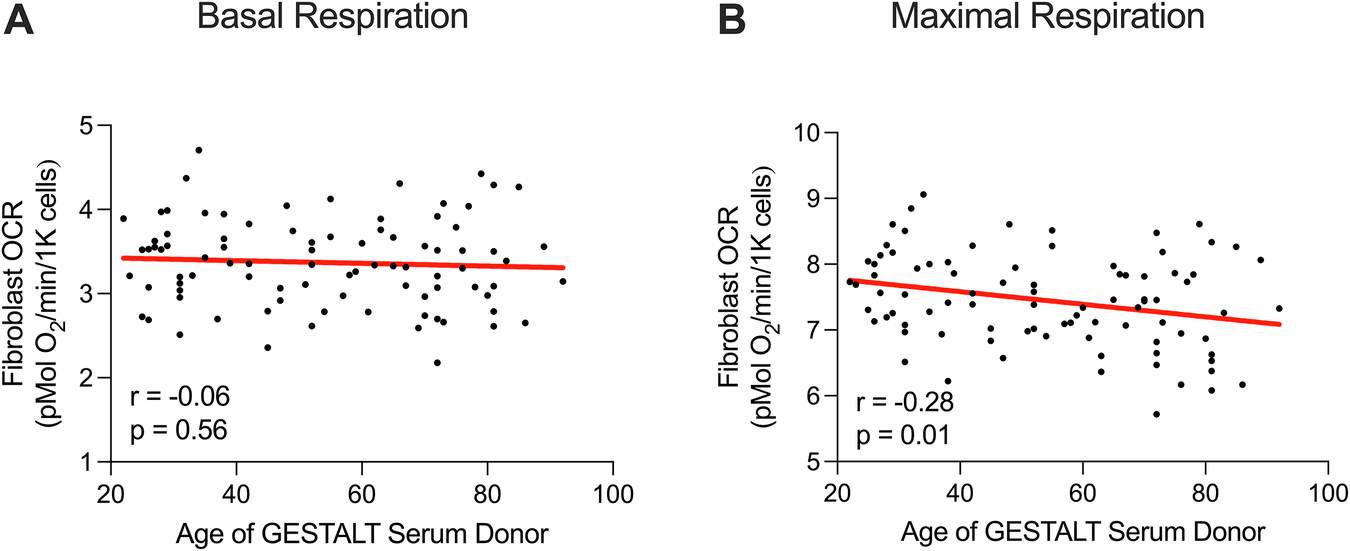
Primary human dermal fibroblasts, skin cells grown in the lab, received serum—the liquid left after blood clots—from 88 healthy adults aged 22 to 92 in a cell experiment. Of these participants, 42% were female. Researchers exposed cells from two male donors, aged 33 and 72, to 10% serum for 24 hours.
The cells’ maximum capacity to produce energy through mitochondria, their energy-producing structures, was negatively linked to serum donors’ ages and age estimates based on chemical marks on DNA. Researchers used blood protein measurements and statistical modeling to build MitoAge, a 25-protein signature that predicted serum’s effects on this capacity. In the human participants, higher MitoAge scores were associated with greater muscle energy capacity and higher fitness measured by oxygen use during peak exercise, but not grip strength.
Why it matters
Mitochondrial function is a cellular feature relevant to aging. The authors present markers tied to such processes as a way to measure biological aging.
Caveats
The authors note that the serum samples compared people of different ages rather than following the same people over time, leaving changes within individuals untested.
From the paper
- Limitation
Using MitoAge longitudinally could reflect the heterogeneity of aging trajectories both within and across individuals.
Quoted word for word from the full text on nature.com.
The paper
The blood proteome predicts the impact of circulating factors on age-related mitochondrial health
University of California San Diego
npj Aging, Jul 24, 2026, Open access


Comments
Be the first to comment.