Artery disease exceeded pancreas inflammation at most blood fat levels
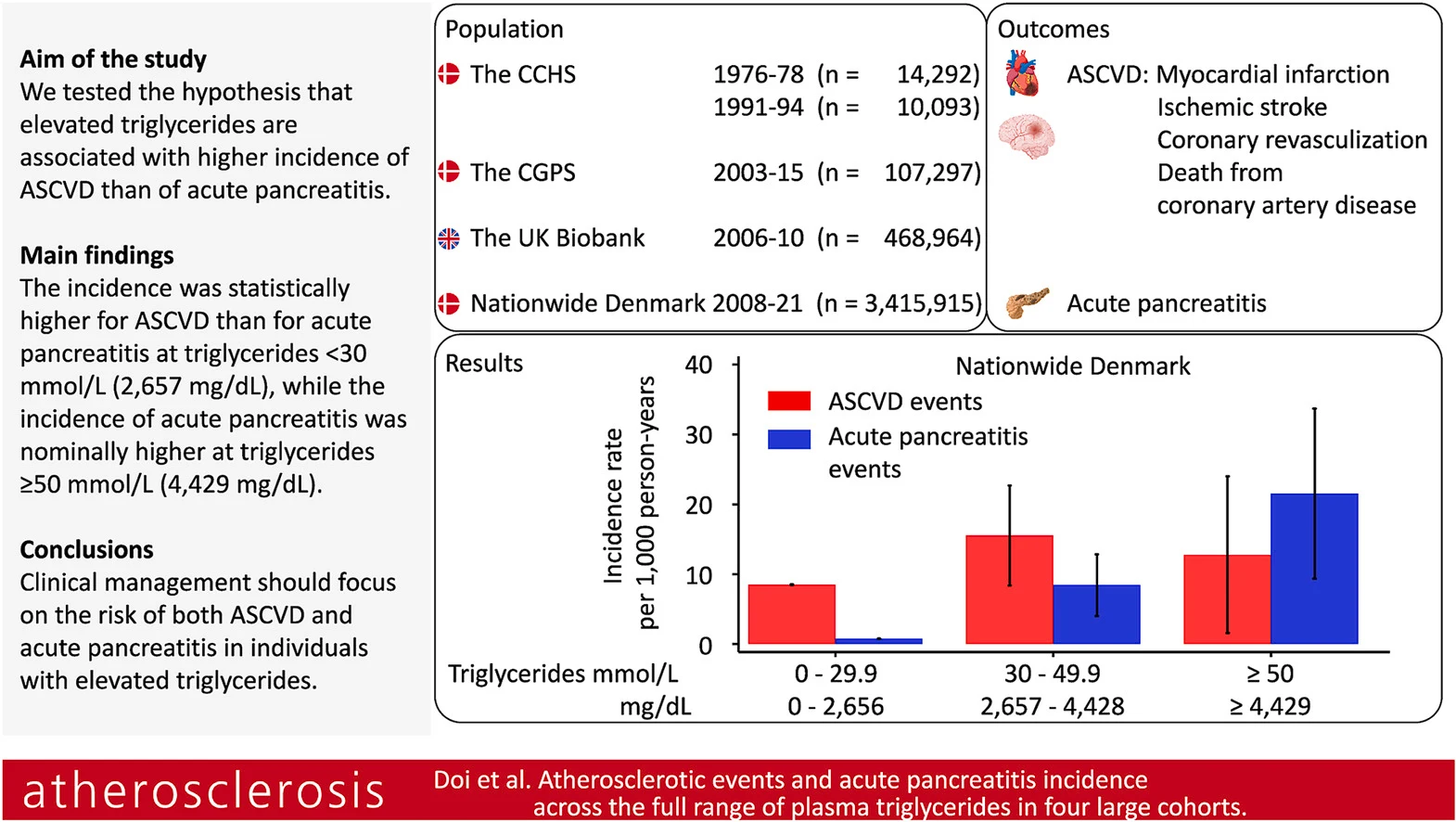
Across four Danish and UK cohorts, artery disease occurred more often than acute pancreas inflammation at blood triglycerides up to 30 millimoles per liter.
Our read
Populations- Studied:
- Cohort study in people
- In the record:
- The 13th paper on plasma triglycerides with results in people; 40 on record in all.
Editor of record: Boris Djordjevic · AgingResearch.News
People in four Danish and UK cohorts were followed in a cohort study comparing atherosclerotic cardiovascular disease, caused by fatty buildup in arteries, with acute pancreatitis, sudden inflammation of the pancreas. The Copenhagen City Heart Study included groups of 14,292 and 10,093 people. The Copenhagen General Population Study included 107,297 people, UK Biobank included 468,964, and Denmark’s nationwide group included 3,415,915. Median follow-up ranged from six to 24 years.
Artery disease occurred more often than acute pancreatitis at blood triglyceride levels up to 30 millimoles per liter (2,657 milligrams per deciliter) in every cohort. Triglycerides are a type of fat. In Denmark’s nationwide group, pancreatitis incidence was numerically higher at levels of 50 millimoles per liter (4,429 milligrams per deciliter) or more.
Why it matters
Cardiovascular disease becomes more common with age. Comparing it with acute pancreatitis helps put triglyceride-associated disease risks into perspective.
Caveats
Other health differences among people with different triglyceride levels could have contributed to the associations with these diseases.
The paper
Herlev Hospital; University of Copenhagen
Atherosclerosis, Oct 31, 2026, Open access
doi.org/10.1016/j.atherosclerosis.2026.121944PubMed 43003007



Comments
Be the first to comment.