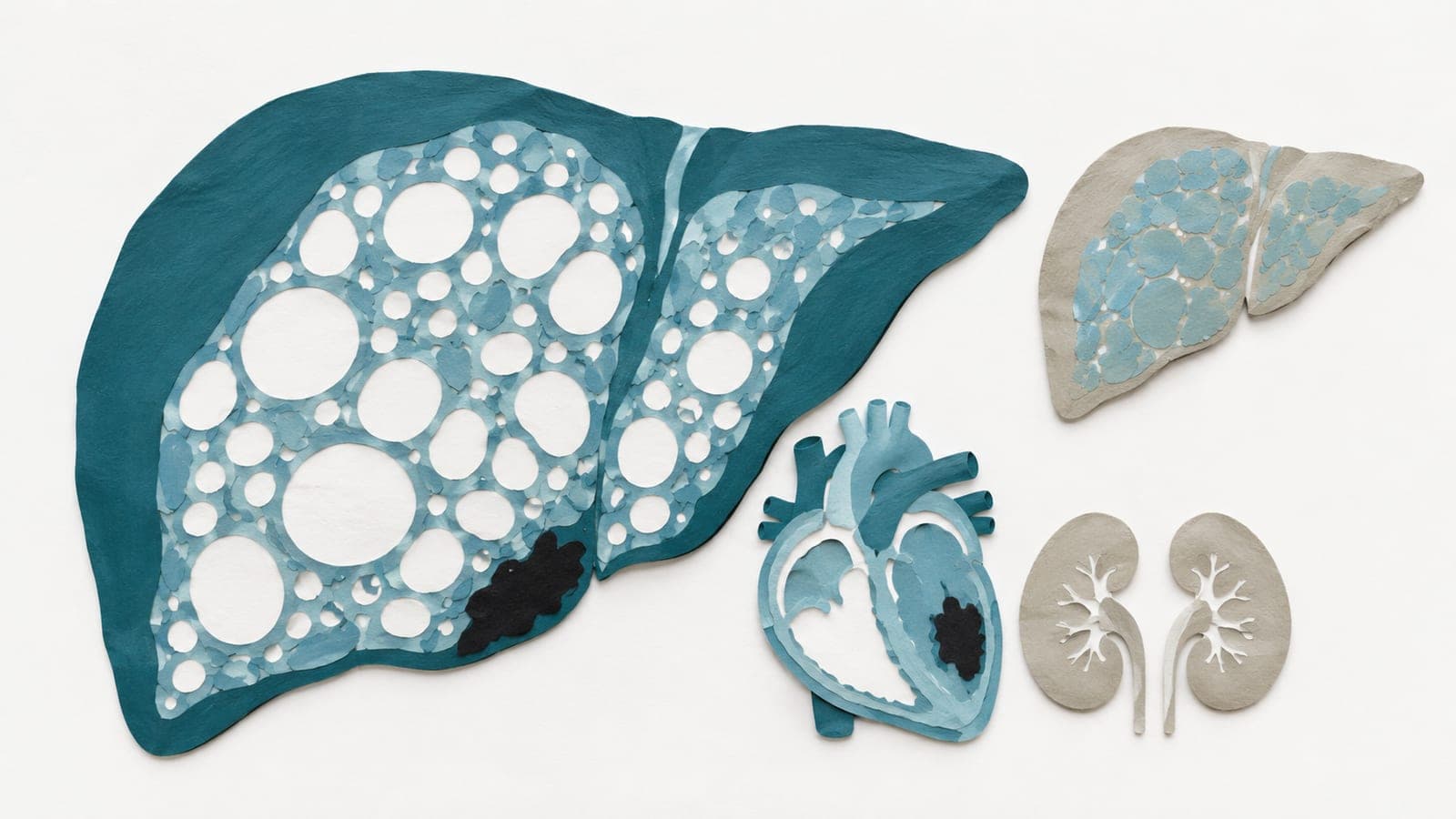
Fatty liver helped predict heart and liver risks
An observational study of 313,970 UK Biobank participants found that fatty liver measures improved risk prediction beyond staging heart, kidney and metabolic health.

Limit: Fatty liver was estimated using indices
Edited by Boris Djordjevic · AgingResearch.News
An observational study followed 313,970 UK Biobank participants with stages 0–3 of cardiovascular-kidney-metabolic syndrome, a framework linking heart, kidney and metabolic health. Researchers estimated liver fat mainly using the Fatty Liver Index.
Over a median 15.7 years, 32,110 major cardiovascular events and 1,599 major liver events occurred. Fatty liver and advanced syndrome stages were each independently associated with both outcomes. Participants with both had the highest risks compared with those with neither. Their hazard ratios, measures of relative risk, were 2.33 for cardiovascular events and 5.09 for liver events. Adding fatty liver to syndrome staging improved the model’s ability to distinguish participants who experienced these events from those who did not.
Why it matters
Cardiovascular disease is an important concern in later life. This study addresses whether risk assessment should also account for liver health.
Caveats
The observational design cannot establish cause and effect, and researchers assessed fatty liver using indices. The findings concern UK Biobank participants with syndrome stages 0–3, not later stages.