Tremor linked to higher death rates in three Danish studies
Among 3,487 Danes with hospital-diagnosed essential tremor, death rates were higher than in matched controls, with a hazard ratio of 1.37.
Limit: Comorbidities, cognitive function, and depression were not adjusted for and could explain higher mortality
Edited by Boris Djordjevic · AgingResearch.News
An observational study analyzed three Danish cohorts: 3,487 people with hospital-diagnosed essential tremor, a movement disorder; 2,029 twins aged 70 or older; and 2,472 adults aged 20 or older reporting tremor. Researchers used national registers to track deaths. They matched each hospital-diagnosed participant to 10 controls and each self-reporting participant to four, by age and sex. They rated tremor severity from the twins’ spiral drawings.
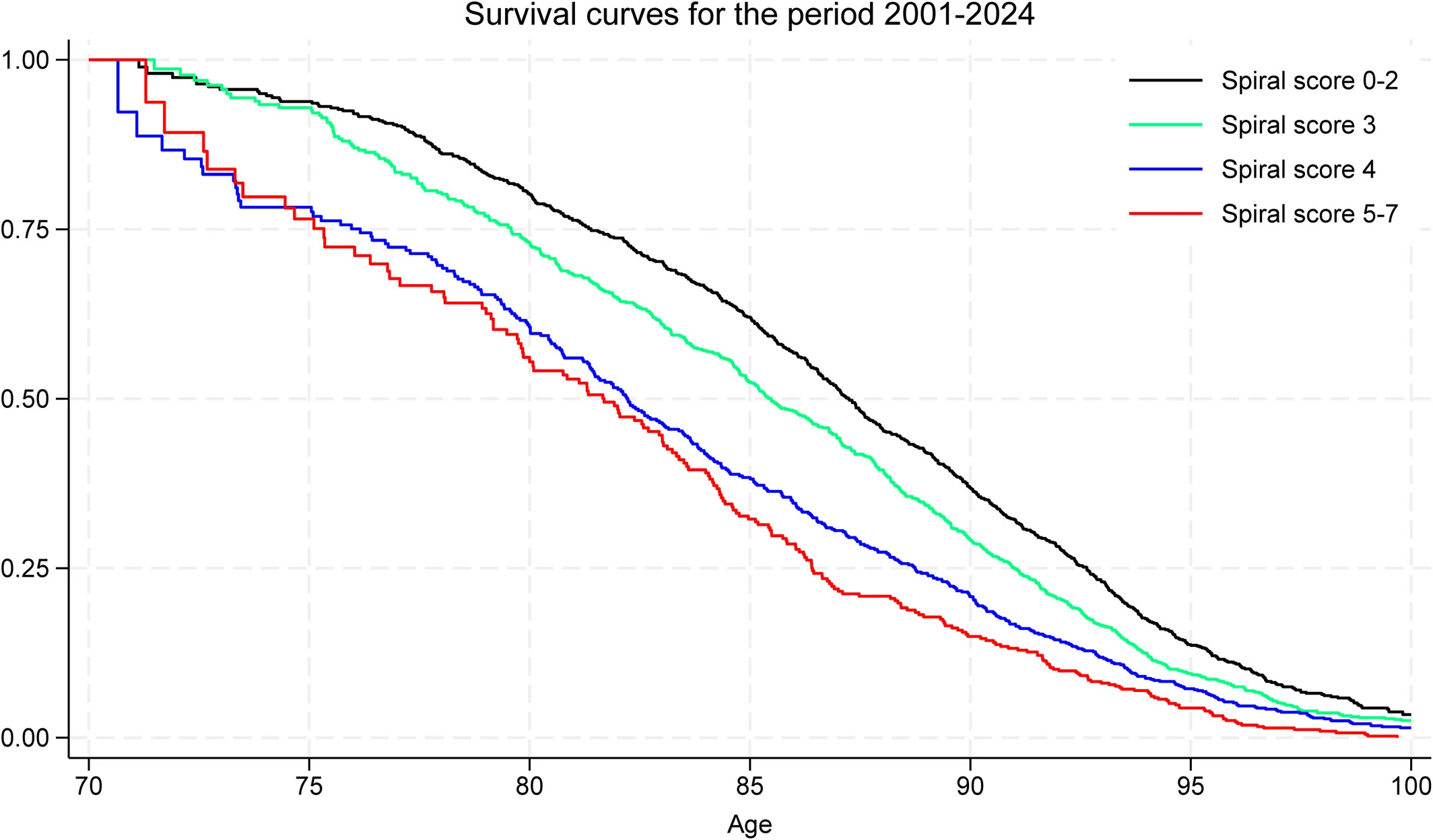
Action tremor—shaking during movement—was associated with higher mortality across the three cohorts. The hazard ratio, a measure of relative death rates, was 1.37 for hospital-diagnosed participants versus controls. Among twins, it was 1.67 for higher versus lower tremor scores (5–7 versus 0–2). For self-reported tremor, it was 1.56 versus controls; adjustment for alcohol use did not remove the association.
Why it matters
Action tremor becomes more common with age. The findings suggest it may mark underlying health vulnerability rather than being a harmless movement problem.
Caveats
The cohorts were observational and partly overlapping, so they cannot show that tremor caused higher mortality. The self-report cohort excluded people with known Parkinson’s disease or hyperthyroidism and some users of medications that can cause tremor.
From the paper
- Participants
From 1995 to 2018, we identified 3487 cases with an outpatient diagnosis of ET in the National Patient Register.
- Result
In the outpatient cohort, hospital-diagnosed ET was associated with increased mortality (hazard ratio [HR], 1.37, 95% confidence interval, 1.27–1.46).
- Limitation
We include diagnoses recorded in a hospital setting in study 1, and in the Danish system, they are mostly seen by neurologists.
Quoted word for word from the full text on movementdisorders.onlinelibrary.wiley.com.
The paper
Mortality in People with Action Tremor: Findings from Three Population-Based Cohort Studies
University of Southern Denmark; Universitätsklinikum Schleswig-Holstein
Movement Disorders, Oct 27, 2026

