Social limits linked to death in chronic obstructive pulmonary disease
Patients with restricted social activity had a higher relative rate of death over four years than those without restrictions, with a hazard ratio of 1.752.
Limit: Social restriction relied on one questionnaire domain, incompletely capturing social isolation and loneliness
Edited by Boris Djordjevic · AgingResearch.News
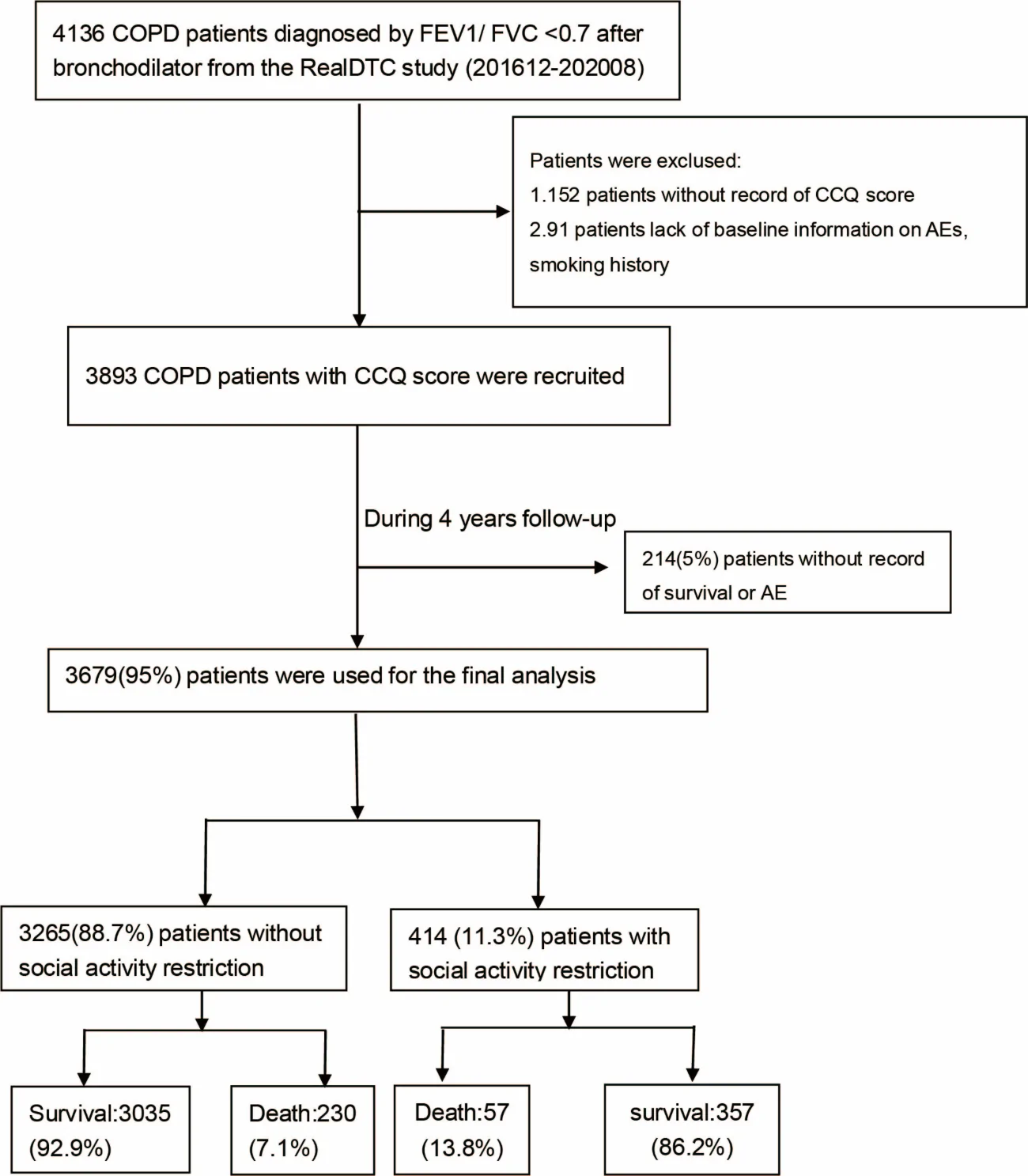
The observational cohort study included 3,679 patients with chronic obstructive pulmonary disease, a long-term lung condition that limits airflow. Their mean age was 65.72 years. Researchers enrolled participants between December 2016 and August 2020. They collected information on social activity restrictions, lung function and symptoms, and recorded mortality at four years.
Overall, 11.3% had restricted social activities. Older age, widowhood and more severe disease were among the factors independently linked to these restrictions. After accounting for other factors, restricted social activity was associated with future flare-ups, including severe flare-ups, and with death. The authors recommended routinely assessing social restrictions in clinics as a simple marker of higher risk.
Why it matters
For people managing chronic lung disease in later life, whether targeted social support can improve health outcomes remains an important question. The authors called for intervention studies to test such programs.
Caveats
This observational study could not establish that restricted social activity caused flare-ups or deaths. All participants had chronic obstructive pulmonary disease; the findings may not apply to people without it.
From the paper
- Participants
We included 3,679 patients in total.
- Result
By multivariable analysis, patients with restricted social activities had higher risks of future acute exacerbation (adjusted odds ratio (aOR) = 1.320; 95% confidence interval (CI) = 1.100–1.583, P = 0.003) and severe acute exacerbation (aOR = 1.299; 95% CI = 1.014–1.664, P = 0.038).
- Limitation
This male predominance is consistent with the epidemiology of COPD in China, where the disease occurs predominantly in men because of the substantially higher prevalence of cigarette smoking among men than among women.
Quoted word for word from the full text on jogh.org.
The paper
Central South University
Journal of Global Health, Oct 23, 2026, Open access


