Statin use linked to lower death rates after brain bleed surgery
Deaths within 30 days of surgery occurred in 3.3% of statin users versus 4.5% of non-users in a Finnish observational cohort.
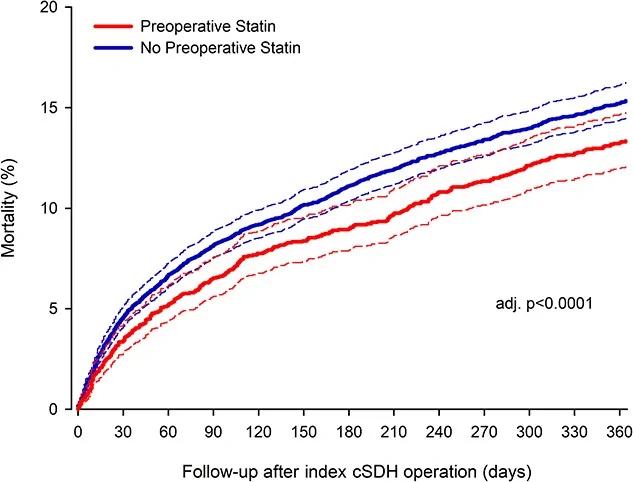
Limit: Frailty and daily functioning could confound the association; registries lacked this information
Edited by Boris Djordjevic · AgingResearch.News
An observational cohort study included 9,001 adults aged 18 or older who underwent surgery for chronic subdural hematoma, a blood buildup between the brain and its outer covering, in Finland. Their average age was 73.3 years, and 68.1% were male. Researchers used prescription purchase records to identify 2,450 pre-surgery users of statins, cholesterol-lowering medicines.
Within 30 days after surgery, 3.3% of statin users and 4.5% of non-users died. At one year, death rates were 13.3% and 15.4%, respectively. Statin use remained associated with lower mortality after researchers adjusted for age, sex, other illnesses and other factors. Average hospital stays were 22.1 days among statin users versus 26.3 days among non-users. Repeat surgery rates were similar between groups at both follow-ups.
Why it matters
Chronic subdural hematoma is common in older adults. The study addresses whether medicines taken before surgery are linked to outcomes for this condition in later life.
Caveats
This observational study cannot show that statins caused the lower death rates; the registries lacked information on frailty and patients’ ability to manage daily activities. The findings concern adults who underwent surgery, not people managed without it.
The paper
University of Turku
Age and Ageing, Aug 3, 2026, Open access