Lung restriction linked to sleep apnea in middle age
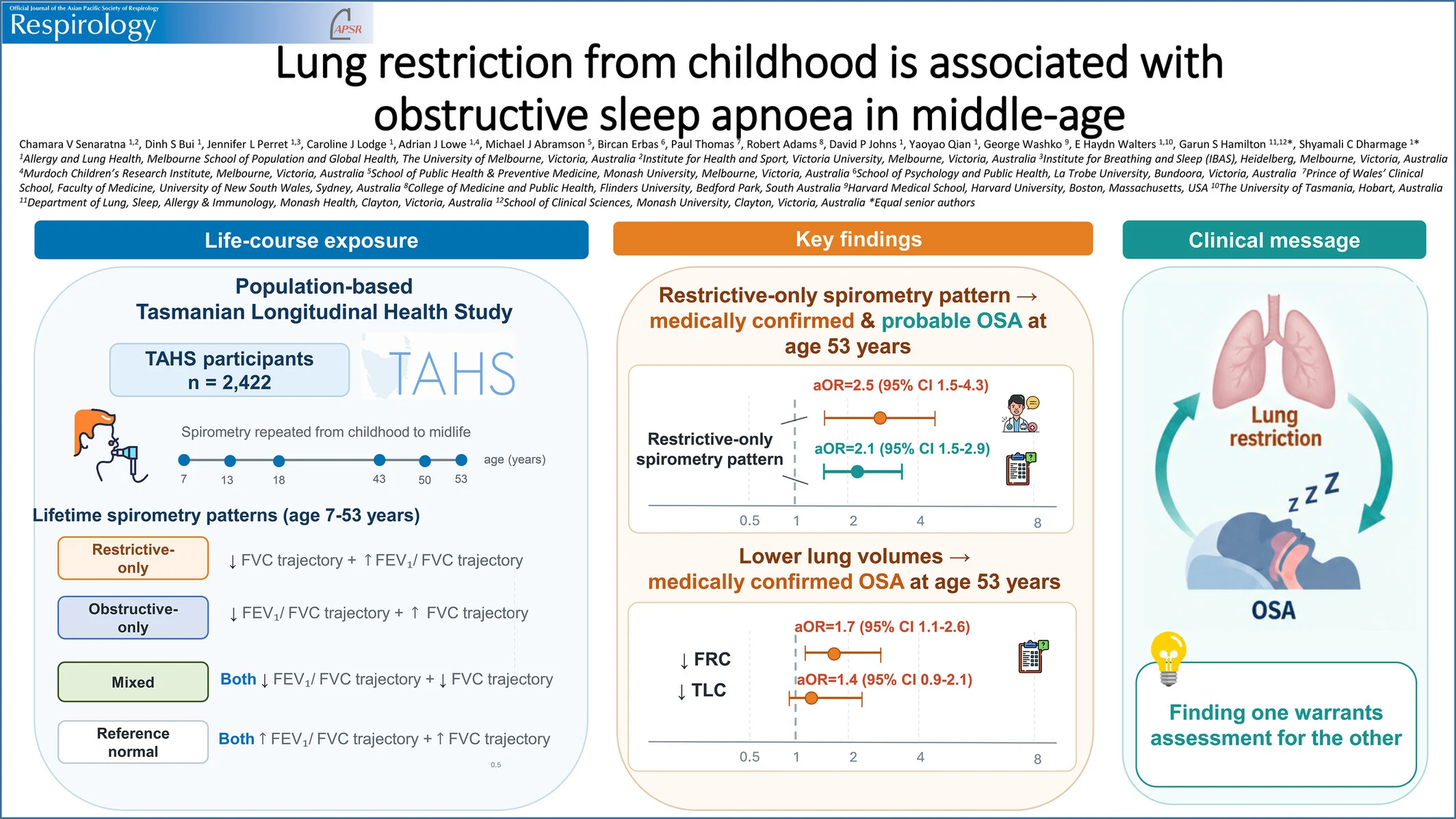
A lifelong restrictive lung pattern was associated with 2.5 times the odds of medically confirmed sleep apnea compared with a normal pattern.
Limit: Sleep apnea was underdiagnosed, misclassifying affected participants as apnea-free
Stake: GSK funded the study.
In a population-based prospective observational cohort of 2,422 people, researchers analyzed lung function measured at ages 7, 13, 18, 43, 50 and 53. They used breathing tests to identify lifetime patterns, including a restriction-only pattern suggesting reduced lung volume.
People with this pattern had 2.5 times the odds of medically confirmed obstructive sleep apnea compared with those with a normal pattern. Obstructive sleep apnea involves repeated narrowing or closure of the upper airway during sleep. The association remained after accounting for body mass index—a measure of weight relative to height—and obesity around the waist. It was also independent of childhood lung function. Results were similar for probable sleep apnea identified using a screening questionnaire.
Why it matters
Lung function across life may offer clues for recognizing sleep apnea risk in middle age. The authors suggested that lung restriction may help flag that risk, and vice versa.
Caveats
This observational study cannot establish cause and effect. The findings came from one population-based cohort, and the underlying biological mechanisms remain to be confirmed.
From the paper
- Result
The ‘restrictive-only’ spirometry pattern was associated with medically-confirmed OSA (OR = 2.5; 95% CI 1.5, 4.3).
Quoted word for word from the full text on onlinelibrary.wiley.com.


