Sociocultural Determinants of Hepatocellular Carcinoma Prevention Behaviors Among Non-Hispanic Black and Hispanic Adults in the United States
Abstract
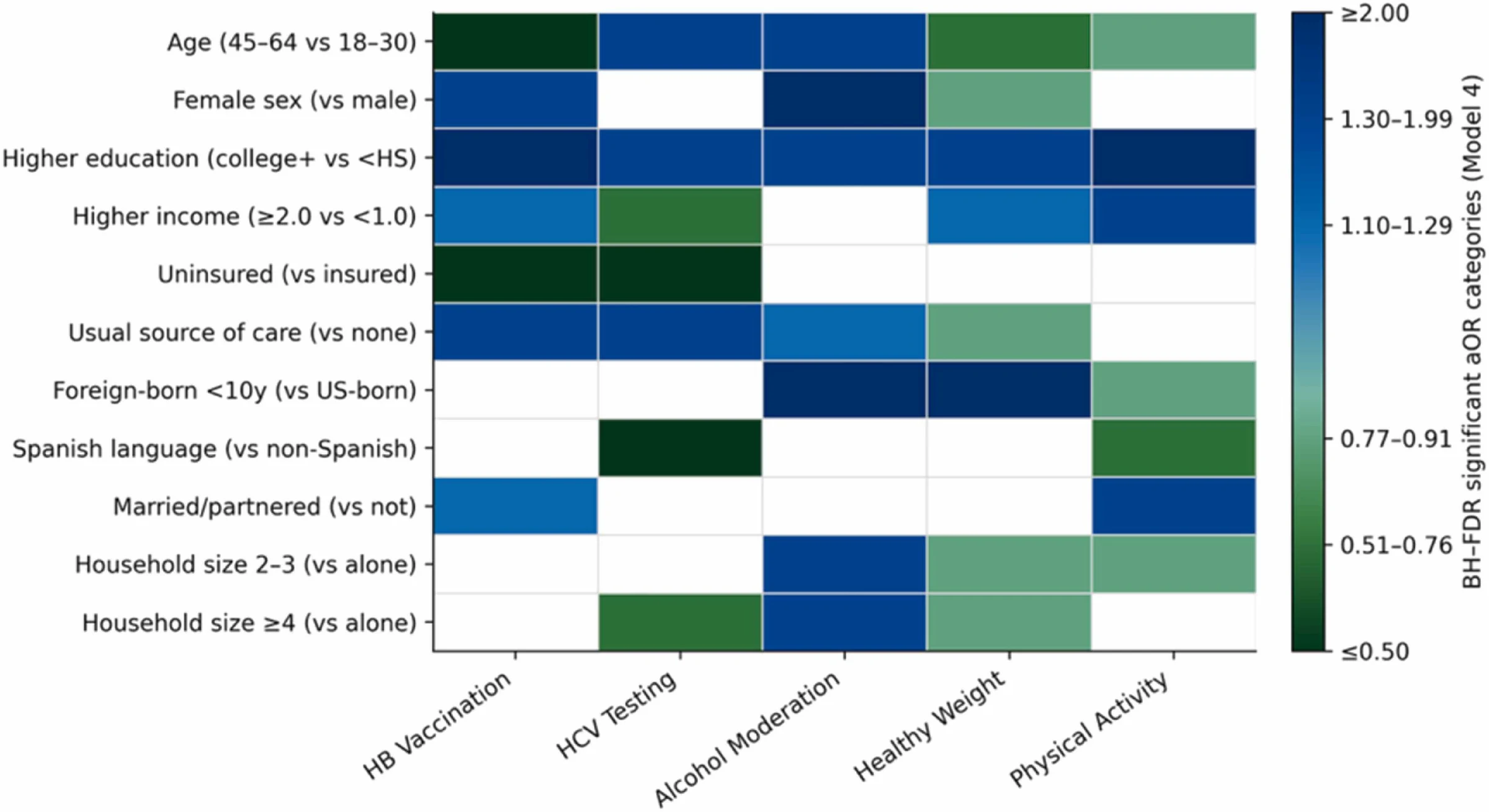
BACKGROUND: Prevention is critical to reduce hepatocellular carcinoma (HCC) burden, however, sociocultural influences on engagement in HCC preventive behaviors among populations at elevated risk are rarely examined together. We sought to evaluate sociocultural factors associated with HCC preventive behaviors among Non-Hispanic Black (NHB) and Hispanic adults. METHODS: Pooled 2015-2024 NHIS data were used to identify NHB and Hispanic adults. HCC prevention behaviors included hepatitis B (HBV) vaccination, hepatitis C (HCV) testing, alcohol risk reduction, healthy weight, and physical activity. Survey-weighted logistic regression estimated associations between sociocultural factors and prevention behaviors adjusted for demographic, socioeconomic, healthcare access, and immigration factors. RESULTS: Among 74,162 adults (NHB: 44.7%, n=33,166; Hispanic: 55.3%, n=40,996), HBV vaccination was lower among individuals aged 45-64 compared with those aged 18-30 years old (aOR 0.38; 95%CI 0.34-0.42), whereas college graduates had higher vaccine uptake (aOR 2.01; 95%CI 1.70-2.38). Adults aged 31-44 years were more likely to get tested for HCV (aOR 1.88; 95%CI 1.57-2.26). Alcohol moderation was higher among women (aOR 2.01; 95%CI 1.81-2.22) and lower among Hispanic than NHB adults (aOR 0.53; 95%CI 0.46-0.60). Higher education attainment was associated with healthy weight (aOR 1.56; 95%CI 1.38-1.77). Immigration status modified racial/ethnic prevention patterns (interaction p=0.009); long-term foreign-born noncitizen Black adults had higher vaccination rates (aOR 3.50; 95%CI 1.37-8.94). DISCUSSION: Engagement in HCC prevention behaviors among NHB and Hispanic adults was strongly affected by age, education, insurance coverage, healthcare access, and immigration context, highlighting structural influences on prevention opportunities. Equity-focused strategies expanding vaccination, screening, and lifestyle interventions are required.
- Alcohol risk reduction
- Educational attainment
- Hbv vaccination
- Hepatitis C testing
- Hepatocellular carcinoma
- Humans
The paper
The Ohio State University Wexner Medical Center and James Comprehensive Cancer Center
Journal of Gastrointestinal Surgery, Oct 18, 2026