Risk of hyperglycemia with different statins by type and dose: a network meta-analysis and real-world pharmacovigilance study
Abstract
BACKGROUND: The potential diabetogenic effects of statins remain controversial, particularly with respect to differences across statin types and doses. METHODS: We conducted a network meta-analysis (NMA) of randomized controlled trials (RCTs) to assess the comparative effects of different statins and doses on hyperglycemia-related outcomes. The NMA was performed within a Bayesian framework. PubMed, Embase, the Cochrane Library, and ClinicalTrials.gov were systematically searched from inception to April 2025. Data extraction and verification were independently conducted by two investigators. Outcomes included risk of new-onset diabetes mellitus (NODM), fasting plasma glucose (FPG), 2-h postprandial plasma glucose, and glycated hemoglobin (HbA1c). Separately, we conducted a real-world pharmacovigilance analysis using disproportionality methods based on the FDA Adverse Event Reporting System (FAERS) to identify potential hyperglycemia-related safety signals in patients without diabetes. RESULTS: A total of 22 RCTs, which enrolled 99,311 patients, were included. The NMA found no statistically significant differences in NODM risk among statins or compared with placebo. However, pravastatin 40 mg/day showed a numerically lower risk estimate (OR: 0.86; 95% CrI: 0.50-1.50), whereas rosuvastatin 20 mg/day and atorvastatin 80 mg/day showed relatively higher estimates. Analyses of intermediate glycemic markers, including FPG and HbA1c, revealed no significant differences across all statin regimens and placebo. In parallel, FAERS pharmacovigilance analyses identified disproportionate reporting signals for hyperglycemic events with atorvastatin (ROR: 6.11; 95% CI: 5.94-6.29), rosuvastatin (ROR: 2.44; 95% CI: 2.31-2.58), and simvastatin (ROR: 1.22; 95% CI: 1.13-1.32). CONCLUSION: No statistically significant differences in glycemic outcomes were observed among individual statins or compared with placebo. However, numerical variations in point estimates across randomized evidence and pharmacovigilance signals suggest possible differences in glycemic profiles among statins. Pravastatin showed numerically lower risk estimates; however, these findings were accompanied by substantial uncertainty. Further prospective studies are needed to clarify these observations.
From the paper
- Studies
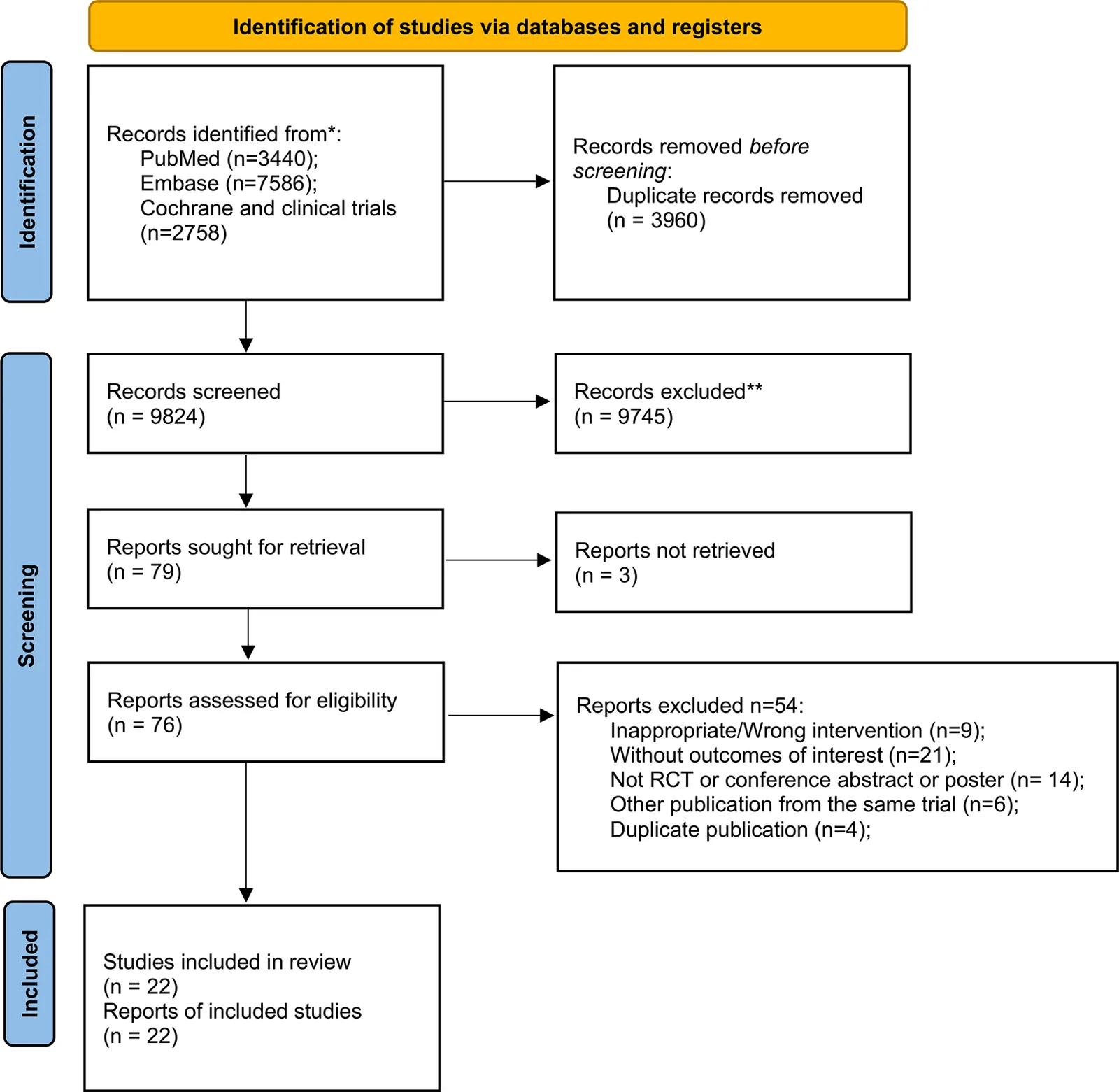
RoB-2 assessment showed that 14 studies (63.6%) were evaluated as having a low risk of bias, 7 (31.8%) had some concerns, and 1 study had a high risk due to lack of allocation concealment and missing outcome data ( Supplementary Figure S1 ).
- Primary outcome
… excepting pitavastatin 4 mg/day, which was significantly associated with higher risk of NODM than placebo (OR: 1.35; 95% CI: 1.09–1.67) ( Figure 3 ).
- Harms
From 1 January 2004 to 31 December 2024, 113,562 adverse events (AEs) were reported with statins as the primary suspected drug, of which 7,366 were related to hyperglycemic events ( Table 2 ).
- Limitation
First, the definitions of NODM varied across the included RCTs, and most trials were not primarily designed to assess glycemic outcomes, which may have contributed to clinical heterogeneity and reduced the precision of the pooled estimates.
Quoted word for word from the full text on frontiersin.org.
The paper
Yuhuangding Hospital
Frontiers in Pharmacology, Oct 2, 2026, Open access


