Association between Gompertz law-based biological age (GOLD BioAge) and incident mild cognitive impairment: Modifying role of social activeness
Abstract
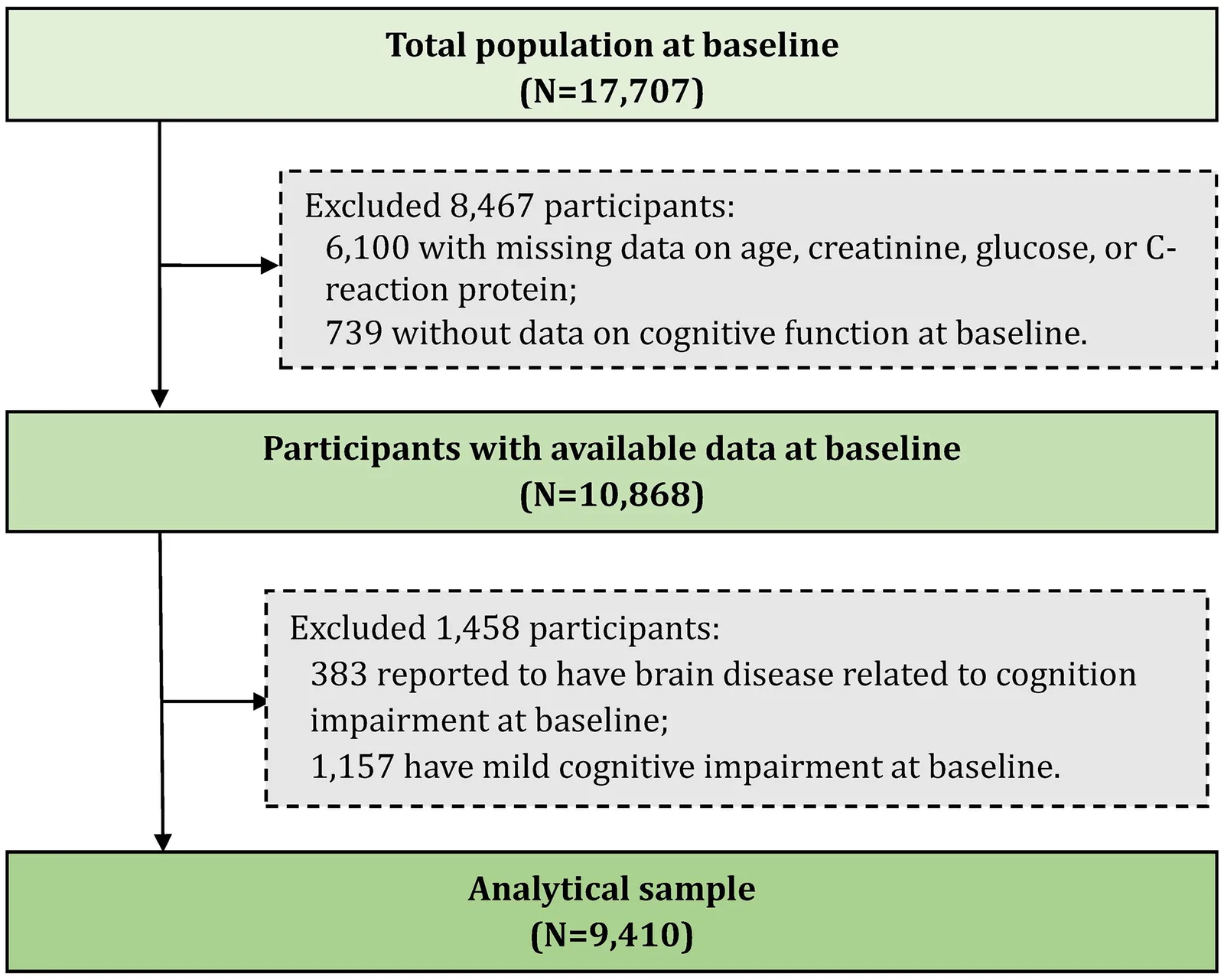
BACKGROUND: Mild cognitive impairment (MCI) is an important transitional stage between normal cognitive aging and dementia. Biomarker-based biological age may better capture physiological aging processes than chronological age, yet its association with the risk of developing MCI remains insufficiently studied. OBJECTIVE: We aimed to examine the association between Gompertz Law-Based Biological Age (Light BioAge) and incident MCI in a middle-aged and older Chinese population, and to explore whether social activeness modifies this association. METHODS: We used data from the China Health and Retirement Longitudinal Study, a nationally representative cohort. Light BioAge was calculated from chronological age, serum creatinine, fasting glucose, and C-reactive protein. Incident MCI was defined using age- and education-standardized cognitive assessments. Cox regressions were used to analysis. RESULTS: Among 9410 participants free of MCI at baseline, 1047 developed MCI during follow-up. Light BioAge was negatively associated with risk of MCI (hazards ratio (HR) = 0.99, 95% CI: 0.98-0.99). Compared to high Light BioAge, those in the moderate and low groups showed significantly lower risks of MCI (HR = 0.78, 95% CI: 0.65-0.94 and HR = 0.79, 95% CI: 0.65-0.97, respectively). The association were consistent across sex and different levels of social activeness, with no significant interaction observed. CONCLUSIONS: Lower biological age, as estimated by Light BioAge, is independently associated with a reduced risk of MCI in middle-aged and older adults. The use of biomarker-based aging indicators may help identify individuals at higher risk of cognitive decline for early preventive strategies.
- Social activeness
- Mild cognitive impairment
- Age- and education-standardized cognitive assessments
- C-reactive protein
- Creatinine
- Humans
The paper
West China Hospital of Sichuan University
Journal of Alzheimer's Disease Reports, 21 Jul 2026, Open access