Herpes simplex virus, APOE ε4, and olfactory function in older adults: A cohort study
Abstract
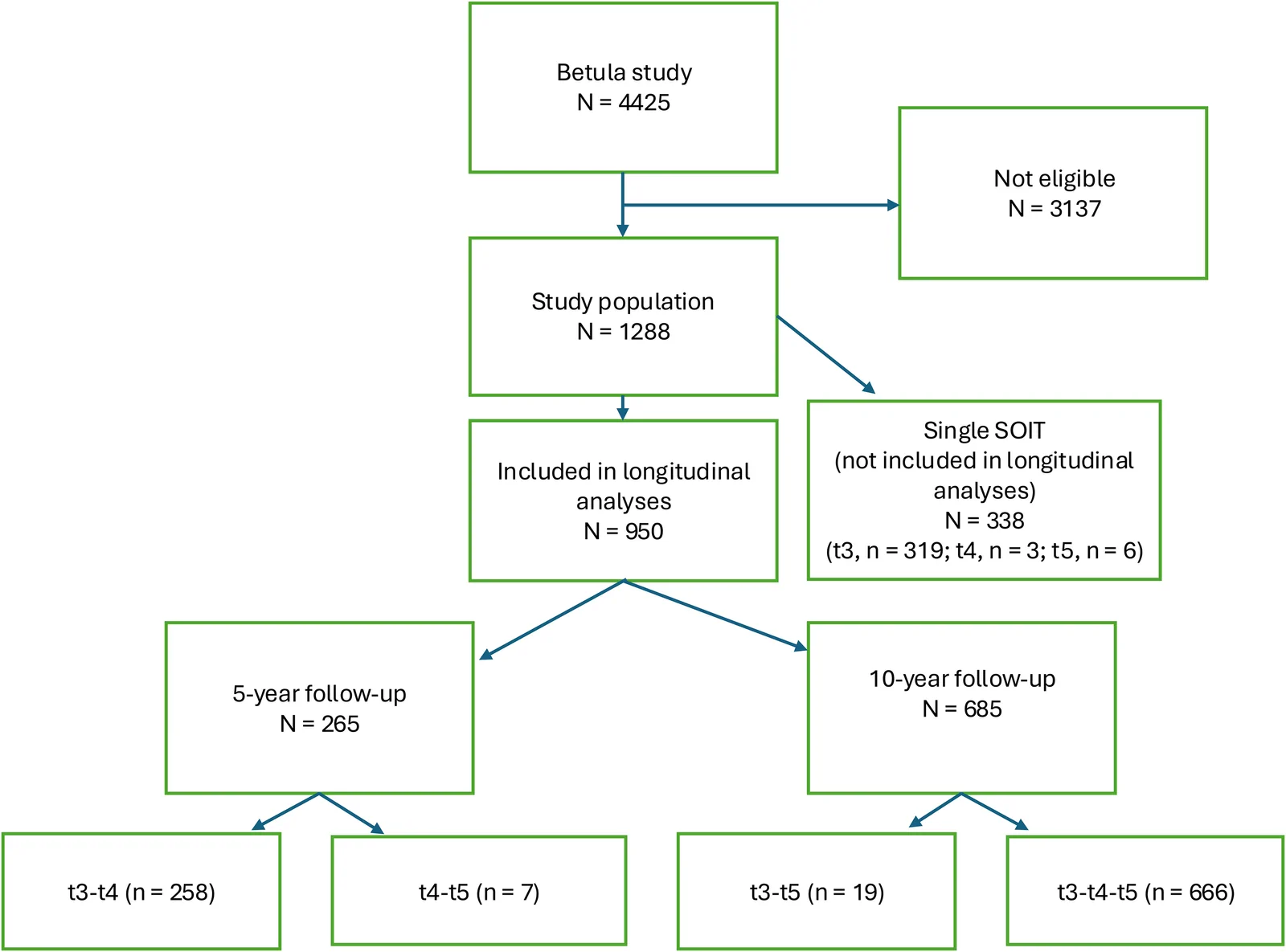
BACKGROUND: Olfactory dysfunction (OD) is associated with neurodegenerative disorders, including Alzheimer's disease (AD). Herpes simplex virus type 1 (HSV1) may increase AD risk, but longitudinal changes in olfaction related to HSV1 carriage and apolipoprotein ε4 (APOE ε4) status remain unclear. OBJECTIVE: To investigate if OD is associated with carriage of HSV1, and whether APOE ε4 status modulates this possible association. METHODS: From a large population-based cohort study in northern Sweden (Betula study), 1288 individuals with a baseline odor identification assessment were included, with follow-up assessment (n = 950) after five or ten years. Odor sensitivity (odor threshold test) was tested at a single time point for 651 individuals. HSV1 carriership and apolipoprotein E genotype were established for all participants. RESULTS: Weighted linear mixed-model analyses showed that carriage of HSV1, regardless of APOE ε4 status, was not associated with decline in odor identification. At baseline, male gender and higher age were associated with impaired odor identification, while better semantic memory was associated with better odor identification ability. Higher age, low education level and better semantic memory were associated with poorer odor identification performance over time. Furthermore, multiple linear regression showed that male gender, higher age and low education level were significantly associated with impaired odor sensitivity. CONCLUSIONS: HSV1 did not associate with OD in this population-based cohort study with 5-10 years of follow-up, where olfaction was measured and analyzed using two different objective measurements. The association between OD and neurodegenerative diseases needs further investigation.
- Herpes simplex virus type 1 carriage
- Olfactory dysfunction
- HSV1 carriage
- Odor identification
- Odor threshold test
- Humans
The paper
Umeå University
Journal of Alzheimer's Disease Reports, 27 Jul 2026, Open access