Dietary and lifestyle quality and endometrial cancer: Incidence and survivorship outcomes-An umbrella review of systematic reviews and meta-analyses
Abstract
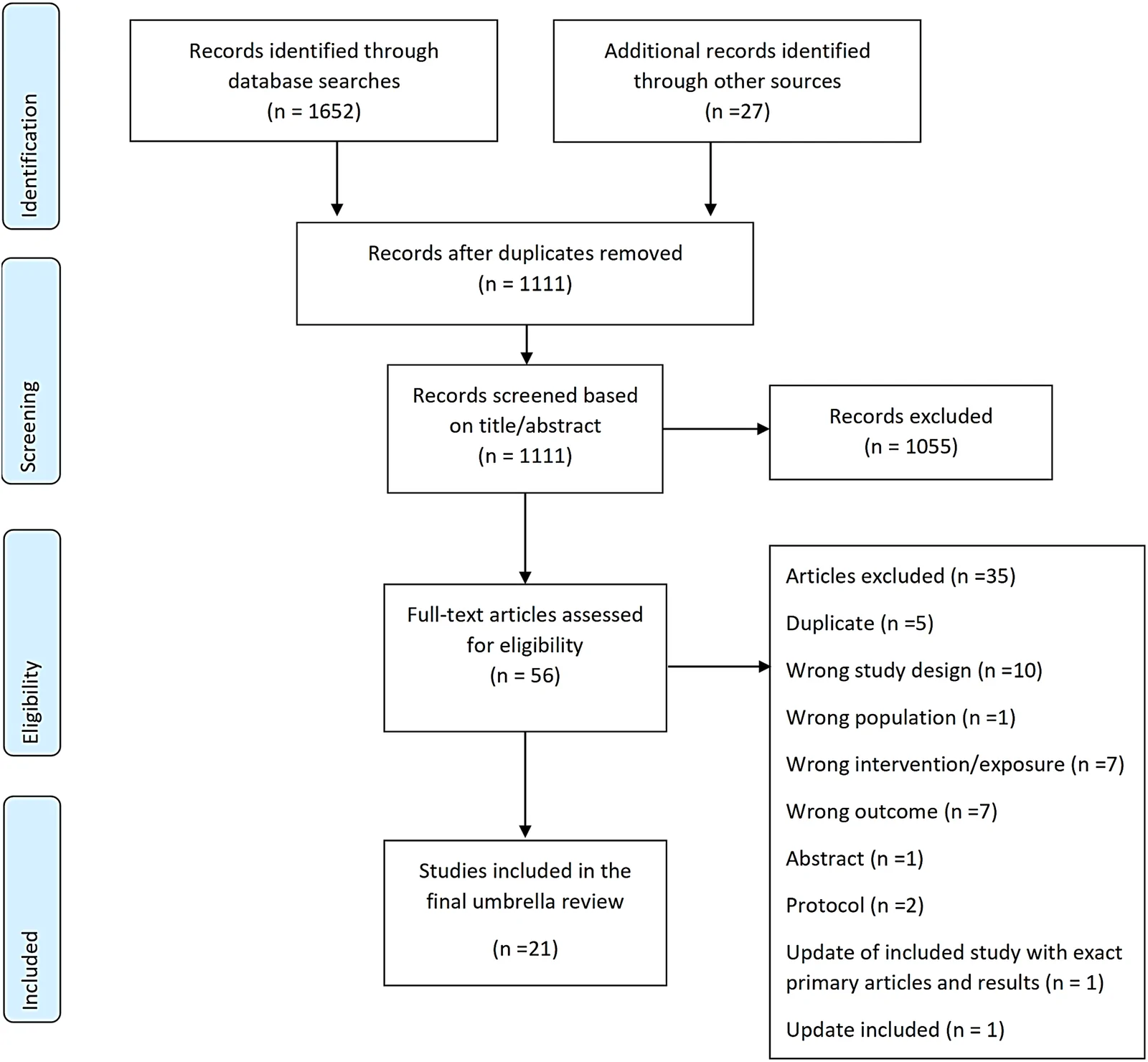
Composite dietary and lifestyle indices capture the combined effects of multiple health-related behaviours and may better reflect real-world cancer risk and survivorship than single exposures. This umbrella review aimed to evaluate and grade the strength of evidence for associations between adherence to composite dietary and lifestyle quality indices and endometrial cancer (EC) outcomes, including risk, EC-specific survival, overall survival, disease recurrence, quality of life, and new-onset cardiometabolic diseases. PubMed, Embase, Scopus, Web of Science, CINAHL, and Cochrane Library databases were systematically searched for relevant systematic reviews. Evidence was graded using prespecified umbrella review criteria. A total of 21 systematic reviews were included. Nine investigated diet quality (7 meta-analyses) and 12 investigated lifestyle exposure or interventions (8 meta-analyses). The outcomes assessed were EC risk (N = 14), all-cause or cancer-specific mortality (N = 5), recurrence (N = 4), overall or cancer-specific survival (N = 3), QoL (N = 5), and cardiometabolic events (N = 1). Following a Mediterranean diet was associated with 29% lower odds of EC (pooled OR = 0.71, 95% CI 0.51-0.98; class IV), whereas Western dietary patterns were associated with 20% higher odds of EC (pooled OR = 1.20, 95% CI 1.03-1.39; class IV). A combined healthy diet and lifestyle approach was associated with a 46% lower hazard of EC incidence (pooled HR = 0.54, 95% CI 0.42-0.71; class III), although heterogeneity was high. No significant associations were observed between lifestyle interventions and global or domain-specific quality of life (QoL) across follow-up durations ranging from 9 weeks to 12 months, irrespective of the validated assessment instruments used. Evidence remains limited regarding the associations between diet and lifestyle factors and EC recurrence, survival, mortality, and cardiometabolic outcomes. Our umbrella review identified suggestive (class III-IV) evidence for associations between healthy dietary patterns, particularly the Mediterranean diet, and combined healthy lifestyle approaches with lower EC incidence. Evidence remains insufficient or non-significant for post-diagnosis outcomes, underscoring the need for further high-quality research.
From the paper
- Result
Better diet quality (measured by MDS) was significantly associated with lower odds of EC incidence [pooled OR=0.71, 95% CI (0.51–0.98), p = 0.036, I² = 44.7%].
- Limitation
Limitations of our review include the small number of individual studies in the re-performed meta-analyses (≤ 5 studies per synthesis) and the limited availability of evidence for post-diagnosis outcomes, including recurrence, overall and EC-specific survival, mortality …
Quoted word for word from the full text on journals.plos.org.
- Combined healthy diet and lifestyle
- Diet quality
- Lifestyle interventions
- Endometrial cancer
- Cardiometabolic disease
- Humans
The paper
The University of Queensland; Cancer Council Queensland
PLOS One, Oct 14, 2026, Open access