Wine intake and cancer risk: An umbrella review of meta-analyses
Declared no competing interests
Abstract
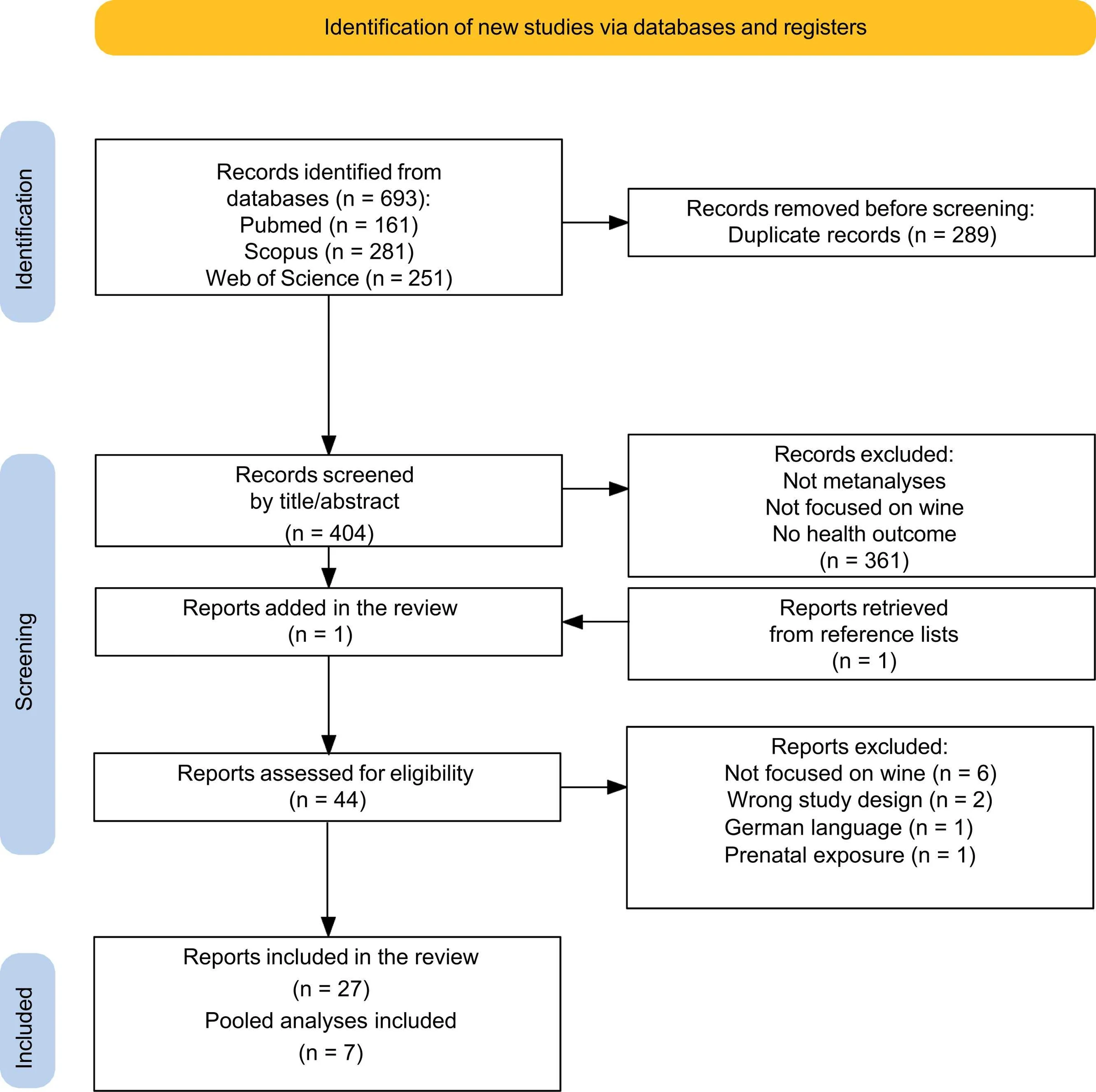
BACKGROUND: Alcohol consumption is a known risk factor for cancer, but different alcoholic beverages may be differently associated with cancer risk. Wine is a complex hydro-alcoholic solution containing several compounds with potential anti-carcinogenic properties. This umbrella review aimed to summarize the available evidence on the association between wine consumption and cancer risk across different cancer sites. METHODS: A systematic search was conducted on PubMed, Scopus and Web of Science, including systematic reviews and meta-analyses published up to April 28, 2026. The methodological quality of the included meta-analyses was evaluated using AMSTAR-2. The strength of evidence was assessed considering statistical significance, number of cases, heterogeneity and small-study effects. Pooled analyses were considered separately. RESULTS: Twenty-seven meta-analyses were included. Most of the associations between wine consumption and cancer risk were not statistically significant. No significant associations were generally found for colorectal, gastric, bladder, endometrial, ovarian and lung cancers. An increased risk was reported for oral and pharyngeal cancer (RR 2.12, 95% CI 1.37-3.29) and esophageal cancer (RR 5.34, 95% CI 1.43-19.89). The available evidence regarding specific beverage types (red versus white wine) was highly inconsistent across the evaluated cancer sites. For breast cancer, risk estimates were remarkably similar between white and red wine, while findings for prostate cancer showed conflicting directions across the included meta-analyses, preventing definitive conclusions regarding beverage-specific effects. CONCLUSIONS: The available evidence showed a heterogeneous association between wine consumption and cancer risk across different cancer sites. While most associations were not statistically significant, increased risks were reported for some malignancies. However, the heterogeneity and methodological limitations of the available evidence do not allow definitive conclusions regarding the specific role of wine in cancer risk.
The paper
Cancer Epidemiology, 8 Oct 2026