Antibody reduced fat while preserving lean mass in mice
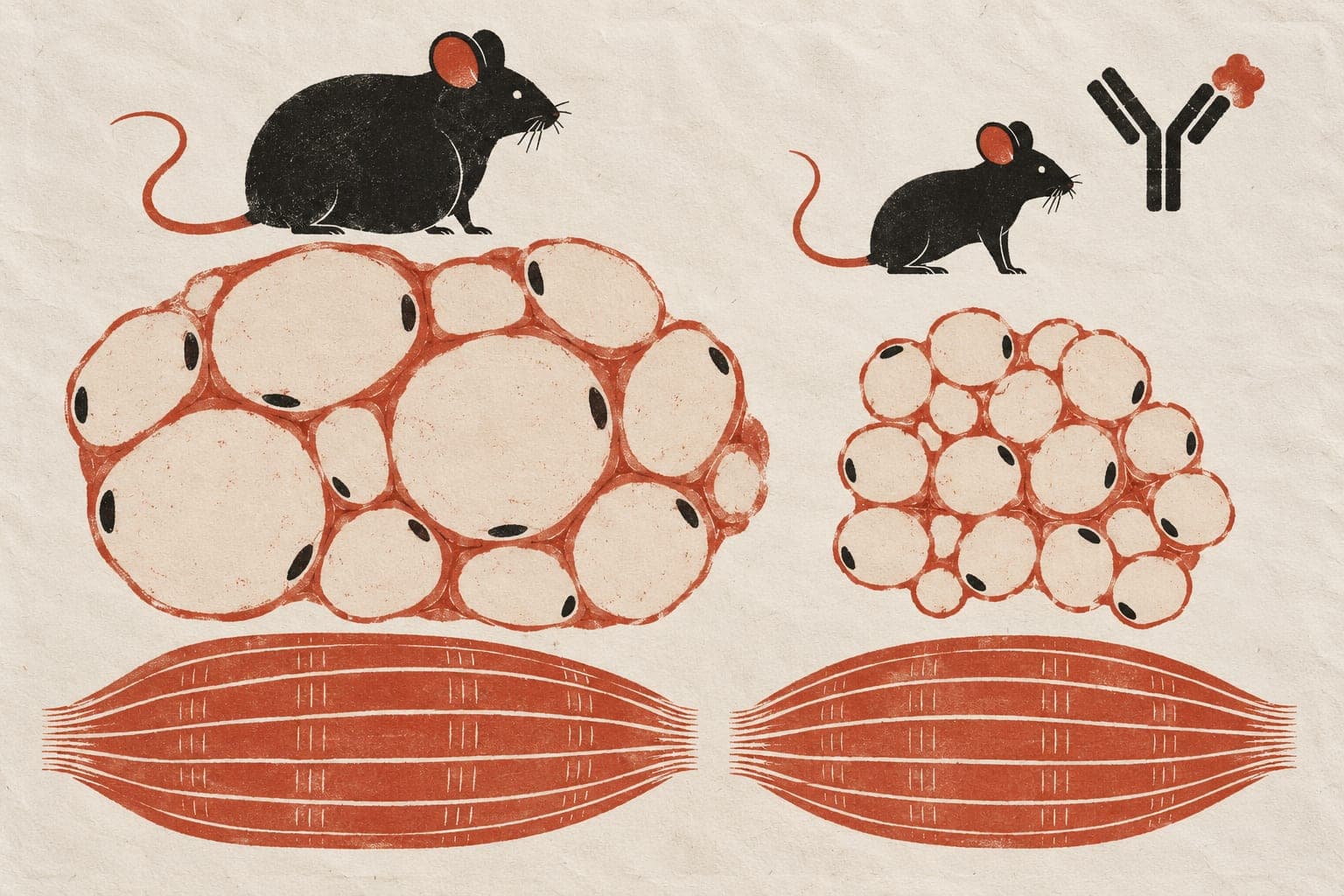
Experiments in middle-aged and aged mice found that an antibody targeting a stress-hormone signal reduced fat mass without reducing lean mass.
JCI Insight
In experiments in mice, researchers tested an antibody that binds corticotrophin-releasing factor, a hormone involved in the stress response. The antibody altered a hormone system that links stress responses to metabolism. It reduced levels of corticosterone, a stress hormone, as well as food intake, body weight and fat mass. It preserved lean mass, the body's non-fat components, and improved sensitivity to insulin, which helps control blood sugar.
The body-composition effects occurred in middle-aged mice fed normal chow or a high-fat diet, and in aged mice. Single-dose experiments found effects on weight gain and body composition that lasted beyond the period of the antibody's action on its target.
Why it matters
The experiments in aged mice bear on whether stress-hormone signalling could be targeted to address obesity later in life.
Caveats
The findings came from mouse experiments and do not establish effectiveness or safety in people.
The paper
Show 18 more authors
Yong Ran, Yona Levites, Hunter S Futch, Luming Yin, Edgardo Rodriguez-Lebron, Xuefei Liu, Kazi Farhana Afroz, Ariella Goloborodsky, Thomas B Ladd, Kristy D Dillon, Danny Ryu, Jennifer L Bizon, Jada Lewis, Karen A Scott, Annette de Kloet, Nicholas T Seyfried, Eric G Krause, Karen N McFarland,University of Florida · Emory University
JCI Insight · 6 Oct 2026