Memory task scores linked to Alzheimer’s markers in older adults
An observational study of 46 cognitively normal older adults and 41 with memory-related mild cognitive impairment linked object-memory scores to Alzheimer’s blood markers.
Our read
Biomarkers- Studied:
- Preprint: cross-sectional study of older adults with or without amnestic MCI
- What changed:
- Memory task scores were lower in older adults with higher blood pTau217 levels
- The catch:
- Amyloid and tau PET data were missing, limiting direct verification of Alzheimer’s pathology
- In the record:
- The 46th paper on pTau217 with results in people; 83 on record in all.
- Why it’s aging research:
- Biological age, frailty, function, multimorbidity or death.
Editor of record: Boris Djordjevic · AgingResearch.News
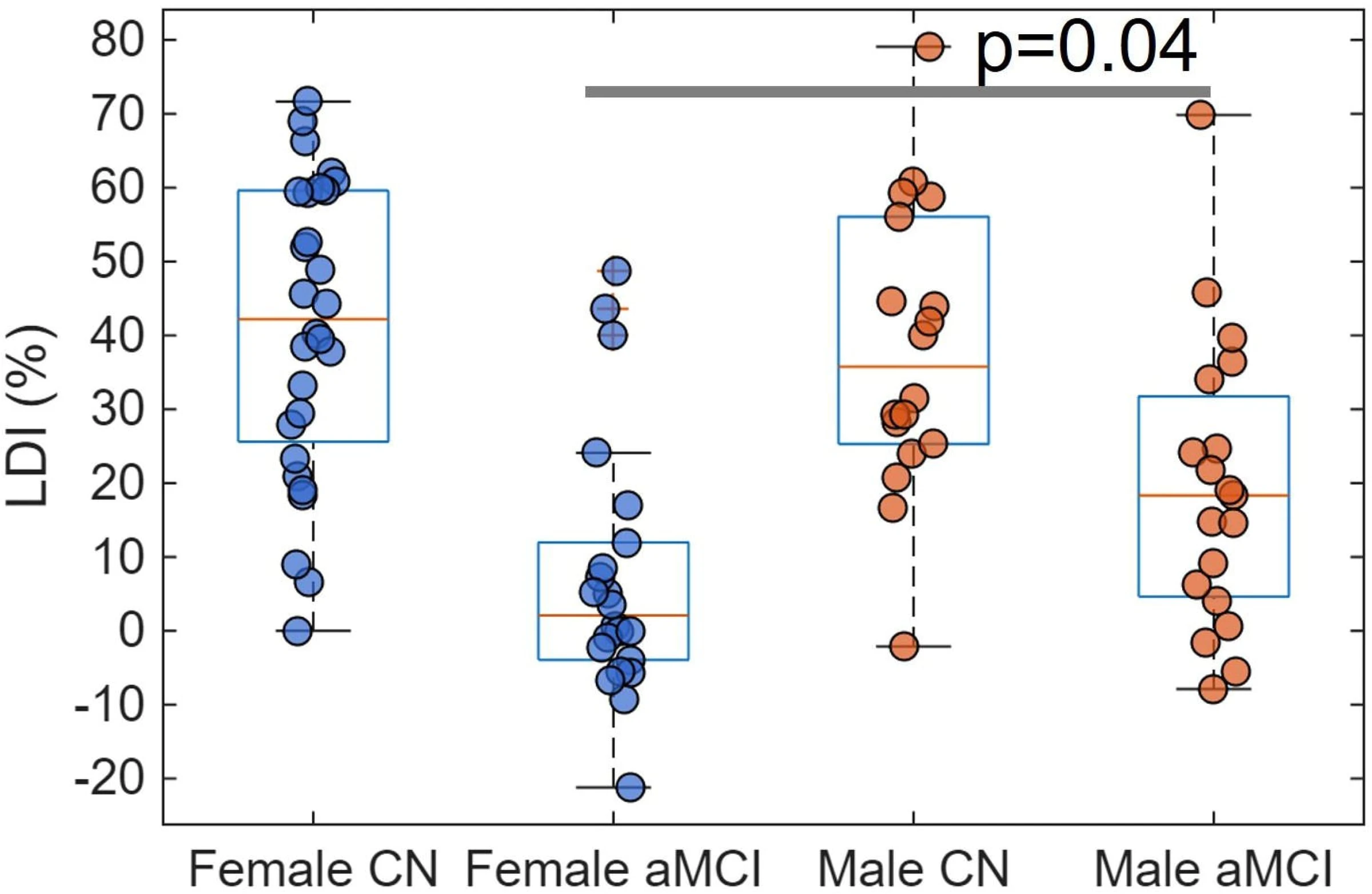
Forty-six cognitively normal older adults and 41 with amnestic mild cognitive impairment, which affects memory, completed an object-memory task in this observational study. They judged whether objects were the same as, similar to or different from ones seen earlier during three 13-minute sessions in one visit. Researchers also measured blood markers and the volume of the hippocampus, a brain region involved in memory.
Participants with memory impairment scored lower. Smaller hippocampal volume and higher blood levels of phosphorylated tau 217, a chemically modified protein measured as an Alzheimer’s marker, had the strongest links to poorer scores. The task distinguished the groups with performance comparable to established Alzheimer’s markers. Older age was linked to poorer discrimination only for objects with little resemblance to previously seen ones, regardless of diagnosis.
Why it matters
The work addresses whether memory testing can complement blood tests and brain scans in identifying cognitive impairment in older adults.
Caveats
This cross-sectional study cannot establish cause or predict future decline, and classification performance was assessed within the same sample. The preprint has not been peer-reviewed, and its findings exclude people unable to complete task training or provide usable brain scans.
From the paper
- Result
In the stepwise logistic regression analysis, stepwise AIC selection identified a combined model including LDI (β = -1.157, 95%CI [-2.247, -0.067])), pTau181 (β = -0.995, 95%CI [-2.465, 0.474]), pTau217 (β = 2.453, [0.786, 4.121]), and hippocampal volume (β = -0.313, [-1.187, 0.561]).
- Limitation
First, the cross–sectional design precludes causal inferences regarding the temporal relationships among mnemonic discrimination decline, biomarker changes, and hippocampal atrophy.
Quoted word for word from the full text on bioRxiv.
The paper
Association of object mnemonic discrimination deficit with age and AD biomarkers in older adults
Cleveland Clinic
bioRxiv, Sep 17, 2026, Open access, Preprint, not yet peer-reviewed


Comments
Be the first to comment.