Changes in Body Composition Assessed by Bioelectrical Impedance Analysis in Patients Treated with GLP-1 Receptor Agonists: A Real-World Experience
6 months
Abstract
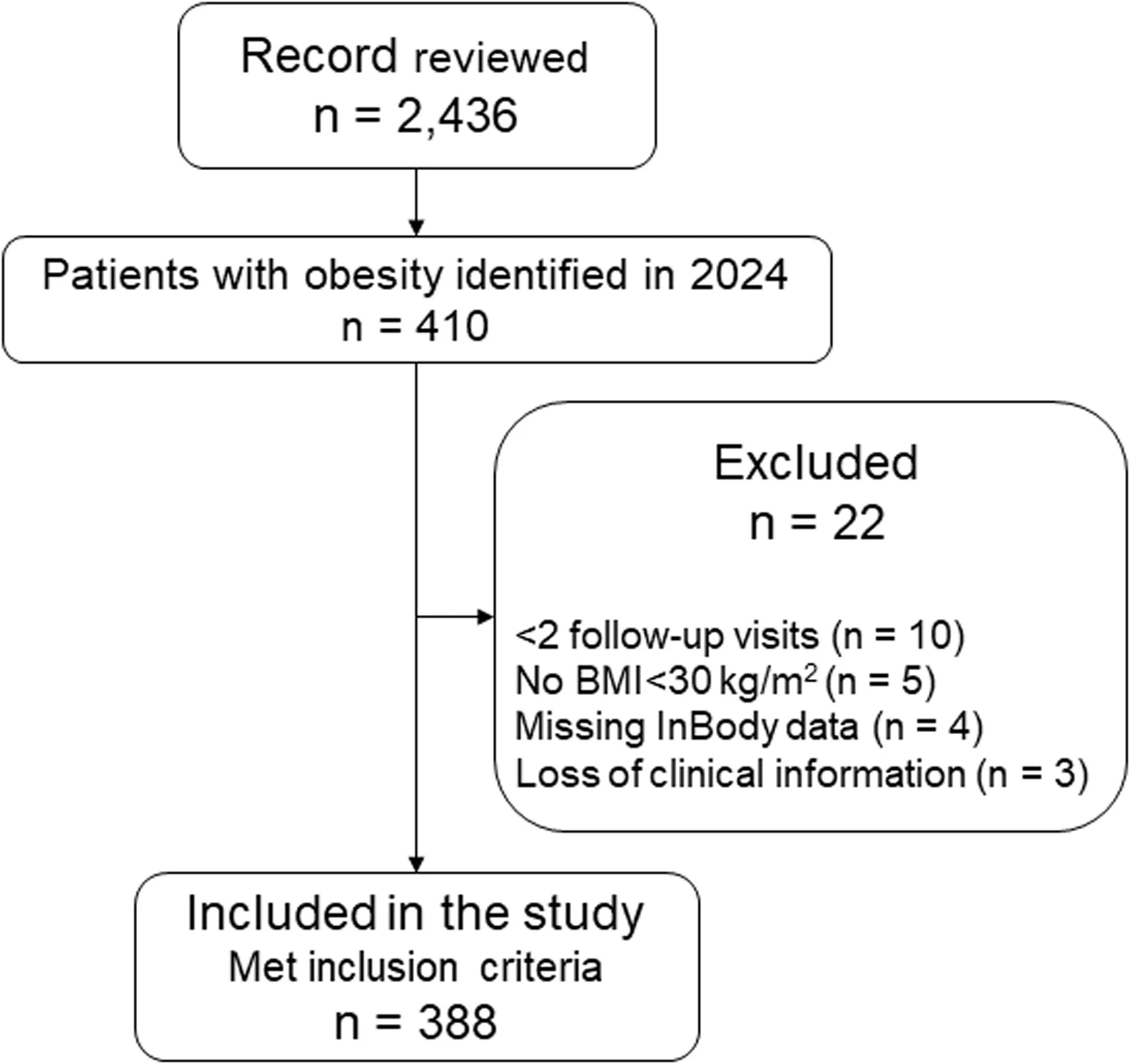
OBJECTIVE: Glucagon-like peptide-1 receptor agonists (GLP-1 RAs) induce significant weight loss in patients with obesity; however, data on real-world body composition changes are limited. METHODS: We conducted a retrospective real-world observational study including 388 obese adults treated with GLP-1 RAs and followed them for 6 months in a specialized endocrinology clinic. Body composition was assessed using multifrequency bioelectrical impedance analysis at baseline and at 6 weeks, 3 months, and 6 months. Linear mixed models with a random intercept per patient were used to compare timepoints, with a fully adjusted model to test the independent contribution of adherence and obesity phenotype. RESULTS: A total of 388 patients (40.7% women; mean age 50.3 years) were included in the study. Mean weight loss reached 11.3% at 6 months (p<0.001), predominantly driven by fat mass reduction (-8.95%), with a marked decrease in visceral fat area (-40.6 cm²). Skeletal muscle mass decreased modestly (-1.46 kg) and was modest relative to the concurrent reduction in fat mass. Adherent patients experienced greater fat loss than nonadherent patients. Improvements were observed in anxiety and binge eating behaviors, with a low incidence of adverse events. Phenotype-based characterization revealed baseline differences as well as distinct patterns of fat and muscle loss. CONCLUSION: In real-world clinical practice, GLP-1 RA therapy combined with lifestyle interventions led to substantial improvements in body composition, characterized by predominant fat and visceral fat loss, with minimal skeletal muscle reduction. These findings support the use of body composition assessments beyond BMI in obesity management.
The paper
Hospital General Universitario Gregorio Marañón
Endocrine Practice, 19 Sep 2026