Frailty gaps in older women with breast cancer spread at diagnosis
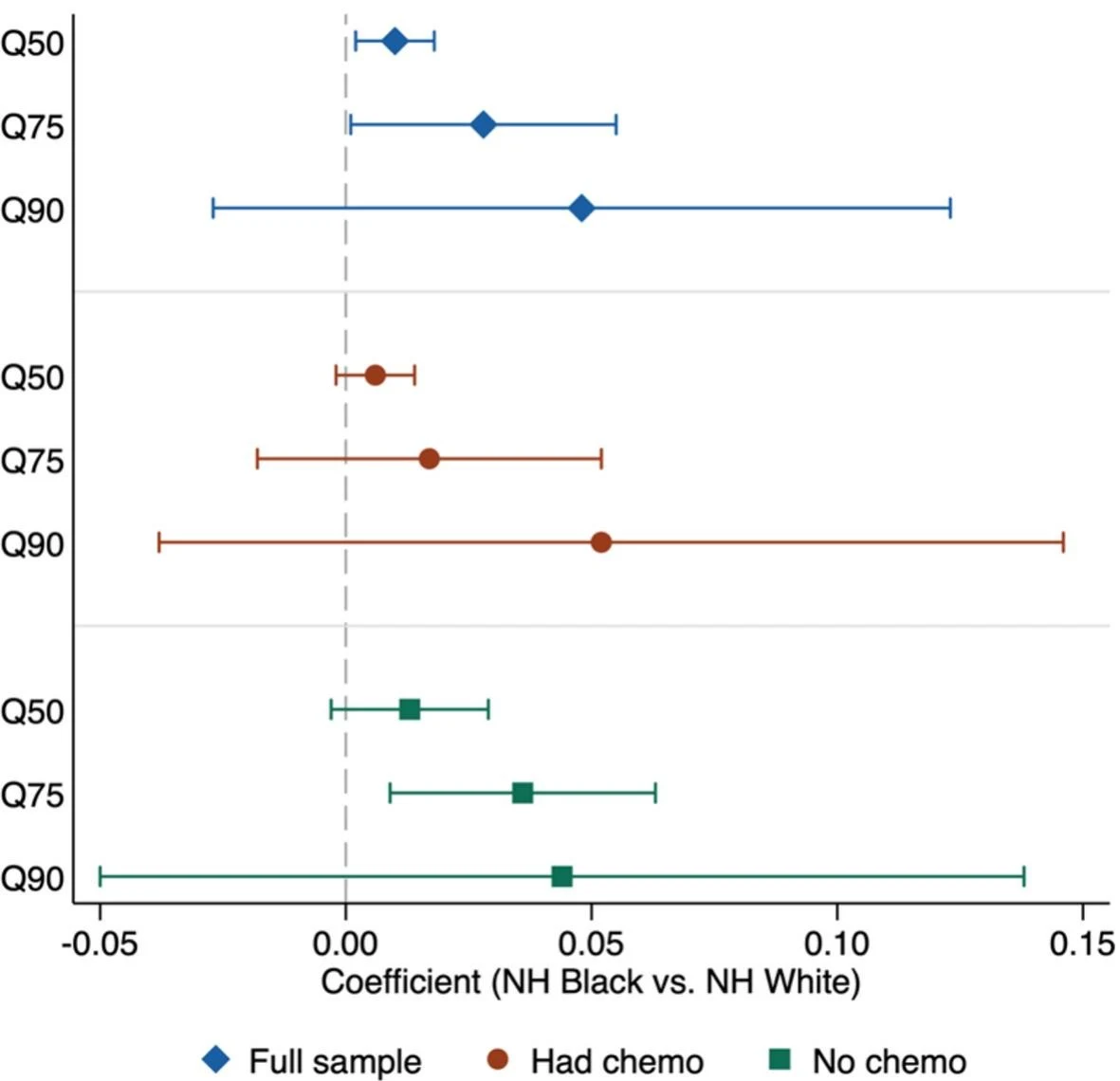
Frailty index scores were 0.21 in non-Hispanic Black women versus 0.15 in non-Hispanic White women, with disparities varying across frailty levels.
Our read
Populations- Studied:
- Cohort study of 7,194 older women with metastatic breast cancer, against non-Hispanic White women
- What changed:
- Frailty scores were higher in non-Hispanic Black women: 0.21 versus 0.15 in non-Hispanic White women
- The catch:
- Frailty was estimated from billing records rather than direct clinical assessments
Editor of record: Boris Djordjevic · AgingResearch.News
An observational study examined 7,194 women aged 66 or older whose breast cancer had spread by diagnosis. Researchers used cancer registry data linked to Medicare billing records from 2010 to 2020. They estimated frailty, a state of increased vulnerability to health problems, six months after diagnosis using a billing-record index.
Women enrolled in both Medicare and Medicaid had frailty scores of 0.24, compared with 0.15 among those without dual coverage. Measured characteristics accounted for average differences by race and dual coverage. At the 75th percentile of frailty scores—toward the higher end—however, 67% of the racial gap and 74% of the dual-coverage gap remained unexplained. At the 90th percentile, measured characteristics fully accounted for the racial gap. Among chemotherapy recipients, 54% of the dual-coverage gap at that percentile remained unexplained.
Why it matters
Frailty may influence how well older women tolerate cancer treatment and what support they need. The authors suggest examining its severity may help identify groups who could benefit from targeted intervention.
Caveats
Frailty was estimated from billing records rather than a direct clinical assessment, and this observational analysis cannot establish what caused the disparities. The findings concern women aged 66 or older whose breast cancer was metastatic at diagnosis.
The paper
University of Virginia Cancer Center
Journal of Geriatric Oncology, Sep 19, 2026

Comments
Be the first to comment.