Microwave-Based Breast Density Assessment Using the SAFE Device
Declared ties to: Health Institutes of Turkey, MITOS Medical Technologies, Scientific and 4 more
Abstract
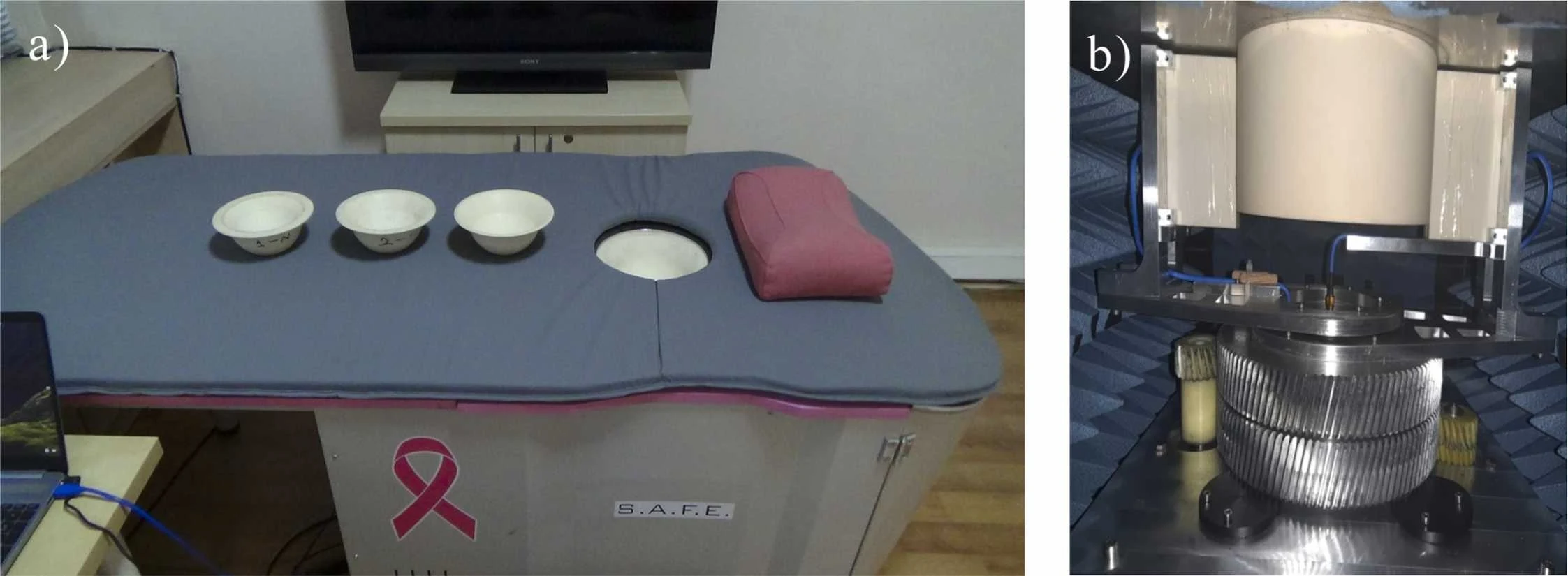
BACKGROUND: Breast density is a critical factor in both breast cancer risk and the effectiveness of diagnostic technologies. Women with dense breast tissue not only have a higher risk of developing breast cancer but also face challenges in screening and diagnosis using mammography. Microwave-based breast evaluation is an emerging approach that can offer complementary information about breast density without relying on ionizing radiation. Incorporating breast density assessment into microwave-based evaluation may represent a step toward exploring the clinical utility of SAFE, given the established association between breast density and breast cancer risk. METHODS: We investigated whether data acquired from the SAFE device could be used to classify breast density levels using machine-learning algorithms. The real and imaginary components of the S11 and S21 parameters were used as input features. Multiple machine-learning models were evaluated, and classification performance was assessed using standard metrics. RESULTS: Among the three machine-learning algorithms evaluated, the best classification performance was achieved using the Support Vector Machine (SVM) model. Results showed promising classification performance with 84% average accuracy, 80% average sensitivity, and 86% average specificity. CONCLUSION: Our preliminary findings demonstrate that SAFE can be used to classify breast density, potentially complementing existing diagnostic methods. These findings support further investigation of microwave-based breast density assessment as a potentially useful source of clinically relevant breast density information.
The paper
Istanbul Technical University; Marmara University
Academic Radiology, 11 Sep 2026