Distinct roles of brain network flexibility in motor learning across age
Abstract
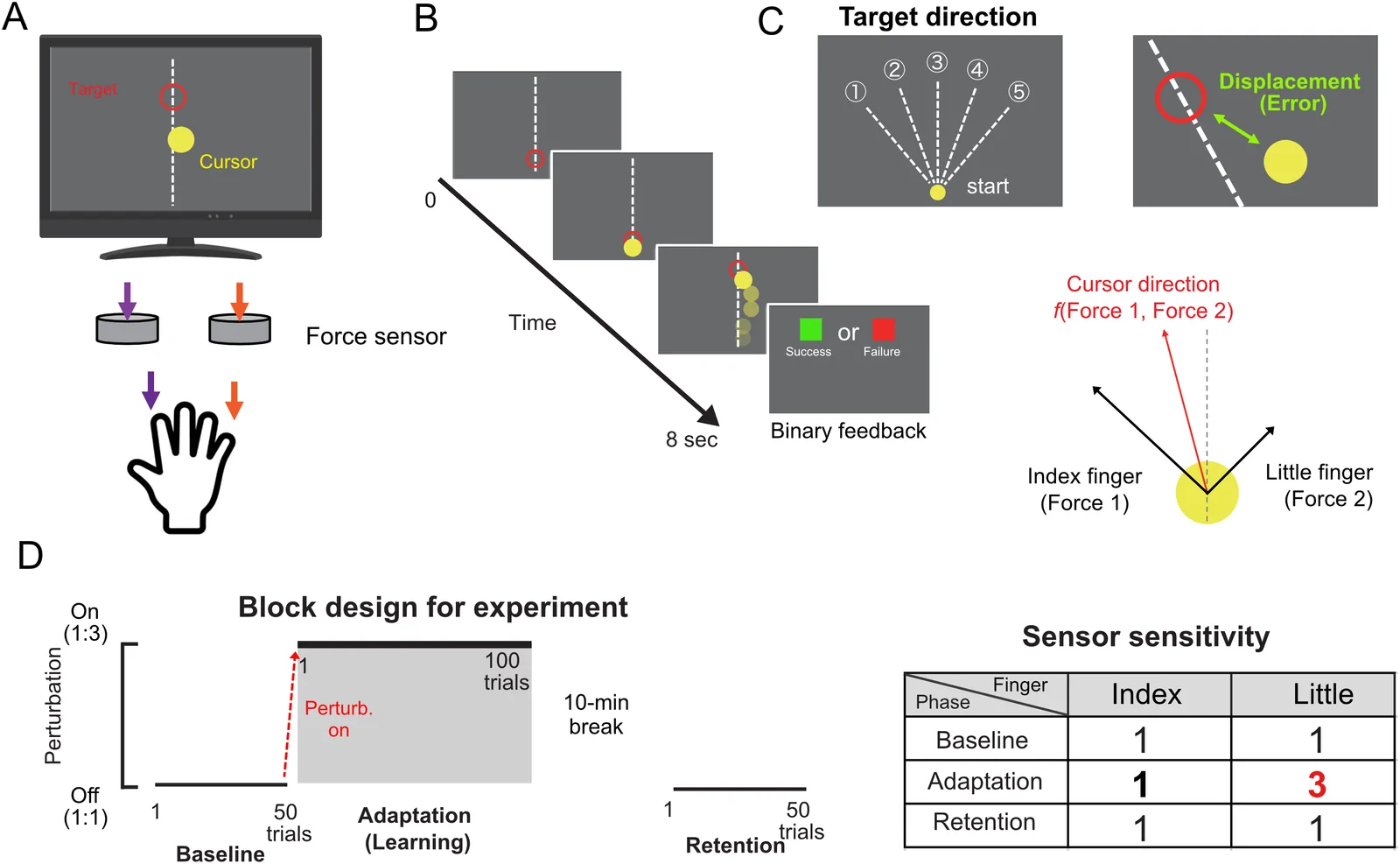
Motor learning is a lifelong process, from infancy through old age. Acquiring new motor actions through repetitive practice requires adjusting motor output in response to sensory input and integrating them to facilitate learning. For this to occur, the central nervous system must flexibly predict and adapt to the dynamic interplay between sensory inputs and motor outputs. Although overall brain function changes with age, it remains unclear how flexible brain networks, reflecting moment-to-moment reconfiguration of large-scale brain networks, influence motor learning ability with aging. To address this, we designed a visuomotor learning task involving both younger and older adults and quantitatively assessed brain network flexibility, leveraging multichannel electroencephalography (EEG) in humans. We found age-group differences in motor learning properties, brain network flexibility, and their neural relationships. In younger adults, the learning aftereffect was associated with brain network flexibility during motor preparation in the learning task. However, this association was not observed in older adults. Together, our findings suggest that brain network flexibility during motor preparation was critical for acquiring and maintaining new motor actions in younger adults, but that this coupling was attenuated with aging.
From the paper
- Participants
This paper therefore reports data from 23 participants in each of the groups.
- Limitation
It is accepted that the cerebellum plays a key role in the regulation of motor learning, including adaptation.
Quoted word for word from the full text on PubMed Central.
The paper
Toyohashi University of Technology; National Institute for Physiological Sciences
Imaging Neuroscience, 9 Sep 2026, Open access