One diabetes drug class linked to lower risk after kidney transplant
Drug use was linked to lower combined risk of transplant loss, death or worsening kidney function than nonuse, with an adjusted hazard ratio of 0.30.
121 months
Limit: Earlier transplants among controls could confound results through differences in immunosuppression and posttransplant care
Edited by Boris Djordjevic · AgingResearch.News
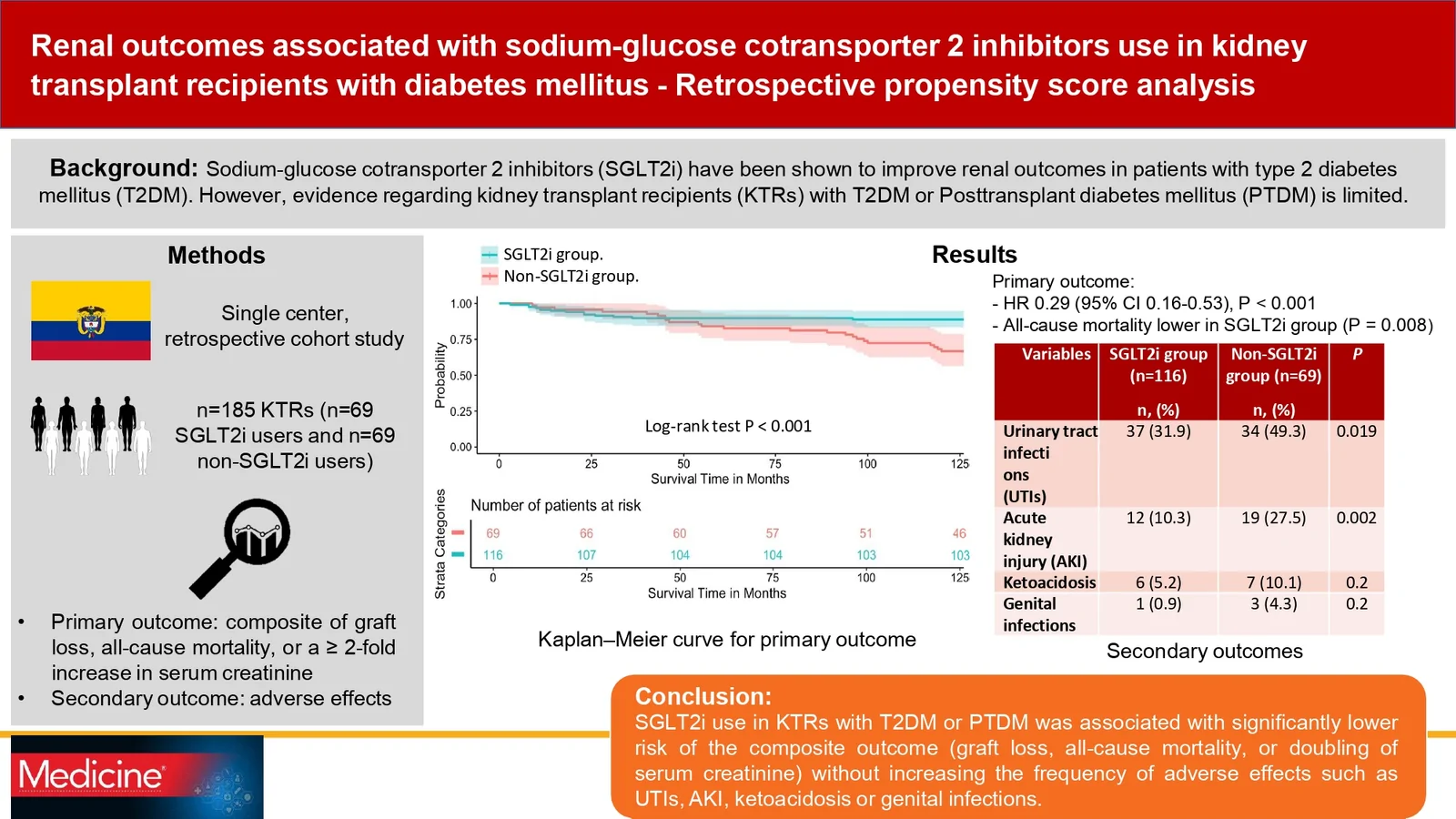
The retrospective observational study included 185 adult kidney transplant recipients in Colombia with pretransplant type 2 diabetes or diabetes diagnosed after transplantation. Researchers compared 116 users of sodium-glucose cotransporter 2 inhibitors, diabetes drugs, with 69 nonusers. Use required at least 90 continuous days. In weighted baseline data for 83 patients, median age was 58; 57.3% were male.
The combined outcome included death, transplant failure or at least doubling of creatinine, a blood measure of kidney function, from its week-four posttransplant level more than three months later. Over an average follow-up of 121 months, this outcome occurred in 16.9% of users versus 47.8% of nonusers. The hazard ratio compared event rates over time after statistical weighting. Safety records for 83 patients showed ketoacidosis, an acid buildup in blood, in 7.9% and genital infections in 2.7%. Neither outcome differed significantly between groups.
Why it matters
For kidney transplant recipients growing older with diabetes, the study addressed long-term survival and preservation of the transplanted kidney.
Caveats
This observational study could not establish cause and effect, and baseline and safety data were incomplete. It excluded people with type 1 diabetes, combined transplants or transplant failure within 12 months.
From the paper
- Result
In an overlap-weighted Cox regression model, SGLT2i use was associated with a lower hazard of the composite endpoint (HR 0.30, 95% CI: 0.17–0.55, P <.001), corresponding to an approximately 70% lower hazard compared with overlap-weighted controls.
Quoted word for word from the full text on PubMed Central.
The paper
Fundación Valle del Lili
Medicine, Sep 4, 2026, Open access