High blood pressure was common in a trial of adults with HIV
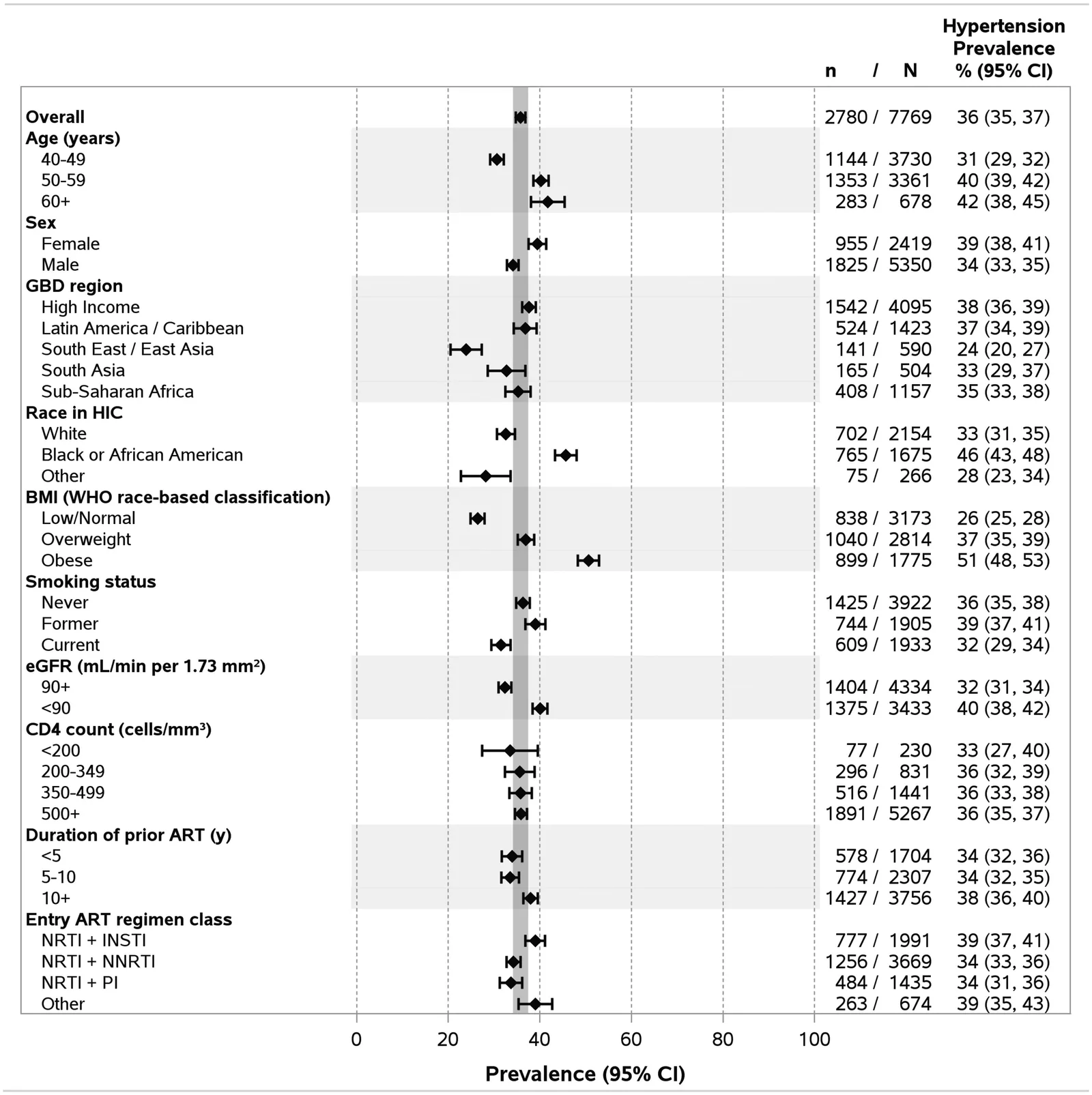
Among 7,769 participants with HIV, 36% had high blood pressure at study entry; 40% of those previously diagnosed had uncontrolled blood pressure.
Cohort study
Limit: A single blood pressure measurement could misclassify white-coat hypertension as undiagnosed hypertension
Edited by Boris Djordjevic · AgingResearch.News
An observational analysis examined 7,769 people with HIV aged 40 to 75 who entered the REPRIEVE trial with low to moderate cardiovascular risk. Their median age was 50, and 31% were women. All had received HIV medicines for at least 180 days before enrollment.
At entry, 36% had high blood pressure, based on a previous diagnosis or elevated blood pressure readings. Among participants with high blood pressure, 31% had not previously been diagnosed. Among those already diagnosed, 40% had uncontrolled blood pressure. Both prevalence and control varied by region. High blood pressure at entry was also associated with a higher risk of major cardiovascular events, including heart attacks and strokes.
Why it matters
For cardiovascular health in middle-aged and older people with HIV, the authors highlighted the need for improved blood pressure screening and optimized treatment.
Caveats
This was an observational analysis within a trial, not a randomized test of blood pressure treatment, and blood pressure was assessed at one visit. Participants had low to moderate cardiovascular risk; those with known cardiovascular disease caused by fatty buildup in arteries were excluded.
From the paper
- Participants
From 26 March 2015 to 31 July 2019, 7769 participants were enrolled in REPRIEVE.
- Who took part
REPRIEVE was a randomized primary cardiovascular prevention trial of pitavastatin vs placebo in PWH aged 40 to 75 years with low to moderate CVD risk in 5 global regions, with a primary outcome of major adverse cardiovascular events (MACE; NCT02344290).
- Ages
In brief, the median age was 50 years (IQR, 45–55), 5065 participants (65%) were non-White, and 2419 (31%) were women.
- Duration
Inclusion criteria included a diagnosis of HIV-1 infection, ages 40 to 75 years, receipt of ART for the last 180 days prior to enrollment with any plasma HIV-1 RNA level, CD4 cell count >100 cells/mm³, and meeting specific low-density lipoprotein and 2013 Pooled Cohort Risk Equation 10-year risk levels below thresholds typically associated with statin prescribing …
- Limitation
This analysis was performed in a population specifically enrolled with low to moderate CVD risk and cannot be generalized to PWH in higher-risk categories.
- Major adverse cardiovascular events
After adjustment for region and traditional risk factors, baseline hypertension was associated with a 1.8-fold higher hazard of primary MACE (95% CI, 1.4–2.3), a 2-fold higher hazard of hard MACE (myocardial infarction, stroke, or cardiovascular death; 95% CI, 1.5–2.8), and a 2.5-fold higher hazard of stroke (95% CI, 1.5–4.1 …
Quoted word for word from the full text on PubMed Central.
The paper
University of California, Los Angeles; Harvard University
Open Forum Infectious Diseases, Aug 20, 2026, Open access


