Physical ability gains linked to better outcomes after leg procedures
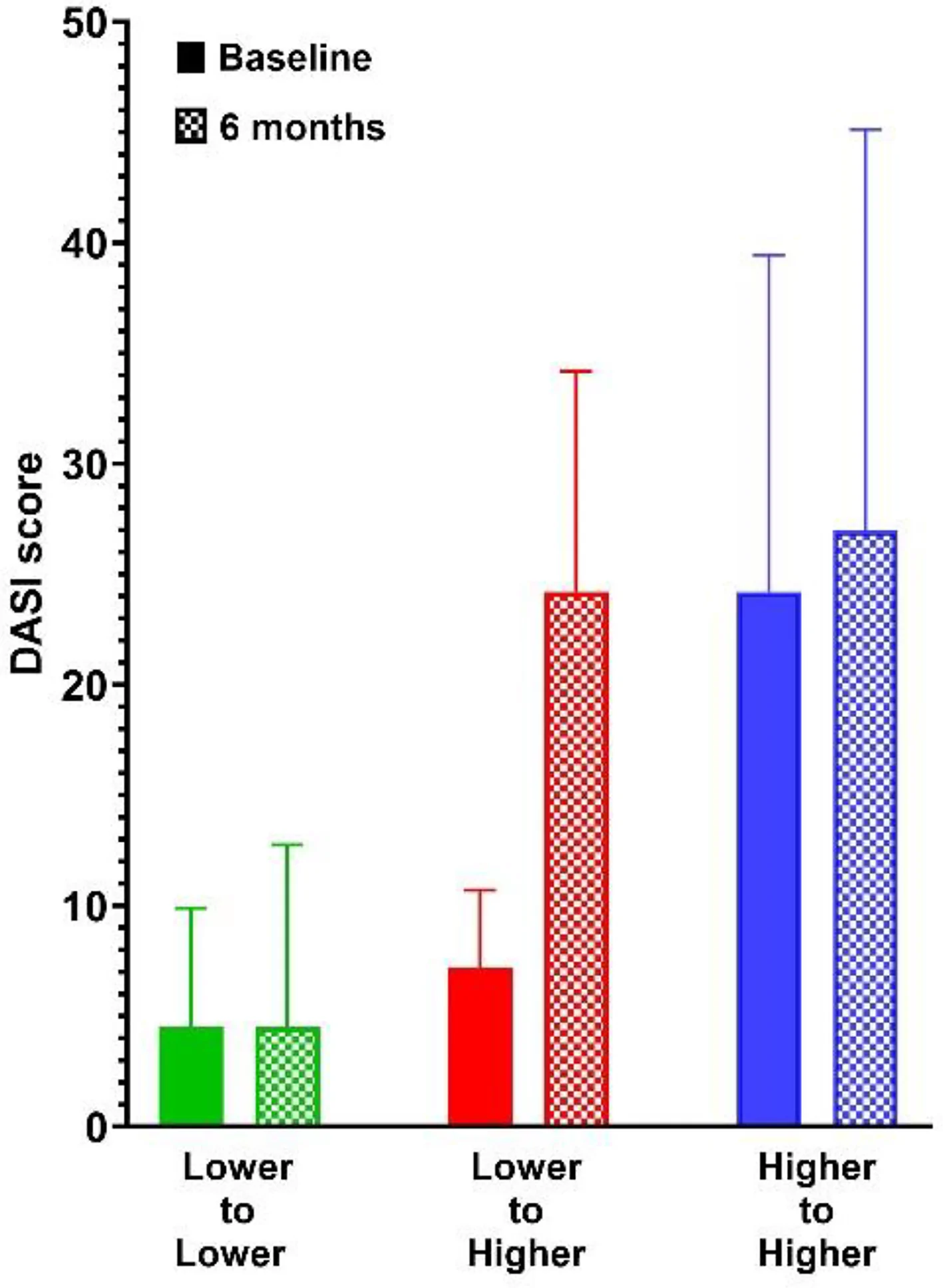
Twenty-eight patients gained an average 17.0 questionnaire points from baseline and had outcomes similar to patients with consistently higher scores after procedures to restore leg blood flow.
Our read
Populations- Studied:
- Cohort study of 143 patients with severe PAD undergoing leg revascularization, several years (Registered NCT02106429)
- What changed:
- Patients whose physical ability improved had similar risks of death and major cardiovascular or limb events to consistently higher-functioning patients
- The catch:
- PAD severity could explain both poorer physical ability and worse outcomes
- In the record:
- The 12th paper on Duke Activity Status Index with results in people; 27 on record in all.
- Why it’s aging research:
- It measures an outcome that worsens with age.
Editor of record: Boris Djordjevic · AgingResearch.News
This prospective observational study followed 143 people with severe peripheral artery disease—narrowed arteries supplying the limbs—after procedures to restore blood flow to their legs. Their median age was 74; 36.4% were women and 40.6% were non-White. They completed a questionnaire about everyday physical abilities before the procedure and six months afterward.
Researchers compared patients whose scores stayed below the initial group median, stayed above it, or rose from below to above. They tracked deaths, heart attacks, strokes, major amputations and sudden loss of limb blood flow requiring another procedure from six months onward. The improving group had outcomes similar to the consistently higher group. Persistently low scores were linked to a higher adjusted death rate than persistently higher scores, with a hazard ratio—a relative rate measure—of 6.78.
Why it matters
For older people with severe peripheral artery disease, the study addressed whether changes in everyday abilities could help identify long-term health risks.
Caveats
This observational study cannot show that improving physical ability caused better outcomes; it included only patients with severe disease who completed both questionnaires. The association with the combined cardiovascular and limb outcome was statistically uncertain.
From the paper
- Limitation
First, this was an exploratory single-region cohort study with enrollment from 2014 to 2015, which may affect contemporary generalizability.
Quoted word for word from the full text on PubMed Central.


Comments
Be the first to comment.