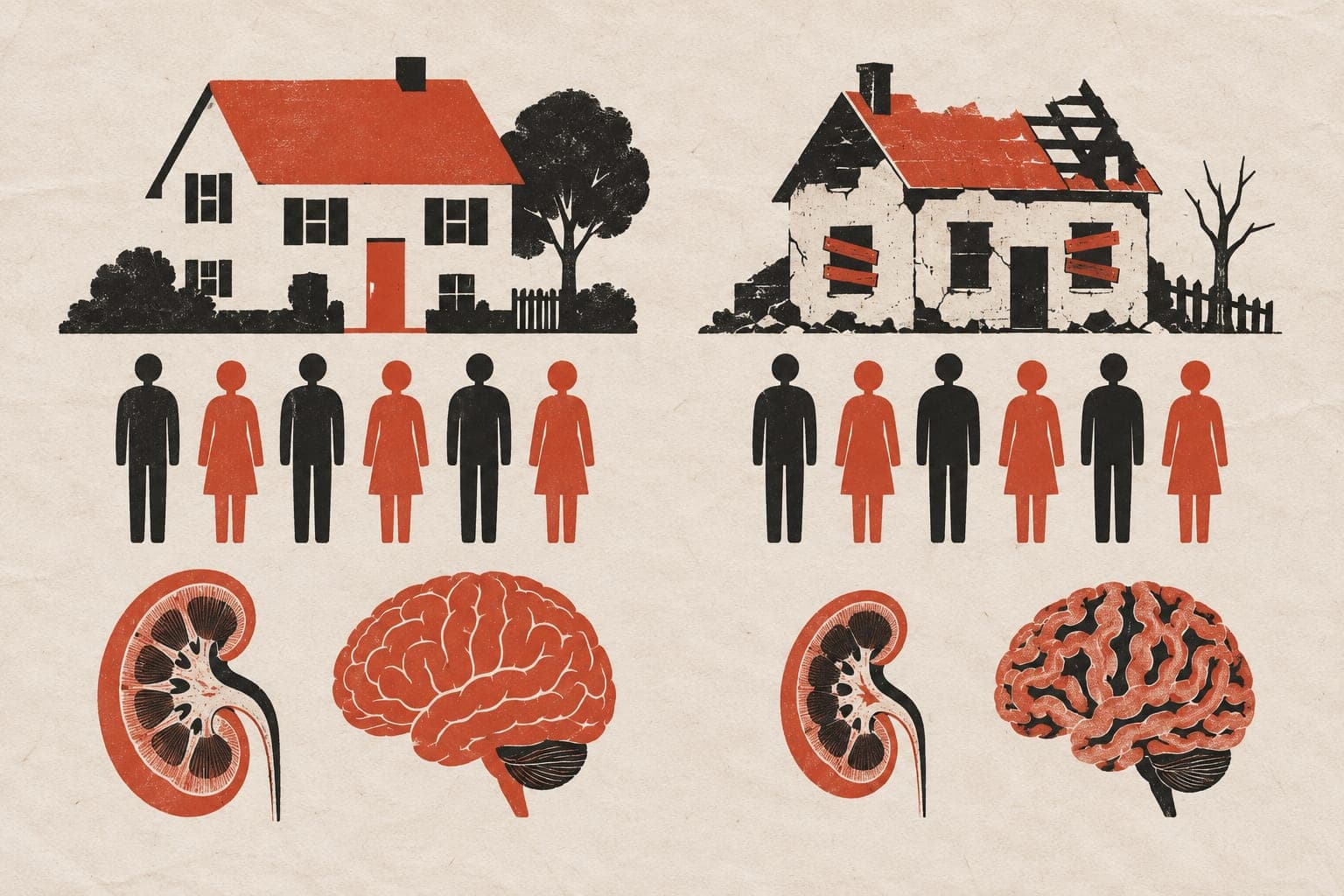
Dementia in Advanced Kidney Disease by Race and Ethnicity and Neighborhood Factors
Declared ties to: Sanofi, CareDx, AstraZeneca and 10 more
Abstract
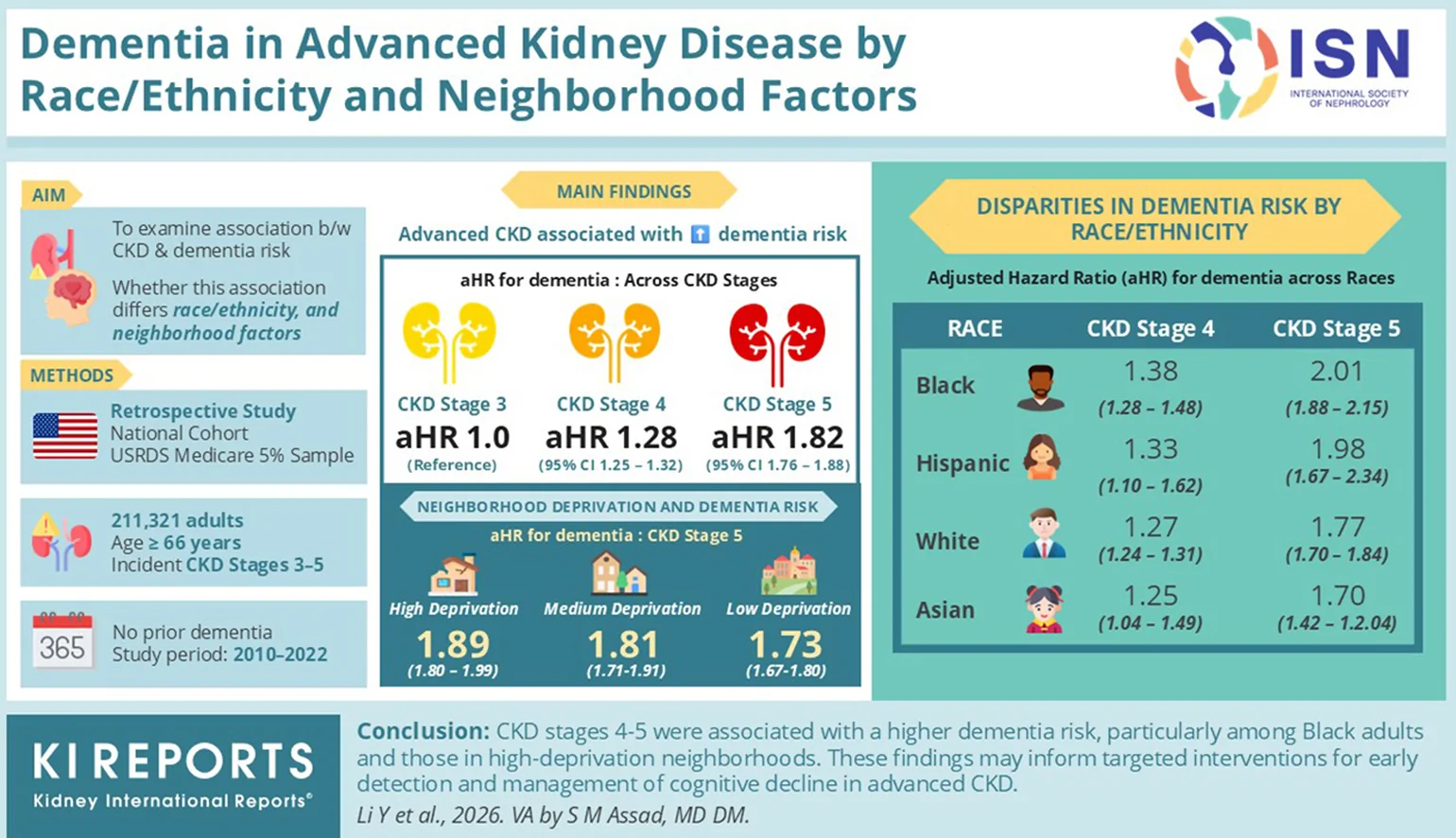
INTRODUCTION: Older adults with chronic kidney disease (CKD) likely face higher dementia risk because of vascular injury and chronic inflammation, potentially intensified among racially minoritized groups and those in rural or deprived neighborhoods. We quantified this association and examined variation by race and ethnicity, urbanicity, and neighborhood deprivation. METHODS: We identified 211,321 older adults with CKD stages 3 to 5 from the Medicare 5% sample (2010-2022) using International Classification of Diseases (ICD)-9 and/or ICD-10 codes. Zone Improvement Plan (ZIP)-code level urbanicity was defined using Rural-Urban Commuting Area Codes, and neighborhood deprivation was derived from the American Community Survey. We used cause-specific hazard models with time-varying CKD stage (reference = stage 3) to quantify the adjusted hazard ratio (aHR) of dementia and included interaction terms to test the differential effect of these associations by race and/or ethnicity, urbanicity, and neighborhood deprivation. RESULTS: After adjustment, older adults with CKD stages 4 and 5 had a higher risk of dementia (stage 4 aHR: 1.28, 95% CI: 1.25-1.32; stage 5 aHR: 1.82, 95% CI: 1.76-1.88). These associations differed by race/ethnicity (stage 4 and 5: P interactions < 0.001) and neighborhood deprivation (stage 5: P interaction = 0.04). Among older Black (stage 4 aHR: 1.38, 95% CI: 1.28-1.48; stage 5 aHR: 2.01, 95% CI: 1.88-2.15) and Hispanic adults (stage 4 aHR: 1.33, 95% CI: 1.10-1.62; stage 5 aHR: 1.98, 95% CI: 1.67-2.34), stages 4 and 5 were associated with a higher risk of dementia. Among older adults in high-deprivation neighborhoods, stage 5 was associated with a higher risk of dementia (aHR: 1.89, 95% CI: 1.80-1.99). CONCLUSION: CKD stages 4 and 5 were associated with a higher dementia risk, particularly among older Black adults and those in high-deprivation neighborhoods. These findings may inform targeted interventions for early detection and management of cognitive decline in advanced CKD.
The paper
New York University
Kidney International Reports, 28 Jul 2026